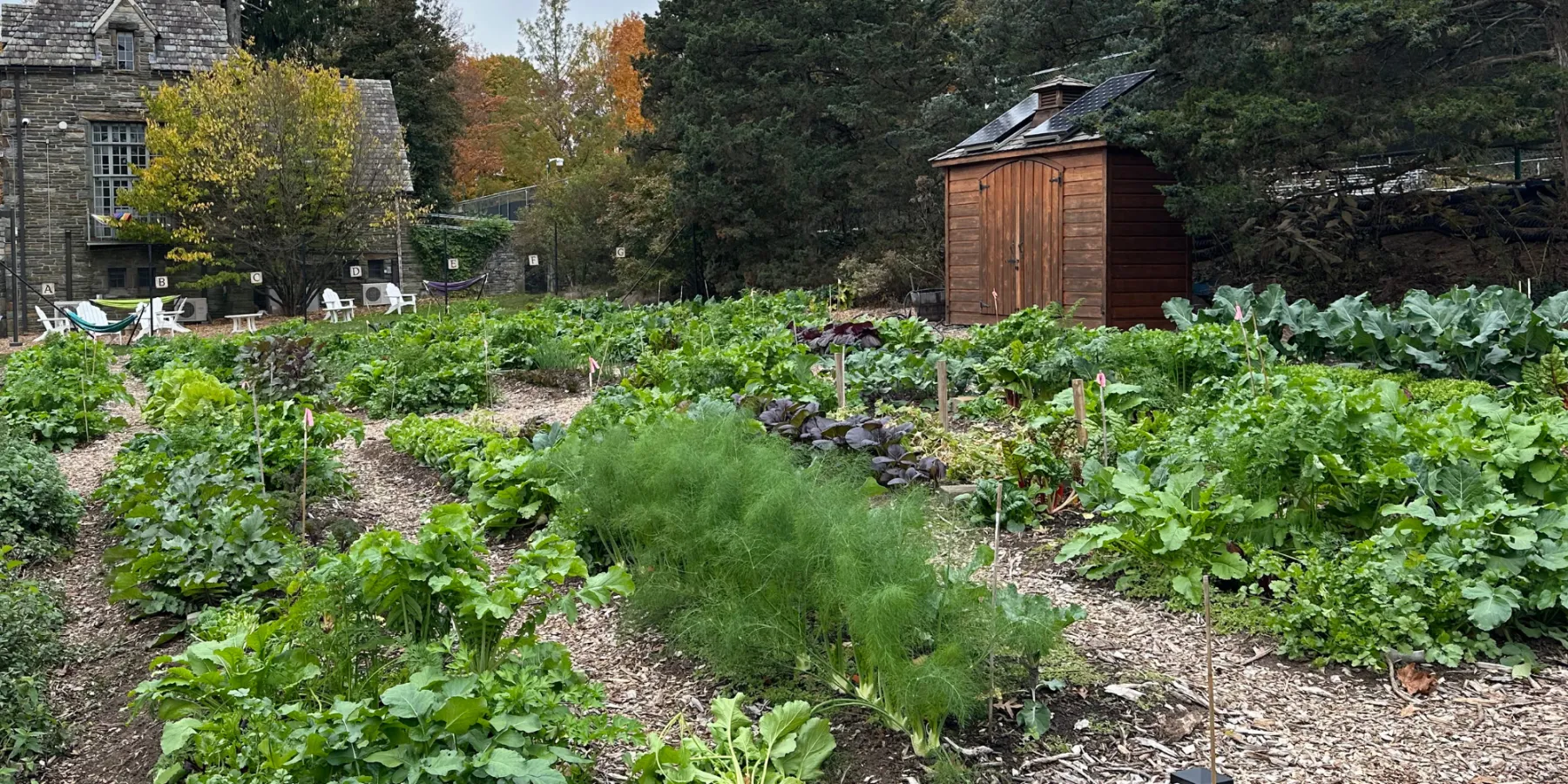
Heirloom Plants
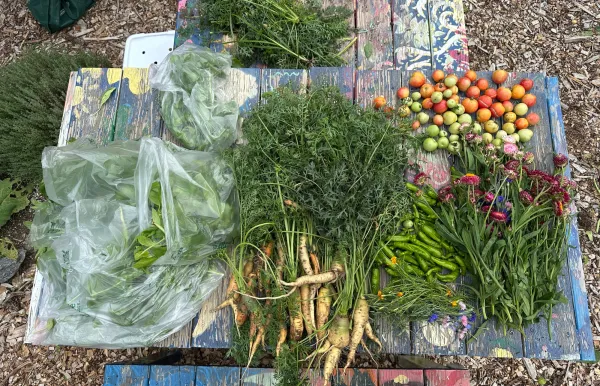
Heirlooms are open-pollinated, region-specific varieties of a given plant, often passed on between generations within a community. They are ‘true to seed’, meaning they retain traits from generation to generation, but display a lot of variety between individuals. Seed saving is important to protecting endangered varieties, many of which bear cultural significance, and whose genetic diversity improves resilience to pests, diseases, and climate change. The Garden Collective sources heirloom seeds from TrueLove Seeds, a locally operated seed saving company.
Learn more about True Love Seeds- Paul Robeson Tomato
Originating from Russia, the Paul Robeson Tomato (Solanum lycopersicum) was introduced to the US in the 1990s by Marina Danilenko. Marina and her mother were the creators of the first private seed saving company in Moscow, following the collapse of the Soviet Union, and named this tomato after the activist Paul Robeson while living abroad in the Soviet Bloc. Paul Robeson (1898 - 1976) was an activist, actor, singer, and athlete. His commitment to nonviolent and uncompromising resistance to systems of oppression was instilled by his mother, who was a teacher from a family of Quaker abolitionists, and his father, who was a formerly enslaved preacher. After academic and professional success in college, Paul earned his law degree from Columbia before going on to the theater. Through his acting and singing, he made large strides for Black actors and entertainers, spreading messages of anti-racism and Black resistance through his art. His involvement in political activism ranged from championing anti-segregation legislation in the US, advocating for Welsh miners’ rights, marching with anti-fascist protestors of the Spanish Civil War, and supporting the Indian Independence Movement. Because of his ardent activism, he was targeted by the U.S. anticommunist party, facing backlash from the entertainment industry and having his passport revoked. This contributed to somewhat of an erasure of his life’s work until the 1970s, when issues of civil rights were receiving more attention in the mainstream. Paul died in 1976 in Philadelphia, but the Paul Robeson Tomato seeks to honor his extraordinary legacy.
- Lebanese Za’atar
Za’atar (Satureja hortensis) is an herb belonging to the thyme and oregano family, and, as is evident by its name, is native to Lebanon. We procured the plant from TrueLove Seeds, a seed saving project and farm located in Glen Mills, PA, who received the herb from New Roots Community Farm in the Bronx, NY. New Roots is a community farm dedicated to working with residents of the south Bronx and refugee and asylee communities to respond to health issues in the area, by integrating communities and building solidarity in meeting community needs in the Bronx. They obtained the seeds from Hannah Goldberg, a professional chef based in New York, whose company Tanabel supports refugees from the Middle East through food and cooking.
Lebanese Za’atar, the herb, is not to be confused with Za’atar the spice mix, which is composed of the herb it is named after, as well as sesame seeds, dried sumac, coriander, cumin, salt, and other spices. Lebanese Za’atar is similar in taste to oregano with more sour notes. The herb also has traditionally been used as an antiseptic.
- Palestinian Kusa Squash
The history of the Kusa Squash (Cucurbita pepo) is an interesting one. Native to Mexico and Central America, the Cucurbita pepo species was introduced to the Mediterranean by European colonizers of the Americas in the 16th century. Various cultivars were developed, which has resulted in the wide range of different squashes, pumpkins, and related varieties available today, such as the Italian zucchini, and the Kusa. “Kusa” actually means “zucchini” in Arabic, with “zucchini” meaning “small squash” in Italian. The word “squash” in English is a shortened version of the Narragansett word “askutasquash” which means “eaten green/raw.” Kusa Squash is a common ingredient in Palestinian cuisine; despite the name, you do not eat them raw in the most popular dish that it stars in – kousa mahshi, boiled kusa squash stuffed with rice, lamb, and herbs. The Kusa Squash tastes similar to zucchini, though with a slightly firmer texture, with a subtly sweet and buttery flavor.
- Chrysanthemum Greens
Crown daisies, chrysanthemum greens, tong hao, ssukgat, shungiku, tần ô… Glebionis coronaria goes by many names. Native to the Mediterranean region, it was originally cultivated as an ornamental plant. It has since been naturalized all over the world and cultivated as a leafy green, being particularly popular in East Asian cuisine. The leaves have a unique, peppery, and slightly bitter taste, making them a common addition to soups and stir-frys. These plants can grow up to three feet tall and bloom with small yellow and white flowers in the spring, which can be used fresh as a garnish, or added to dishes for flavor when dried.
- Malabar Spinach
Malabar Spinach (Basella alba) – also known as Rau mồng tơi, Red Stem Malabar, Phooi Leaf, Indian Spinach, climbing spinach, or Alugbat – is native to tropical regions of Asia, in India, Sri Lanka, and Indonesia. While unrelated to true spinach, this variety resembles spinach in appearance and taste, but is notably glossy and gelatinous in texture, as well as peppery and citrusy in flavor. Once the plant begins to flower, the leaves become bitter, but its flowers are followed by deep-purple berries, which might be flavorless, but are used as a bright purple stain, dye, or food colorant.
Native Plants
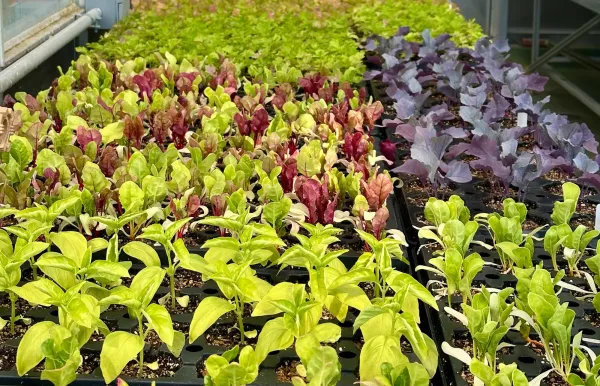
Native plants are those that have naturalized in a region over long periods of time. They are well-suited to the specific environments in which they’ve evolved, becoming integral to their local ecosystems. Native plants, having adapted with and in their natural ecosystems, bring a variety of benefits when compared to non-natives. Native pollinator species also depend on them for survival, and they require fewer synthetic inputs. Swarthmore sources native seeds from Prairie Moon Nursery, a company that specializes in seeds native to North America.
Learn more about Prairie Moon Nursery- Clustered Mountain Mint
Pycnanthemum muticum, or clustered mountain mint, is a perennial wildflower native to 60% of the United States, all the way from Maine to Florida. The mountain mint is part of the Lamiaceae family (mint family) – with the strong fragrance and flavor of spearmint – but is actually more closely related to wild bergamot or bee balm which are of the same family. Its vigorous growth and fragrance that fends off browsers allows pollinators substantial access to the plant. Based on a 3-year Penn State Southeast Agricultural Research study, clustered mountain mint is highly attractive to pollinators – it had the most pollinator visits across 86 species and varieties of native plants, and drew the most diverse group of pollinators, including bees, butterflies, syrphids, and more.
- Purple Passionflower
Passiflora incarnata, colloquially known as Maypop, or Purple Passionflower, is a passion flower native to the East coast, in a region stretching from Pennsylvania to Texas. As the name suggests, these perennials bloom with intricate, purple flowers from mid-summer to early fall, and begin to fruit with hollow, green fruit that fall when ripe and “pop” when crushed, which is the alleged origin of the name “maypop”. Passionflowers were named by missionaries first setting foot on the continent in reference to the crucifixion of Christ, or the Passion – the 10 petal-like parts represent the disciples of Jesus, the 5 stamens the wounds Jesus received, the stigmas the nails, and the fringe the crown of thorns. The Purple Passionflower, notable for its calming properties, has a long history of being used for medicinal purposes. Used in traditional Indigenous remedies for wounds and as a blood supplement, it has since been adopted by Western physicians to relieve stress, anxiety, insomnia, pain, and many other conditions. This native variety is tart and sweet with a distinctly acidic flavor similar to pineapple.
- Downy Wood Mint
Blephilia ciliata, colloquially known as Downy Wood Mint, is a variety of mint that is native to the East Coast of North America, from Georgia to Canada. Part of the mint family, this perennial doesn’t have leaves pungent enough to be used as a culinary herb, but is a pollinator favorite, blooming in clusters of pink-purple flowers from May to August. Also known as the Downy Pagoda Plant, the flower clusters stack one on top of the other, like a pagoda.
- Jacob’s Ladder
Native to the eastern US and Canada, Polemonium reptans or Jacob’s Ladder is a spring ephemeral with light blue flowers. The scientific name, Polemonium, refers to King Poleman of Pontus of the Roman Empire. Reptans, meaning ‘creeping,’ refers to this plant’s self-seeding spread. Leaflets on the plant are arranged in a way resembling a ladder, hence the common name of Jacob’s ladder – a reference to the biblical story of Jacob's dream of a ladder to heaven.
This wildflower attracts bees, moths, butterflies, and other pollinators, blooming in April and May. It thrives in partial shade and moist soils. While it used to be more common and widespread throughout this region, Jacob’s Ladder is now less widely established due to increased development and urbanization – even though it can survive in a variety of habitats. Perhaps the most apparent threat to Polemonium reptans currently is that of invasive plants, like Ground Ivy and Garlic Mustard.
- Nodding Onion
Allium cernuum, also known as Nodding Onion or Allegheny Onion, is native to most parts of the Continental US and Canada. Its common name describes the way the blooms gently droop – as if nodding off to sleep! While edible, the Nodding Onion has a bitter taste which fends off browsers. The beautiful flowers return every year thanks to the perennial nature of these plants, and they thrive with little intervention after being established. This plant is also drought tolerant and attractive to a range of native pollinators.
- Hairy Beardtongue
Penstemon hirsutus, or the Hairy Beardtongue, is a perennial wildflower native to the Northeast, known for its hairy stems for which it is named in both Latin and English. The fine hairs help the plant retain moisture and ward off some herbivores. The “beardtongue” part of its name refers to the fifth, sterile stamen covered in hairs that it has on the protruding lower petal on its flowers, resembling a white beard. Beardtongues are particularly popular amongst bees – as they burrow into the trumpet-shaped flowers, the “beardtongue” stamen acts as a comb, brushing pollen off their bodies.
- Small Skullcap
Scutellaria leonardii, or Small Skullcap, is a perennial herb in the mint family, native to the eastern United States and Canada. Violet-blue flowers with blue speckles bloom throughout May and June. Resistant to browsers like deer and rabbits and attractive to pollinators like bees, moths, butterflies, and other beneficial insects, this herb provides a great native addition to the garden.