Swarthmore’s Offsetting Strategy
Prioritize emission reduction. Emissions should be reduced directly to lower the quantity of offsets needed and to take ownership of our own climate impacts. This is in progress due to the implementation of 20X35 and the creation of a Scope 3 emissions plan.
Portfolio approach. Offsets vary in their methodology, type of emissions offset, and co-benefits offered. Including a variety of projects allows for balancing of the different project types, benefits, costs, and challenges.
Transparency. Offset purchases and project information should be available for the campus community to view.
- Portfolio Criteria and Considerations
High Quality: A high quality project is one that is:
- Additional: the project and resulting emission reductions would not be viable without carbon credit revenue
- Permanent: emission reduction is permanent or has low risk of reversal
- Robustly quantified: accurately quantifies emission reductions and avoids overestimates
- Verified: project activities are verified and validated by a third-party
- Not environmentally or socially harmful: avoids any potential negative side effects
We are looking to the Core Carbon Principles, which includes the above and additional principles, ratings from Calyx Global, an independent carbon credit rater, and Second Nature’s Carbon Markets and Offset Guidance to help guide decision making on high quality offsets.
Price: Carbon offset price varies based on the location, co-benefits offered, scale, technology, and methodology. Usually, projects that are better quality and have more co-benefits will be more expensive.
Co-benefits and safeguards: Co-benefits are social, environmental, or economic impacts from a project that are additional to the carbon emissions reductions. There should be as little risk as possible for environmental and social harms in a project.
Location: Offset projects are located all over the world. At Swarthmore, we are interested when possible in purchasing offsets that are local so that the emissions reduction takes place close to campus. In contrast, purchasing offsets for projects elsewhere can advance the Sustainable Development Goals and finance climate action in regions that experience harsher damages from climate change. Both of these goals may be achieved in a portfolio approach.
Connection to Swarthmore: Where applicable and only if meeting our criteria, working with alumni-affiliated organizations, such as Climate Vault.
Education, research, and leadership opportunities: Offset projects may present an opportunity to connect projects to the curriculum, particularly in Environmental Studies or STEM disciplines. There is also an opportunity to support newer carbon removal methodologies with offset purchases, demonstrating sector leadership and innovation.
Criteria
Explanation
Importance
High-quality
Rated highly in Calyx Global and/or a CCP label eligible project
Required for each project
Price
Based on Carbon Charge budget and internal evaluation of available funding
Required for each project
Co-benefits
Include project(s) with additional social and environmental benefits
Flexibility within portfolio
Location
Local or not, think critically about the impact the project has in its region
Flexibility within portfolio
Connection to Swarthmore
Where applicable and only if meeting the rest of our criteria, include projects with College connections or that work towards the College’s mission.
Flexibility within portfolio
Education, research, and leadership
Encourage engagement and research opportunities through projects. Determine how to include and increase carbon removals in the future.
Consider opportunities for this in the future
- Carbon Offset Purchases for FY2025 Emissions
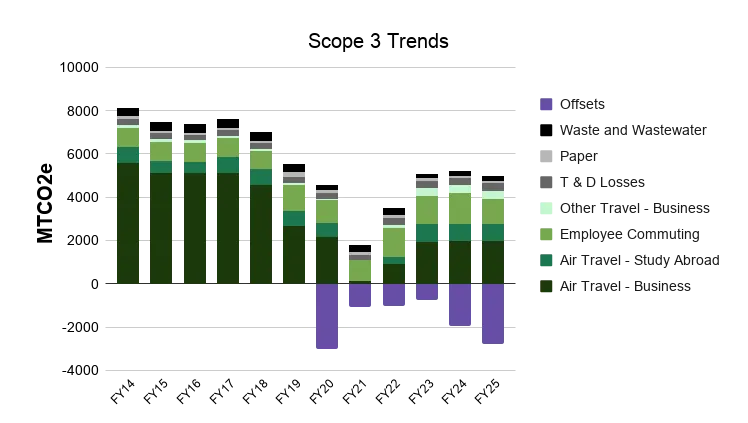
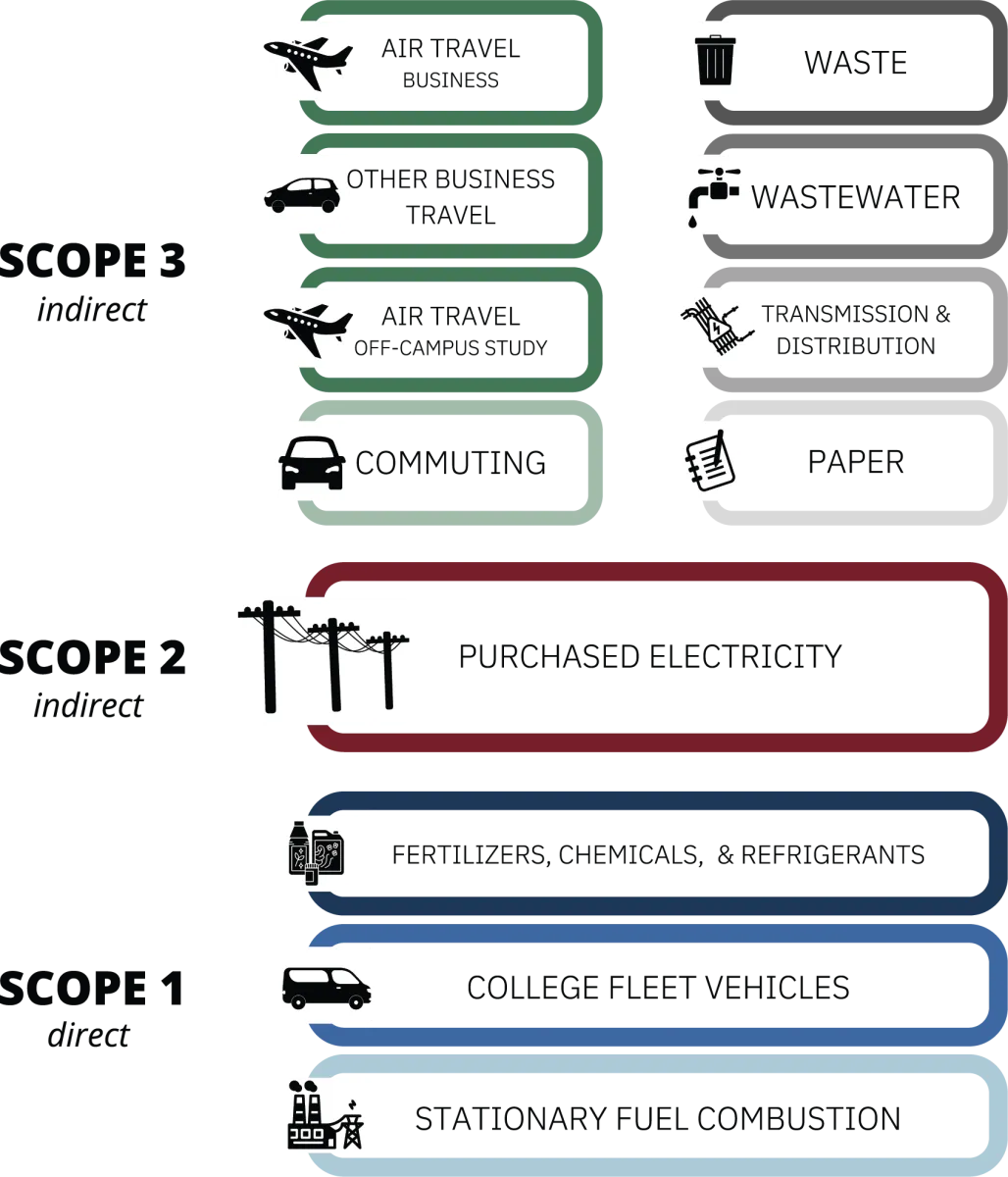
Using the above strategy and criteria, a portfolio approach that allows us to support projects that collectively contain our desired criteria while mitigating risk was used to offset emissions equivalent to our directly financed air travel and study abroad emissions.
Project
Description
Offsets Purchased
Climate Vault RGGI Permits
Northeastern States, USAClimate Vault uses regulated compliance markets to purchase and “vault” CO2 allowances, thereby preventing major emitters in those markets from utilizing them to emit carbon dioxide into the atmosphere. For Swarthmore College, Climate Vault purchases carbon allowance permits in the Regional Greenhouse Gas Initiative (RGGI), a cooperative effort among twelve northeastern states. Proceeds from the RGGI market are often invested by states back into communities, including clean energy programs, energy efficiency, and bill assistance to local businesses and communities.
123 MTCO2e
Tradewater Middle East ODS Destruction
Dammam, Saudi Arabia
Tradewater collects and destroys ozone depleting substances (ODS) from around the world. In this case, gases acquired from the Middle East are destroyed at a facility in Germany. While regulations have phased out the production of these chemicals, destruction of already produced gases is not required. This project permanently destroys CFC-12, a gas with a global warming potential 10,900 times higher than CO2, ensuring it does not leak into the atmosphere.
700 MTCO2e
Ciudad Juarez Landfill Gas to Energy
Chihuahua, Mexico
At the Ciudad Juarez Landfill, methane that would normally be released from the landfill into the atmosphere is captured and used to produce electricity. This process relies on expensive technology and would be unable to operate without climate finance.
1,676 MTCO2e
Proyecto Mirador Improved Cookstoves
Honduras
Proyecto Mirador is a non-profit that replaces cookstoves in Honduras households with more fuel efficient stoves. Construction and specialized stove parts are reliant on carbon offset revenues. Emissions are reduced and families benefit from less smoke and particulate matter in their homes.
200 MTCO2e
Total
2,776 MTCO2e
- Previous Offset Purchases
Previous Offset Purchases
Before the implementation of the new strategy and criteria for this year's offset purchases, Swarthmore College has exclusively purchased offsets from Climate Vault, to offset varying amounts of Scope 3 emissions.
FY2024
Amount Offset: 1,972 MTCO2e - directly financed air travel emissions
FY2023
Amount Offset: 745 MTCO2e - 16% of Scope 3 emissions
FY2022
Amount Offset: 1,041 MTCO2e - directly financed air travel emissions
FY2021
Amount Offset: 1,067 MTCO2e - 100% of Scope 3 emissions
FY2020
Amount Offset: 3,000 MTCO2e - 50% of Scope 3 emissions