PPF Contact
Ashley Henry
Associate Director, Lang Center for Civic & Social Responsibility
Lang Center for Civic & Social Responsibility
Contact
Links
Eugene M. Lang ’38 and the Board of Managers of Swarthmore College created the Swarthmore Project Pericles Fund (PPF) in 2005. The Fund supports groups of Swarthmore students who propose and implement social and civic action projects whose scope and sustainability will advance solutions for the issues in question and also promote recognition of students' motivation and capability to address such major issues effectively. Any team of two or more currently enrolled students may apply for grants of up to $25,000 to fund projects that are visionary in scope and groundbreaking in practice. Projects may have a regional, national, or international focus. Students whose formal proposals are accepted and receive Project Pericles Fund grants are designated Periclean Scholars.
At least one team member must take PEAC 009 Introduction to Engaged Scholarship (1 credit) and Systems Thinking for Social Change each year of the grant.
Based upon the Lang Center's commitment to Engaged Scholarship and ethical intelligence, students who are interested in applying for a grant from the Project Pericles Fund must have taken coursework that is directly relevant to understanding their issue area, unpacking the social problem, and/or designing project elements. In some cases, the project could be developed in the context of the class with the faculty member instructing the course serving as an adviser to the students as the project proposal emerges and comes to fruition. Alternatively, another faculty member—preferably one whose scholarship and expertise is germane to the project at hand—can serve as a project advisor. Students who are named Periclean Scholars and receive grant funding need group members to commit to taking relevant courses throughout the lifetime of the grant.
Note: This project grant is not in service of Swarthmore College and does not create an employment relationship between the student(s) and the College.
The Lang Center is pleased to announce three Project Pericles Fund grants for the following student social change initiatives:
BarrioEd Project is an initiative of Hannah Londoño Breithaupt ’26, Sofia Cerros Lopez ’27, Zuri Eason ’27 with faculty advisor, Prof. Edwin Mayorga (EDUC). This initiative aims to establish culturally sustaining, youth-centered afterschool sanctuary programs for Latine students in South Philadelphia to help them cope with and challenge systemic inequities in public education.
Little Dragons is a project of Yu-Jing (Laine) Chen ’28, Xi (Perxi) Pu ’27, Xintong Xu ’28, Shuyi (Alice) Zhang ’29, and Zhuoyu (Jamie) Zhang ’27 with faculty advisor Prof. Daifeng He (ECON). Based in the Greater Philadelphia area, this project builds community among local Chinese immigrants to address cultural and generational disconnections. It also supports youth from immigrant families in navigating their identity struggles by bridging Chinese and U.S. mainstream cultures.
Youth for Innocence: The Philly/Pennsylvania Initiative is a project of Bijan Taheri ’28, Elijah Dillow ’27, Elijas Davila ’27, Liliana Zavin ’29, and Nzingha (Angel) Wright ’29 with faculty advisor Prof. Keith Reeves. This project empowers a cohort of youth across Pennsylvania to combat wrongful convictions through direct casework, policy reform initiatives, and awareness-raising events.
Incumbent projects include:
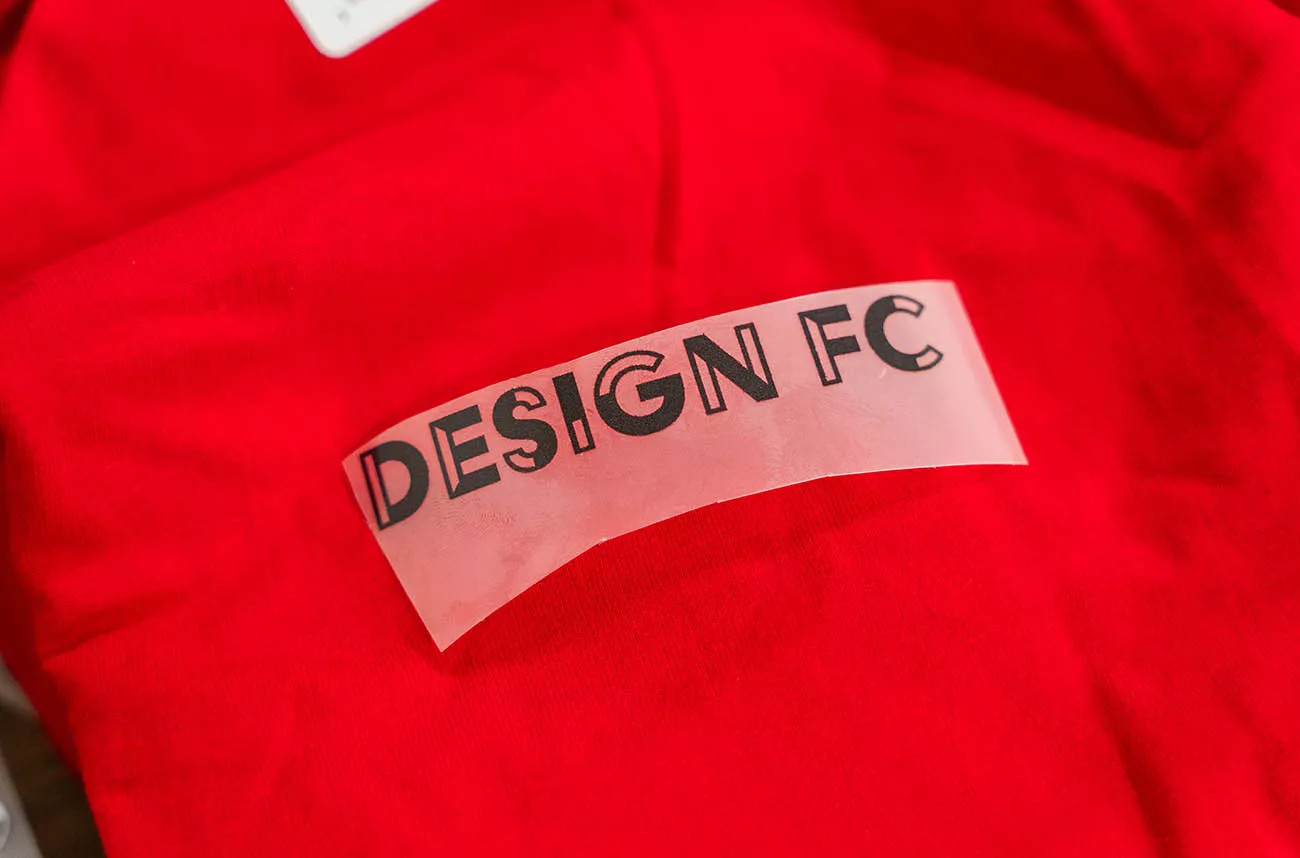
Design FC, led by Lila Travers ’26 and Joseph Eyiolowope ’26 with faculty advisor Prof. Joseph Nelson (EDUC) provides middle and high school students from Chester, PA with a creative space for self-expression through sports apparel design to foster academic success, mentorship, and professional exposure.
Stop the Bleed, led by Allan Di ’29, Daniel Wu ’26, Kayla Nicholas ’26, and Allan Nichols ‘28 with faculty advisor Prof. Lee Smithey (PEAC) has brought evidence-based hemorrhage-control training to teachers and staff of the Chester Upland School District to prepare them to respond to traumatic injuries to teachers and staff.
Thinkers Academy, led by Sylridge Wah ‘27 and Shannel Owusu-Agyei ’28 with Prof. Kathryn Riley (CHEM), provides supports high schoolers in Buchanan, Liberia, seeking to reduce educational gaps and decentralize learning opportunities by combining arts education, digital literacy training, and team-based community projects to foster self-expression and civic engagement.
View past PPF grant recipients.
Associate Director, Lang Center for Civic & Social Responsibility
Lang Center for Civic & Social Responsibility
Design FC (DFC) seeks to address the lack of engaging and creative spaces for youth in Chester, PA. More specifically, the project is geared towards middle and high school-aged students from Chester, a predominantly Black community that has been historically disadvantaged by systems of racial and economic injustice. This project offers students a safe and creative space for self-expression and autobiographical storytelling through the design of sports apparel and other creative mediums, with a particular emphasis on addressing systemic barriers to youth involvement in Chester’s flourishing arts scene. In addressing the apparent lack of artistic programming in the Chester Upland School District, our project seeks to unleash the creative and transformative potential of art and design to foster positive performance in the classroom, meaningful relationships between students and mentors, and expose students to industry professionals within the Chester community and beyond.
In Liberia, secondary education has struggled due to post-war and post-epidemic effects: only 3% of people who attended formal schooling graduate high school, and 4% go on to post-secondary education (Education Policy Data Center (EPDC) 2018). Thinkers’ Academy will target high school students between tenth and twelfth grades in Buchanan, Liberia, where after-school programs are limited in number. Through Thinkers’ Academy, we hope to achieve these goals: 1) Harness the creativity skills of students through arts education and the teaching of digital literacy skills to address these gaps in secondary education in Liberia. 2) Offer students a safe space for self-expression and reflection geared toward promoting collaboration, networking, community engagement, and improving learning outcomes. Finally, our overarching goal is to 3) decentralize educational opportunities in other parts of Liberia that are not Monrovia, where after-school and enrichment programs are clustered and 4) create community-engaged scholars through a digital literacy-based education and inquiry-based learning.