Professor Allison Miller (Mathematics & Statistics)
Professor Allison Miller (Mathematics & Statistics)
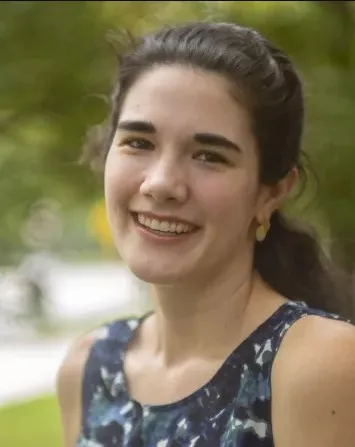
Professor Oliva Sabee (Dance)
Professor Olivia Sabee
Title: ‘Our Graceful Gallic Allies’: Dancing Liberty in the Age of Revolutions
Thursday, October 23, 2025
4:30 pm
Location: Singer 033
In the 1790s, the French and Haitian Revolutions brought waves of French immigrants to the east coast of the United States, among them several groups of dancers. Focusing on the practices and performances of three prominent dancers — Alexandre Placide, Suzanne Theodore Taillandet Douvillier, and Jean-Baptiste Francisqui — this talk will introduce the concept of pantomime ballet, a widely popular European performance form, and analyze how it was transformed via first, the Caribbean colonial performance circuit, and second, its new U.S. context, where Francisqui created numerous politically-themed works, such as The Americans and the French at the Siege of York-Town; or America Preserved (1795).
In both Charleston and Philadelphia, as had also been the case in France, contemporary discourses around civilization and nature, liberty and despotism, shaped the reception of these works. Yet the dancers’ distinctive embodied histories, notably their expertise in acrobatics and the impersonation of Afro-diasporic peoples, created a divergent reading of these dances in which the minuet, a symbol of the aristocracy, came to represent freedom rather than carefully cultivated constraint.
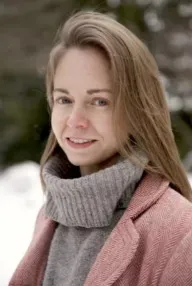
Professor Alex Torra (Theater)
Professor Alex Torra (Theater)
Title: Theater as Civic Practice: How to Fortify Ourselves for an Uncertain Future
Thursday, November 20, 2025
4:30 pm
Scheuer Room, Kohlberg Hall
Abstract: Over the last year, my creative research has taken shape through six theater projects, each one a live experiment in how we might keep showing up — to each other, to our communities, and to the big challenges of our modern times. Working alongside collaborators and audiences, I’ve been asking a simple but demanding question: how can theater teach us to meet uncertainty with clarity, courage, and care? At the center of this practice is a desire to create theater that can do more than entertain; it can invite us to reflect, reckon, and repair. In the process, perhaps we can build the tools to cultivate a hopeful yet clear-eyed relationship with the complexities of our current moment.
The projects I’ll share emerge from collaborations across many lived experiences and identities, including my own as Latine and queer. They dig into questions of belonging, safety, spiritual connection, resilience, and what it takes to keep faith in community when so much feels fragile. Each project is both performance and experiment, a rehearsal for being human together.
Over our 45 minutes together, we’ll move through these works — part story, part reflection, part interactive experience — tracing the intersections between process and practice, personal inquiry and collective engagement. It’s an invitation to consider how we sustain creative and civic life amid exhaustion, fear, and change, and how theater might help us imagine a way forward.
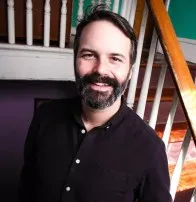
Professor Nathalie Anderson (English, Emerita)
Professor Nathalie Anderson (English, Emerita & former Director of the Creative Writing Program)
Thursday, December 4, 2025
4:30 pm
Scheuer Room, Kohlberg Hall
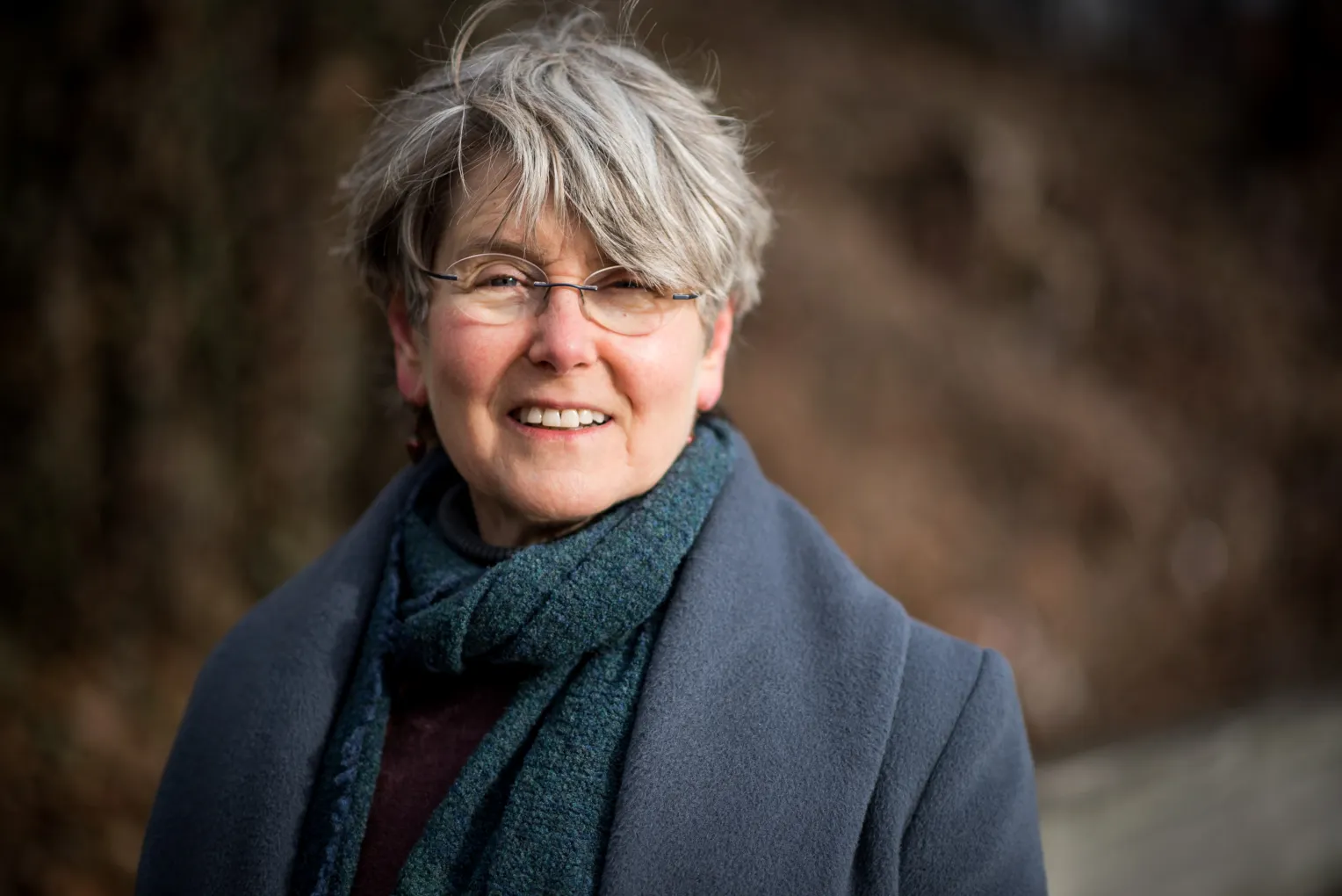
Professor Vivian Turong (History)
Professor Vivian Troung (History)
Thursday, February 26, 2026
4:30 pm
Scheuer Room, Kohlberg Hall
In 1972, Edward J. Stoll, Deputy Inspector of the New York City Police Department Intelligence Division, warned about the growing unrest in Chinatown. “Prior to 1970,” he wrote in a report to his commanding officer, “demonstrations and crime were practically unknown in Chinatown and among the Oriental population. However, since then actions by Orientals have come to the attention of law enforcement agencies at ever increasing rates.” Stoll promoted the model minority narrative of Chinese Americans as a typically apolitical, self-policing immigrant community that had been roiled by the twin threats of protests and youth gangs.
In my talk, I analyze how the NYPD policed Chinatown gangs and Asian American activist organizations as intersecting parts of the same “Oriental problem” in 1970s New York City. I examine the NYPD Intelligence Division records, otherwise known as the Handschu files, to show how the surveillance and policing of these groups constituted a form of counterinsurgency to manage the political threat they posed and restore the neighborhood's status as law-abiding and orderly. Examining the policing of Chinatown, I show how the model minority narrative was not a foregone conclusion by the 1970s, but one that required ongoing enforcement.
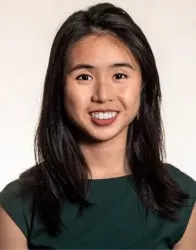
Professor Adrienne Benally (Environmental Studies)
Professor Adrienne Benally (Environmental Studies)
Thursday, March 26, 2026
4:30 pm
Scheuer Room, Kohlberg Hall
In 2013, the Navajo Nation purchased a coal mine on the Navajo reservation as an unprecedented strategy of economic development. While coal development is a key source of revenue for the tribe and situates the Navajo Nation as a key stakeholder in domestic coal production, the purchase remains a problematic decision. Navajo people are a place-based culture with an inherent spiritual relationship with the land and have long endured the harms of resource extraction on their homeland. Further, with the current U.S. domestic energy policy, Navajo people are deeply concerned about federal environmental deregulations and the focus on American Indian tribal energy resource holdings.
As a Navajo tribal member my research examines how the Navajo Nation has come to privilege economic and political incentives over cultural integrity and the health and well-being of the people and the environment. In my talk, I analyze the power of colonial and hegemonic discourses influencing the Navajo Nation in coal production as a form of tribal economic development and under the pretense of advancing tribal sovereignty. What is clear is that the contemporary positionality of the Navajo Nation is dynamic and complex, and a negotiated and contested space of cultural contradictions and contemporary tribal identity.
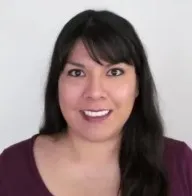
Professor Jody Joyner (Art)
Thursday, April 16, 2026
4:30 pm
Scheuer Room, Kohlberg Hall
At the center of my creative practice lies a deep belief that ideas manifest through encounters with the physical world. In my work in sculpture and installation, I am especially interested in materiality as a site of meaning. I probe the environmental impacts and social contexts of materials, transforming discarded things into novel forms through a kind of modern day alchemy. Throughout this talk, I will share recent and current work in a variety of scales and contexts— sculpture made from objects I encounter in the built environment as well as collaborative installations which respond to particularities of place.