Colloquium Series

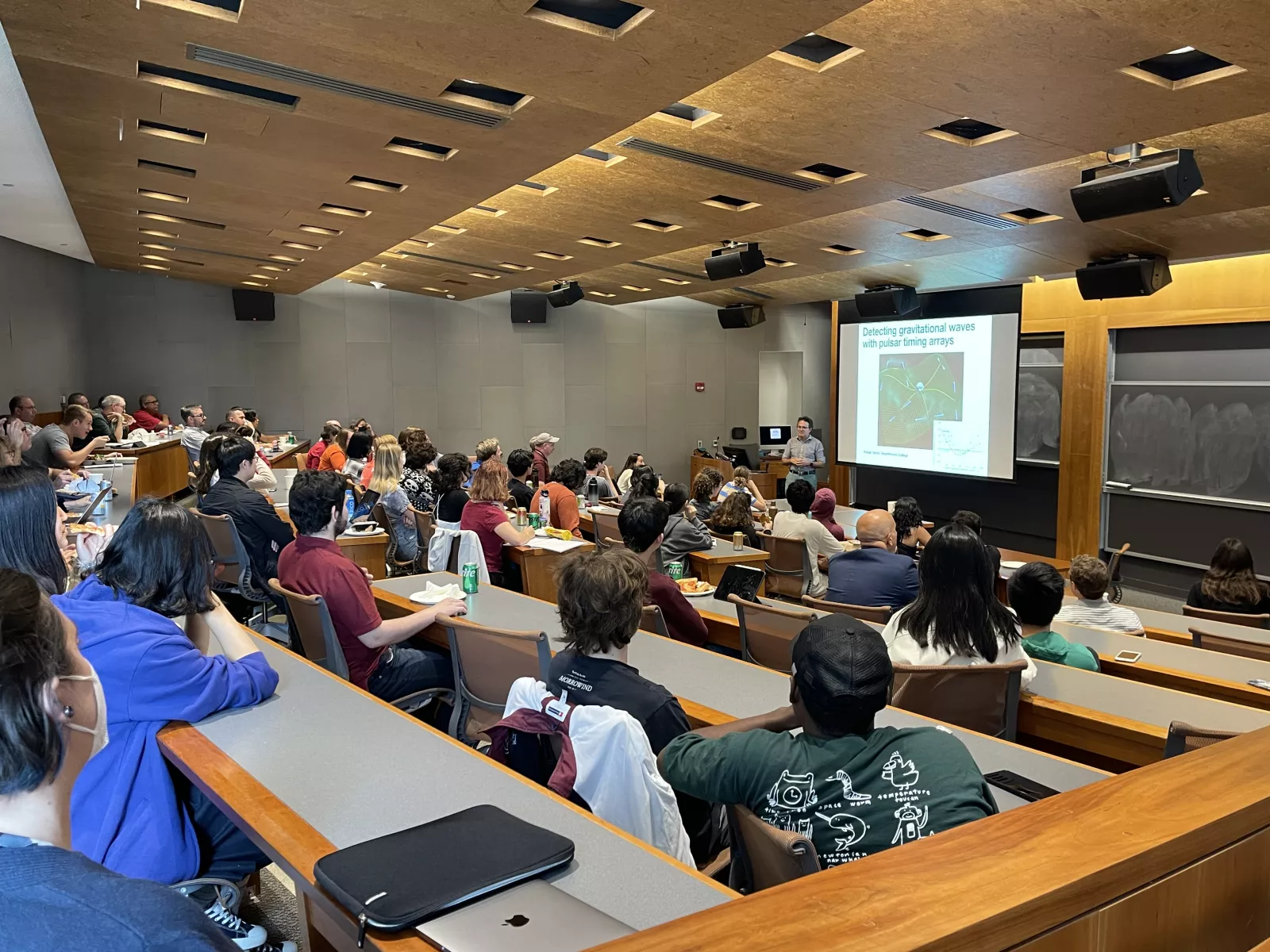
Tristan Smith colloquium on Sep 22, 2023

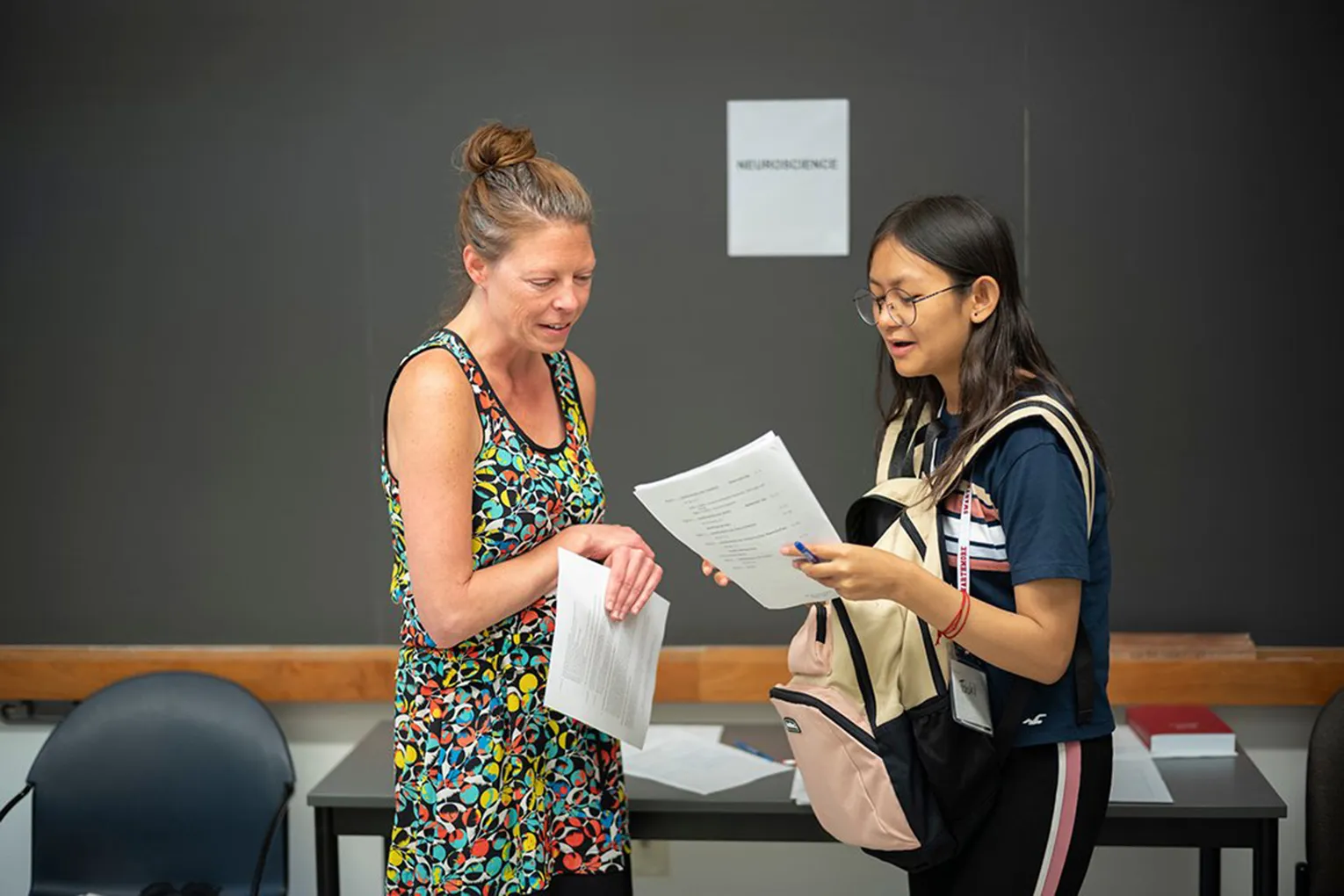
Department colloquia usually meet on Fridays at 12:45 PM (unless otherwise noted) in the Cunniff lecture hall (Science Center 199). These research talks are aimed at a broad audience of undergraduate physics, astrophysics, and astronomy majors. Visitors are welcome.

A casual lunch (such as pizza) is served at 12:25 PM in the lobby outside room 199.

Cunniff Hall, also known as Science Center (SC) room 199, is not in the Physics Department but rather is on the other side of the Science Center, near the Chemistry Department office, and almost directly under the observatory dome (making it easy to locate from outside the Science Center). In fact, to find your way to Cunniff Hall, you can follow these directions to the observatory and at the last step, you'll find the room directly opposite the elevator, on the first floor.
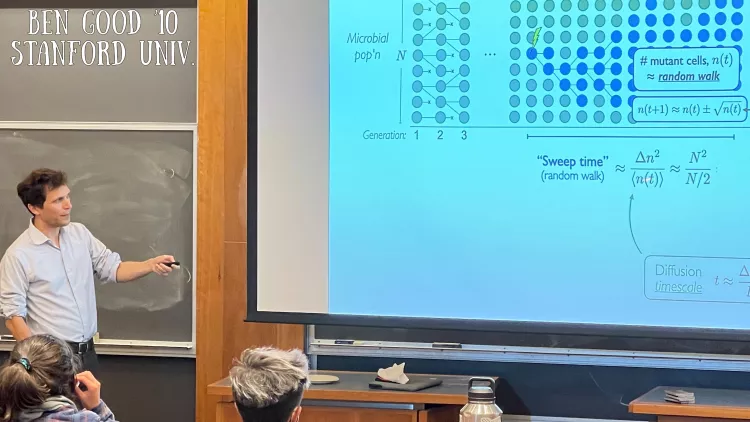
Colloquium series: Dr. Kimmy Wu speaks on February 11, 2020

Spring 2026 Colloquium Schedule

Unraveling the Physics of Knotted Materials

Elizabeth Dresselhaus (UC Berkeley)
Friday, February 6, at 12:45

Knotted materials are ubiquitous in our everyday lives, especially in February in the Northeast. Yes, I am talking about your sweater! But that is just the beginning. Mathematics, mechanics and more collide in the study of knotted materials with physics. In this talk, I will share the interwoven history of physics and knot theory and then survey the emerging field at their intersection, which encompasses possibilities ranging from “smart clothing” that could transform the lives of people living with disabilities to a cosmological theory of the matter-antimatter asymmetry. Then I will focus on the mechanical behavior of knitted fabrics, a material whose presence in our everyday lives comes from millennia of artisanal knowledge and collaboration. I will share our recent work demonstrating that knitted fabrics remember how they have been stretched, specifically that they exhibit return-point memory, a phenomenon originally discovered in ferromagnets. I will also describe a phenomenological model we developed for this phenomenon, inspired by plasticity theory from mechanics, and a theory for the origin of memory in these materials. Bring your favorite sweater and get excited to learn new ways it relates to your courses and research.

Scott Franklin (Rochester Institute of Technology)

Scott Franklin (Rochester Institute of Technology)
Friday, February 20, at 12:45

Title and Abstract TBA

Sarah Burke-Spoalar (West Virginia University)

Sarah Burke-Spoalar (West Virginia University)
Friday, March 20, at 12:45

Title and Abstract TBA

Lamiya Mowla (Wellesley College)

Lamiya Mowla (Wellesley College)
Friday, April 3, at 12:45

Title and Abstract TBA