Teaching Spotlight: Ben Geller (Physics & S3P)
April 2026
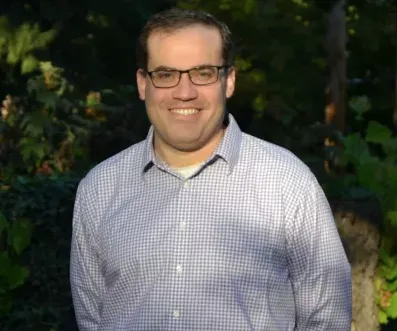
Ben Geller, Associate Professor of Physics, was nominated for the TLC's Teaching Spotlight.
Caroline Cheung, TLC program coordinator, sat down with Ben in March 2026 to learn about his approach to physics education and belonging. This profile was developed from that interview.
Ben Geller, Associate Professor of Physics and Director of the Swarthmore Summer Scholars Program (S3P), frames both his research and classroom pedagogy around the idea that physics classrooms are about people more than they are about equations.
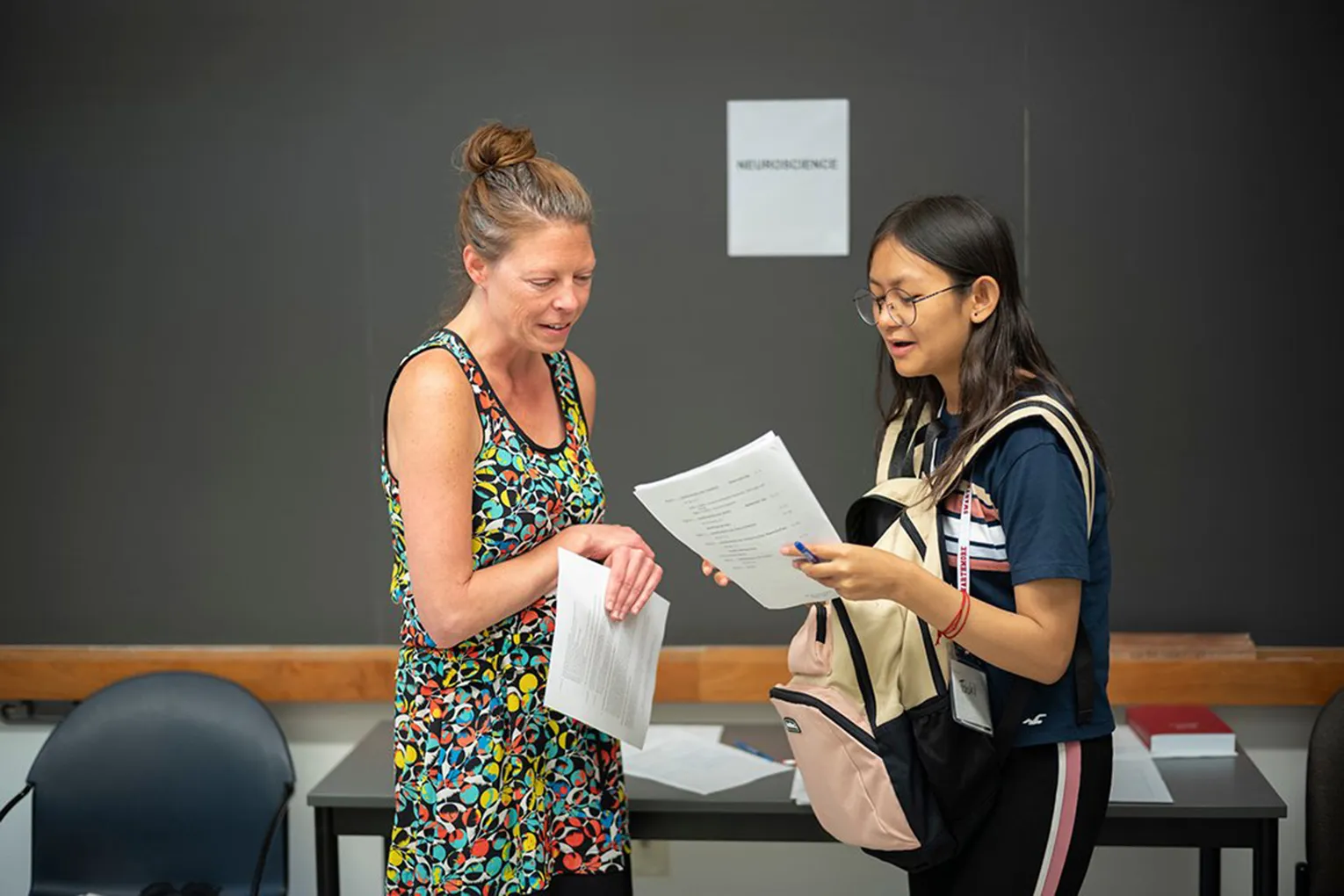
For Ben, teaching physics has never been just about training future physicists. In fact, most of his students aren’t physics majors at all, and that’s exactly what excites him.
“The majority of my teaching is with students for whom physics is not their primary interest,” he explains. “I see that as a feature, not a bug.”
Without the pressure to cover everything a future physicist might need, his courses focus instead on what makes physics meaningful to his students. He looks for ways to connect concepts to students’ existing interests—whether that’s biology, medicine, or societal problems—so physics becomes something relevant and tangible rather than abstract and distant. The result is a classroom that prioritizes curiosity and connection over coverage.
“It’s a challenge that I like,” he says, “to work with students who haven’t previously seen physics as personally meaningful—and to support them in developing a sense that physics can actually be relevant to them and to their primary interests”
That focus grew out of his own path. As a graduate teaching assistant, he often taught non-majors and quickly realized he loved teaching as much as, if not more than, research. Midway through graduate school, he made a difficult decision: he pivoted away from experimental biophysics to focus on research that explores how students learn in the physics classroom.
“It was scary,” he recalls, “because you invest so much in one professional path, so that making it to the end of that path starts to become entangled with your self-worth and your identity, and then you change direction and pursue something new that is more in line with who you are and what you’re passionate about. I frequently think back to that transition when talking to students who are grappling with similar decisions about their professional futures. I tell them that it’s never too late to make a change that they feel brings their work life into better alignment with what they care most about and with what makes them excited as a human being. .”
That experience continues to shape his teaching and his research. Today, his scholarship has a distinct emphasis. While much of physics education research focuses on conceptual learning gains, Ben is equally—if not more—interested in the affective dimension of learning: how students feel, what makes them engaged, and whether they feel like they belong in a physics classroom.
“Students can’t learn effectively if they feel like they don’t belong in the classroom, or if they aren’t at least somewhat excited about what they are studying” he says.
In practice, that means making the emotional dimensions of learning visible. Students are invited to reflect not only on what they understand, but also on their affective experiences, whether that’s confusion, frustration, anxiety, joy, or moments of clarity. Ben is open about his own intellectual and emotional struggles, modeling vulnerability and “failing forward” as part of the process.
“I want to know how students are feeling, not just what they’re thinking,” he says, “and I want students to know that faculty have also struggled. The struggle and the confusion are normal, and in fact essential.”
At Swarthmore, where students are eager to make connections across disciplines, this approach resonates. But it also comes with pedagogical challenges when introductory or foundational courses include students with a wide range of physics and math backgrounds.
Ben’s response to supporting students of all backgrounds and positionalities is a simple philosophy: high expectations paired with high support. Peer assistants (“Photons” in the Physics and Astronomy department) play a key role in helping build a classroom culture where asking for help and support is expected. Students are reminded that confusion is not failure, but a natural part of learning and that growth and success require making mistakes.
“Swarthmore admits extraordinary students, each with their own personal stories and goals,” he says. “They need support as they step into this environment.” And Ben is adamant that this support should be holistic across the campus community.
In fact, that broader ecosystem is something Ben engages with not only through physics teaching, but through programs like the Summer Scholars Program (S3P), which he directs, and through a new Quantitative Skills course that he is co-teaching with Prof. Eva-Maria Collins in Fall 2026.
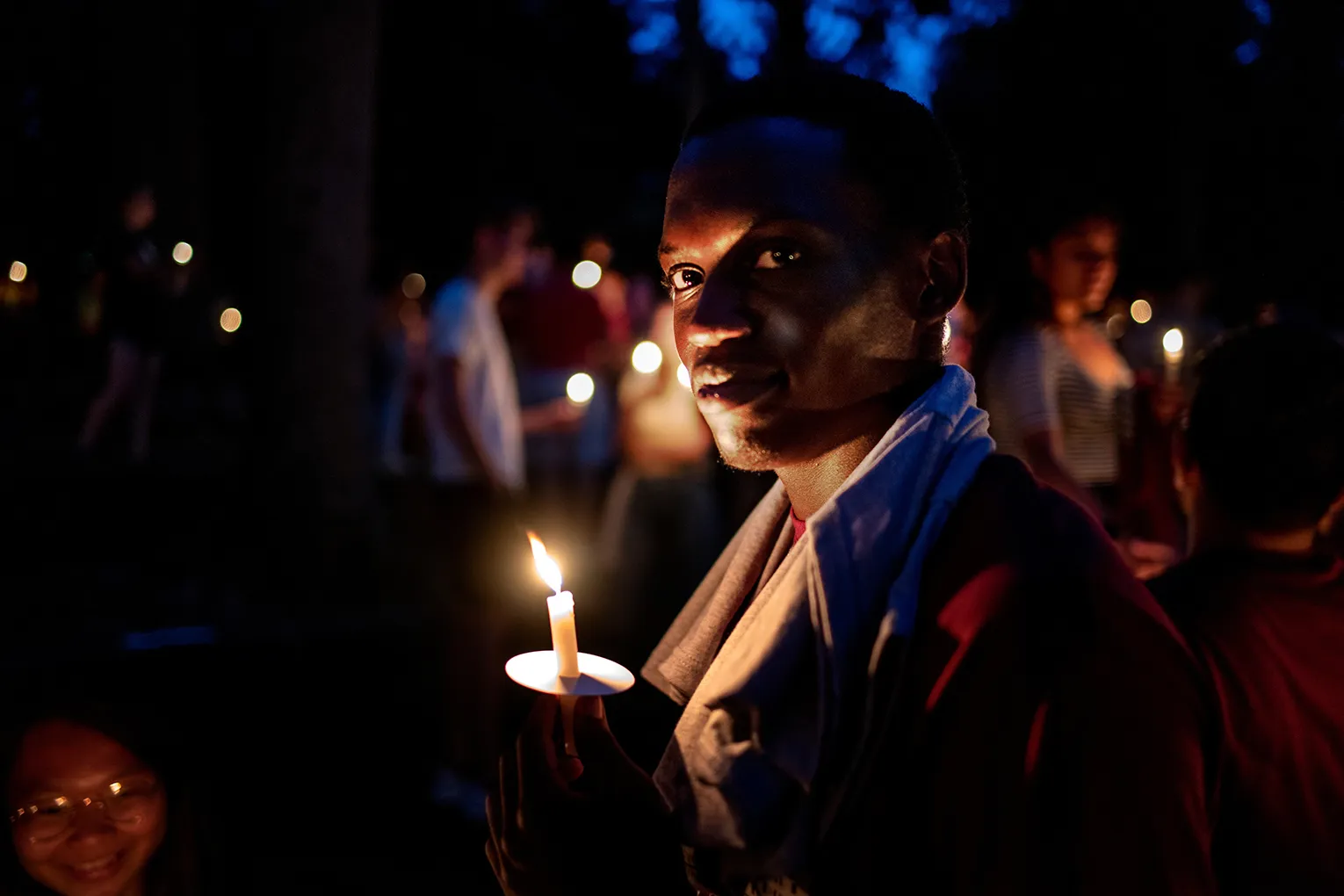
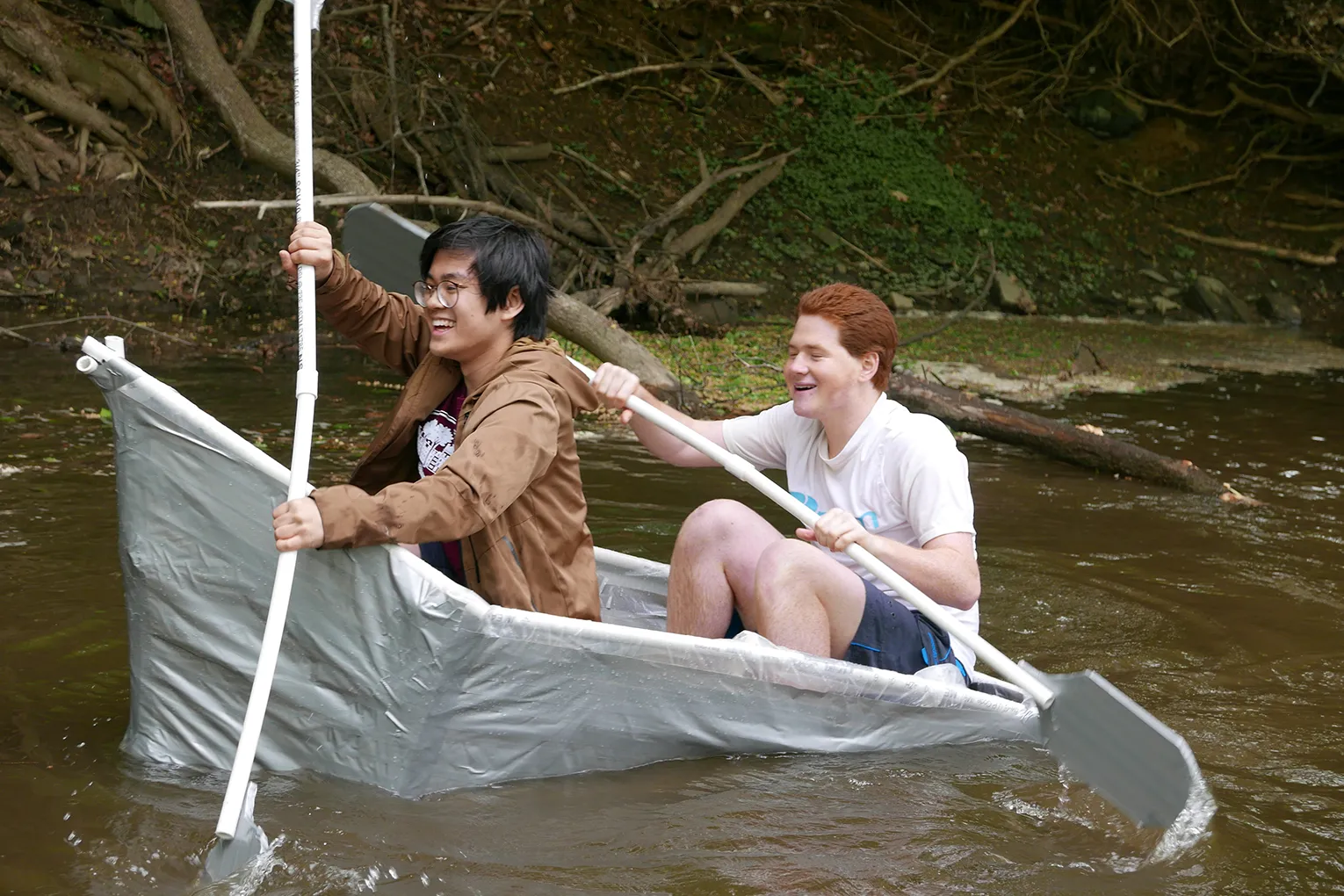
Each summer in S3P, he works closely with students from under-resourced backgrounds who are preparing to begin their journeys at Swarthmore in NSE fields “It’s an annual reminder,” he says, “about how lucky we are at Swarthmore to getto work with incredibly talented and dedicated students……and also that we are asking them to step onto a train that can move very fast.”
For many of these students, the transition can be daunting. Building relationships early, creating support networks, and affirming their place in the academic community are critical.
“Connection is the key, whether it’s connection across disciplines or connections between people” he says. “And it’s something we as a campus community have to be intentional about building.”
Even now, Ben continues to refine his teaching: by observing colleagues and experimenting with different approaches learned within a community of educators. He works to balance active learning with students’ sense of what is comfortable, always aiming for a classroom that is both challenging and welcoming.
In the end, Ben’s teaching philosophy circles back to a single idea: connection. Connection between academic divisions on campus; between physics and other disciplines; between curricular concepts and personal meaning; between students and each other; and perhaps most importantly, between students and themselves—their identities, their confidence, and their sense of belonging.