An Archive of a Body: The Use of Archival Footage and the Archival Form in Todd Haynes’ Superstar: The Karen Carpenter Story
Essay by Jayho So '26 for Film & Media Studies Capstone in Spring 2026
Superstar: The Karen Carpenter Story (Haynes, 1987) is, to put it mildly, an unconventional take on a celebrity biopic. It is primarily staged with the use of puppeting Barbie-like dolls to represent the characters in the place of live actors, though at times it switches to using live-action footage of hands and faces when characters are singing or performing actions. At times it totally switches from the narrative structure of a celebrity biopic to a more impressionistic non-narrative mode of a documentary about the 70’s (where the action of the story takes place, and whose sociopolitical tumult provides the thematic backdrop of the film) or about anorexia, the disease that consumed the titular performer’s life. This unorthodox structure is in fact a carefully crafted decision. Through the use of various formalistic devices, Superstar highlights its own artifice as a constructed cinematic object, and it uses this artifice to structure itself as a cinematic archive that exceeds the narrative and thematic boundaries of the traditional biopic.
Possibly the strangest of Superstar’s formalistic devices is the fact that, at several points in the film, the film cuts away from the action of the story to punctuate it with grainy footage of corpses and the violence of war. It stands out as a particularly jarring creative choice in a film full of creative choices designed to be jarring, and its conspicuous inclusion may leave audiences wondering what it all means, or why director Todd Haynes has made this choice in the first place.
According to film scholar Jaimie Baron, however, viewers asking these questions may be missing the forest for the trees. According to Baron, what she learned from film scholar Vivian Sobchack was that film analysis has to take into account the subjective experience of the audience when watching said film, a topic of study called phenomenology. When it comes to the use of archival footage in a film, meaning is not derived from where and when that archival footage was taken but rather the emotional and intellectual effect it has on the viewer. In her words
the text does not exist in isolation from the viewing experience; indeed, the text is co-constituted in the viewing experience. [...] I discovered that it made sense to me to define “archival footage” not in terms of where the footage happened to be located before it was appropriated or into what kind of film it was repurposed, but rather in terms of the viewer’s experience of the footage. (Baron)
In other words, the object of a film is not constructed by the film itself, rather it is constructed by the emotional reaction that an outside audience has to the images depicted in the film, the construction of the film being the method by which that reaction is created and contextualized. The feeling created by viewing what a film depicts is itself what it “means”.
So what emotional effect do the brief flashes of death and military violence have in Superstar? As stated before, the sudden cuts to these visuals are emotionally jarring, momentarily taking the audience out of the reality of the film’s narrative to a piece of seemingly unrelated, disturbing non-narrative imagery. They interrupt the experience of viewing the film, causing the audience to lose their focus on the literal events and instead to ponder what they are seeing and why they are seeing it. Note that these images are in live action, further breaking from the primarily puppet-based reality of the film. In some scenes they are used to punctuate a moment of horror, such as the scene in which the Carpenters are signed to A&M Records, which is framed and scored as a sort of figurative deal with the devil and the beginning of the end for Karen Carpenter.
In other times, however, these shots are cryptically inserted into moments that on paper should be more peaceful or positive, such as the montage sequence in which the Carpenters are first taking off on the record charts. In these instances the depictions of corpses serve to intentionally dampen and twist the happy mood, to serve as a sort of reminder that even during these good times there are underlying issues, tensions, and disorders that bubble up to the surface and will eventually totally consume the central figure by the end. In any case, these flashed depictions of death are a tool of evoking horror in the audience, deliberately shocking the audience to take them out of the film’s reality, and juxtaposed against the primary reality of the film they help to highlight the film’s overall artifice.

The other part of Baron’s main argument regarding archival footage is that since a film is defined by an audience’s perception of it, what primarily defines footage as “archival” is actually also determined primarily by the audience’s experience of that footage. As she describes it, “the archival became, for me, a matter of the experience of a given viewer watching a film [...] and recognizing the temporal disparity between different images within the same film” (Baron). Regardless of whether or not the footage has actually been sourced from an outside source or from the filmmaker’s personal archive, or is even actually footage shot by the filmmaker for purpose of being used in the film that is merely dressed to superficially resemble “archival” footage, it is the audience’s perception of the material as “archival” – something removed from the reality of the film by time or format – that actually makes the footage archival.
Using Baron’s logic, we can argue that the entirety of Superstar constitutes an archive: no matter whether the footage is sourced from outside archives or constructed wholesale, if it has the aesthetic effect of an archive, it is archival. As stated before it is only partially a traditional narrative biopic: it frequently gives way to other modes of filmmaking, particularly documentary or montage. The documentary format gives an air of factuality that a narrative film does not usually have, and by transforming Superstar’s format into that of a documentary film at these points it is able to incorporate ideas of political unrest and tension (the segment about the Carpenters’ place as calm and normative amidst a rebellious and confrontational counterculture), the perception and legacy of celebrity (the talking heads interviews with the people about the Carpenters’ legacy), and the mentality behind anorexia (the sequence about anorexia and the difficulties with treating it from the outside), all of which are significant to the underlying themes of the film but would normally be outside the realm of its narrative format.
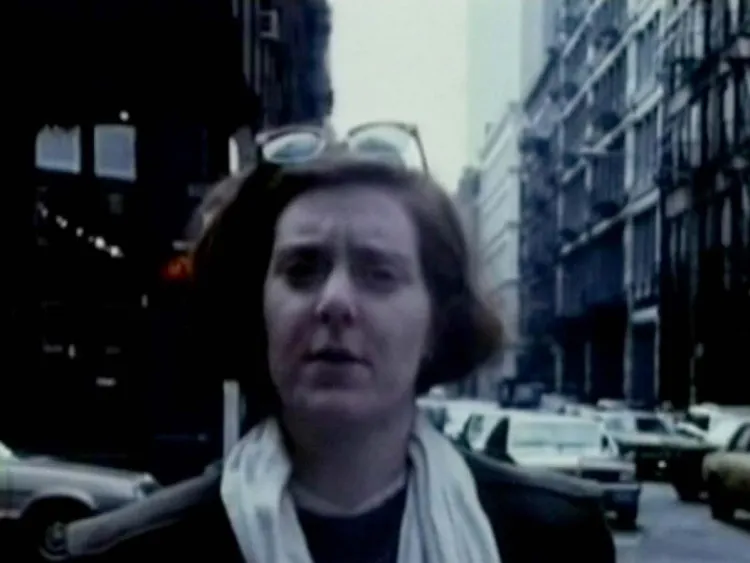
On the other hand, when the film uses montage in the documentary sequences, it incorporates period news footage, TV footage, war footage, and other footage. Though this footage may be sourced from outside archives, it is not meant to be totally neutral or even necessarily factual in its use. Instead, this footage is intentionally and artificially curated to create in the audience an emotional experience of the context surrounding the Carpenters. They even include strange black-and-white shots of a doll spanking another doll, footage that was undoubtedly shot for the purpose of being used in the film but are shot in such a different way and integrated so jarringly into the film that by Baron’s argument we would define them as archival. The audience, already primed to view the film as a constructed object, experiences the film in terms of the individual images it presents, trying to create meaning by linking these images and their connotations together.
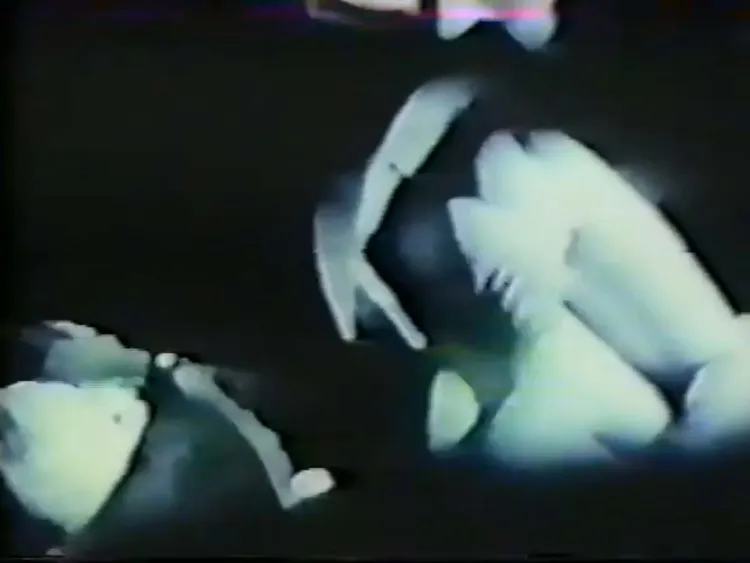
The film becomes less of a narrative biopic and more of a complex cinematic collage, and this unconventional structure that brings together disparate elements gives the audience the impression of an “archival” experience, a collage or montage that captures a moment or moments in history. In Superstar’s case, this is the 70’s, a time of war and political unrest for America and the world, a time of booming success for the Carpenters as a duo, and a time of disease and decay for Karen Carpenter. Even the aforementioned use of death footage – footage sourced from the Vietnam war – places the film and Karen Carpenter’s narrative into that moment in history and draws a parallel between the tumult in the outside world and the tumult within Karen Carpenter. This experience means that the film is in fact an archive, a time capsule that truly captures in the minds of the audience the disparate elements that coagulate into the distinct feeling of a moment in history, both the clean and superficial image and the decaying underbelly underneath.
Superstar uses the biopic of a person who lived in a moment of time and makes her story into a sort of encapsulation or microcosm of all the facets of that moment in time, and in doing so serves as a critical and retrospective archive of that era of time. By provoking emotional reactions in its audience to highlight its own formalistic artifice and by freely integrating separate modes of filmmaking into its structure to tie the film’s narrative into greater underlying themes, Superstar becomes an archive of all of these subjects: of history, of celebrity, of war, of disease, of a breakdown, of tumult, of decay, of a body.
Bibliography
Baron, Jaimie. “9. From Meaning to Effect: Writing about Archival Footage.” Writing about Screen Media, ROUTLEDGE, New York, New York, 2020.