- Online Digital Collections
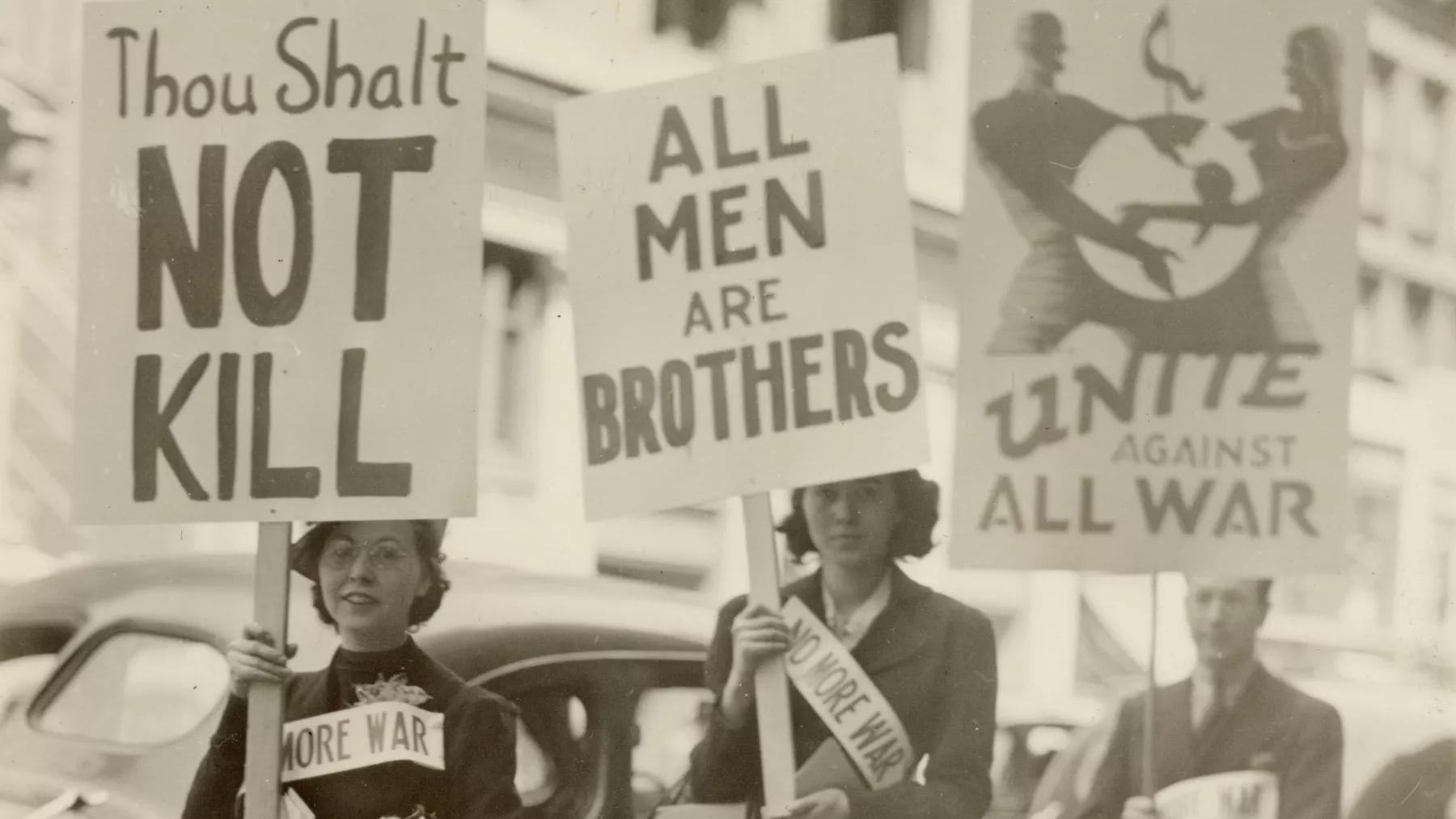
Peace Collection staff has created several digital exhibits over the years, such as
A selection of items from our collections have been digitized and are viewable on the TriCollege Libraries Digital Collections site. Highlights include:
- Jane Addams Collection
- Button, Pin, and Ribbon Collection
- E. Raymond Wilson Collection of Japanese Lantern Slides
- Mohandas K. Gandhi Correspondence
- Peace Collection Ephemera
- Photographs
- Soviet posters
- War Resisters League Publications
Additional materials––including selected digitized Sound Recordings and Moving Images from our collections––are available on the Internet Archive.
There are a few things in other places, so if you don't see what you're looking for, email peacecollection@swarthmore.edu for help.
- In the Library
Most Peace Collection materials have not been digitized. We would love to welcome you for a visit! You can find information on how to schedule an appointment on our Visit Special Collections page.
Search our catalogs before your visit:
- Archives and Manuscripts: find archival materials and manuscripts, read collection descriptions and summaries, and learn of any limitations on particular collection access.
- Tripod: find books and periodicals. After entering your search, you may refine your search to items under "Library" to Swarthmore: Peace Collection.
The Words We Choose
Occasionally, you may come across language in our finding aids, catalog records, digitized collections, blog posts, exhibitions, or elsewhere that you find offensive or harmful. You can learn more about how we address these terms in our reparative language statement.