Swarthmore to Award Honorary Degrees to Leaders in Higher Education, Arts, Justice, and Sustainability at 154th Commencement
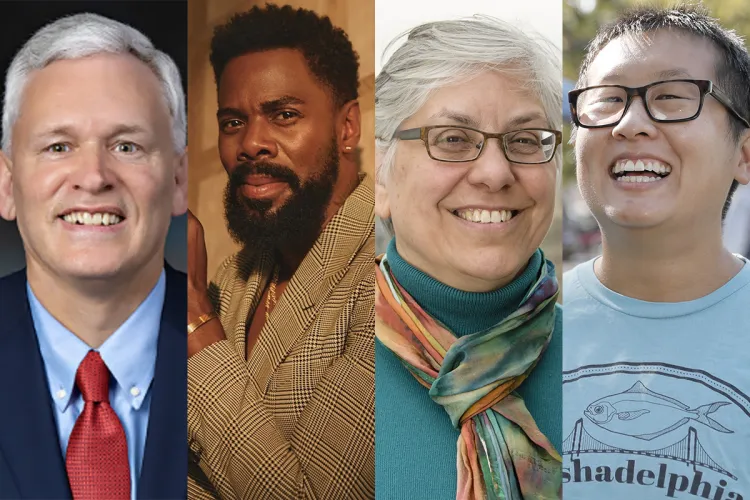
From left: Jonathan Alger ’86, Colman Domingo, Judith Sandalow ’84, and Talia Young ’01.
During Swarthmore College’s 154th Commencement ceremony on May 24, President Valerie Smith will award honorary degrees to college president Jonathan Alger ’86, multi-talented performer Colman Domingo, children's law advocate Judith Sandalow ’84, and environmental educator Talia Young ’01.
Jonathan Alger ’86
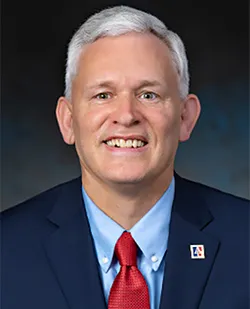
Jonathan Alger ’86 is a nationally recognized scholar of higher education policy and law whose career has been defined by a deep commitment to civic engagement, academic freedom, and access to excellence in higher education. A graduate of Swarthmore College, where he earned his B.A. with High Honors and was elected to Phi Beta Kappa, Alger went on to receive his J.D. with Honors from Harvard Law School. In July 2024, he became the 16th president of American University, following 12 years as president of James Madison University.
During his tenure at James Madison University, Alger led the creation and implementation of a strategic plan centered on engaged learning, community engagement, and civic engagement. Under his leadership, JMU expanded initiatives supporting first-generation students, launched a comprehensive Task Force on Racial Equity, and completed a highly successful fundraising campaign. The university achieved R2 national research designation and increased external research funding by 92% from 2019 to 2023. Alger also helped elevate JMU’s national profile across academics and athletics, guiding the institution through a period of significant growth and transformation.
Earlier in his career, Alger served as senior vice president and general counsel at Rutgers University and as assistant general counsel at the University of Michigan. At Michigan, he played a key leadership role in two landmark U.S. Supreme Court cases involving diversity and admissions, coordinating one of the largest amicus brief coalitions in Supreme Court history. He also worked for the American Association of University Professors and the U.S. Department of Education’s Office for Civil Rights, building a career at the intersection of law, public policy, and higher education governance.
A respected teacher and scholar, Alger has taught courses in leadership, law, higher education, public policy, and diversity, and has been published widely in journals including The Journal of College and University Law. He currently serves as immediate past chair of the board of the American Association of Colleges and Universities and on the Knight Commission on Intercollegiate Athletics and is a member of the Council on Foreign Relations, Council on Competitiveness, and American Academy of Arts and Sciences.
In 2019, Alger received the ALL IN Campus Democracy Challenge Standout Campus President Award, recognizing his national leadership in advancing democratic engagement on college campuses. In September 2025, he returned to Swarthmore to deliver a SwatTalk titled “Higher Education at a Crossroads: A President’s View from the Nation’s Capital,” reflecting on both the challenges and enduring promise of higher education.
Throughout his career, Alger has championed the idea that universities are not only centers of scholarship but also vital civic institutions — places where intellectual rigor, inclusive excellence, and democratic purpose meet.
“I was deeply touched to receive the call about this honorary degree from my alma mater. At Swarthmore, I experienced firsthand the educational value of diversity through interactions with amazing peers from all over the country and world, and was enriched by the mentoring of devoted faculty who instilled passions for lifelong learning and public service. I have been determined throughout my career to reflect the values and lessons of Swarthmore at the institutions I have served, and to make similar opportunities available for students in subsequent generations.”
Colman Domingo
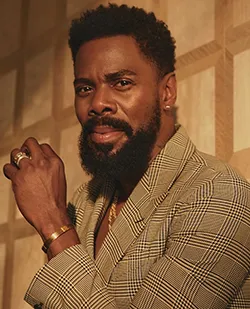
Colman Domingo is an award-winning actor, playwright, producer, and director whose work across stage and screen has established him as one of the most dynamic and influential artists of his generation. Born in West Philadelphia and a 1987 graduate of Overbrook High School, Domingo attended Temple University before moving to San Francisco to pursue a life in the theater — a leap of faith that launched a career defined by artistic rigor, range, and remarkable staying power.
Domingo is widely recognized for his Emmy-winning role as Ali in Euphoria, and for standout performances in Zola, If Beale Street Could Talk, Selma, Candyman, and more. With his husband Raúl Domingo, he produces under their Edith Productions banner, including the Pulitzer Prize-winning, Tony-nominated Fat Ham, the Oscar-shortlisted animated short New Moon, and the award-winning North Star. On April 11, Domingo hosted Saturday Night Live for the first time.
On television, Domingo was most recently seen in Netflix’s The Four Seasons, for which he received an Emmy nomination, and led the limited series The Madness, created by Clement Virgo. In 2024, he voiced Norman Osborn in the Disney+ animated series Your Friendly Neighborhood Spider-Man.
On film, Domingo starred in and executive produced Sing Sing (dir. Greg Kwedar), earning Academy Award, Golden Globe, Critics Choice, and SAG nominations. He also executive produced It’s What’s Inside, which premiered at the 2024 Sundance Film Festival and was released by Netflix. In Rustin, produced by Netflix and Higher Ground, Domingo portrayed Civil Rights leader Bayard Rustin — earning Oscar, Golden Globe, BAFTA, and SAG nominations. That same year, he played Mister in Warner Bros.’ The Color Purple, which received a SAG ensemble nomination.
Domingo originated and starred in The Scottsboro Boys, Blood Knot, and Passing Strange. He also starred in the first screen adaptation of a Ralph Ellison story for PBS, King of the Bingo Game.
As a theater director, Domingo has worked with People’s Light Theatre, Huntington Theatre, Geffen Playhouse, Actors Theatre of Louisville, and Berkeley Repertory Theatre. He also appears on Lin-Manuel Miranda’s concept album Warriors.
In 2025, Domingo was on the cover of VOGUE and Time Magazine as a “Closer,” one who works to fill the racial equity gap, and in 2024, TIME named him one of the 100 most influential people in the world. He was a co-chair of last year’s Met Gala, which raised a record $31 million for the Costume Institute.
A dedicated mentor and educator, Domingo has served on the faculty of the Yale School of Drama and as a creative associate at Juilliard.
“I am deeply honored and humbled to receive an honorary degree from Swarthmore," says Domingo. "I am from West Philadelphia and graduated from the area's public schools. The idea that my work is being honored by this institution is truly significant and impactful for me, my family, and my community. My heart just sings and soars.”
Judith Sandalow ’84
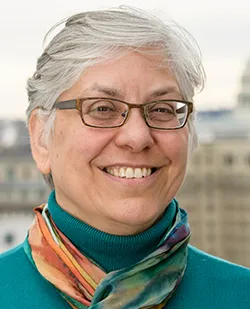
Judith Sandalow ’84 is a public interest attorney and nonprofit leader whose career has been devoted to advancing justice for low-income children and families. A graduate of Swarthmore College and Yale Law School, where she earned her J.D. in 1990, Sandalow has spent more than three decades using the law as a tool to confront inequity — particularly for young people navigating the child welfare and juvenile justice systems and for parents fighting to improve their children's health and education.
Since 2000, Sandalow has served as chief executive officer of Children’s Law Center, a nonprofit organization that addresses the urgent legal needs of children in Washington, D.C. Under her leadership, the organization has grown from a staff of three to more than 100 attorneys, social workers, investigators, and other professionals. In partnership with hundreds of pro bono attorneys from law firms across the country, Children’s Law Center now assists more than 5,000 children and families each year, combining direct representation with systemic advocacy to improve the policies that shape their lives.
Sandalow’s commitment to vulnerable youth began early in her career. As a Juvenile Justice Fellow at Georgetown University Law Center, she focused on the rights of children in the justice system. She later launched a juvenile clinic at DC Law Students in Court and built a criminal defense practice representing young people and adults charged with serious offenses, personally advocating for hundreds of children. Her perspective is also deeply personal: As a foster and adoptive parent who raised two sons in the District of Columbia, she understands firsthand the complexities families face in navigating public systems.
Beyond her leadership at Children’s Law Center, Sandalow has helped strengthen the broader civic infrastructure of the District. She is a founding board member of the Foster & Adoptive Parent Advocacy Center, chaired the board of the D.C. Fiscal Policy Institute, and was a member of the Leadership Greater Washington Class of 2004.
Her work has been widely recognized. She was named a 2025 Washingtonian of the Year by Washingtonian Magazine. In 2022, Sandalow received the Thurgood Marshall Award from the D.C. Bar for extraordinary commitment to equal justice, and in 2020 she was honored with the American Bar Association’s John Minor Wisdom Public Service and Professionalism Award. She has also been named one of Washington’s "Most Influential Women Lawyers" by the National Law Journal and received the Meyer Foundation Exponent Award and the Presidents’ Award from the Washington Council of Lawyers.
Reflecting on her work, Sandalow has said she is most proud of building an organization that is guided by a shared north star: ensuring all D.C. children have a strong foundation of family, health, and education. For Sandalow, the law is not the outcome, but the instrument — a means to dismantle inequity and expand opportunity to those who too often go unheard.
“Swarthmore College taught me to think critically, opened my eyes to the richness of diverse experiences and perspectives, and showed me how to combine these to make my own community a more just place. I am honored to have my efforts recognized and to have an opportunity to celebrate a new generation of Swarthmore graduates."
Talia Young ’01
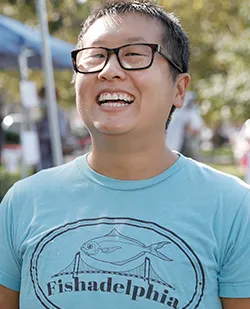
Talia Young ’01 is an environmental scientist, educator, and community entrepreneur whose work bridges marine ecology, food justice, and youth engagement. A biology major at Swarthmore, Young went on to earn her Ph.D. in ecology and evolution from Rutgers University, where her research used chemical tools to better understand aquatic food webs and the environmental pressures shaping marine ecosystems. Her scientific training has remained central to her work — but always in service of communities beyond the academy.
Young is the founder and executive director of Fishadelphia, a community seafood program that connects New Jersey harvesters and processors with culturally and economically diverse consumers in Philadelphia. Fishadelphia aims to address food insecurity while strengthening regional supply chains and supporting working waterfronts. The program has also run after-school programming for middle and high school students in Philadelphia, introducing young people to marine science, food systems, and environmental stewardship.
Fishadelphia’s innovative approach to sustainability and community partnership was featured in the PBS docuseries Hope in the Water, highlighting Young’s belief that conservation succeeds best when it is inclusive and locally rooted. She has raised more than $1 million in foundation and public support for the program, striving to pay living wages and embedding education into every facet of its operations.
A former Smith Conservation Research Fellow at Princeton University, Young has taught environmental science since 2020 at Haverford College, where she is the William H. and Johanna A. Harris Professor of Environmental Studies and Entrepreneurial Studies. Her courses — ranging from introductory environmental studies to fisheries science — reflect her commitment to combining rigorous scholarship with hands-on problem solving.
Beyond her work in food systems, Young has been an active civic participant in Philadelphia Asian American, LGBTQ, and immigrant communities. She played an active role in community efforts to oppose the proposed relocation of the Philadelphia 76ers' arena near Chinatown, amplifying neighborhood voices and advocating for equitable urban development.
Throughout her career, Young has modeled a form of scholarship that is collaborative, public-facing, and justice-oriented. Whether tracing trophic relationships in marine ecosystems or building relationships across neighborhoods, she approaches science as both an intellectual pursuit and a civic responsibility — demonstrating how research, teaching, and activism can work together to create more resilient and inclusive communities.
Photo by Elizabeth Robertson (Philadelphia Inquirer)