Emily Paddon Rhoads
Associate Professor
Political Science
Peace & Conflict Studies
Contact
Links
Affiliations: Lang Center, Political Science, Peace & Conflict Studies
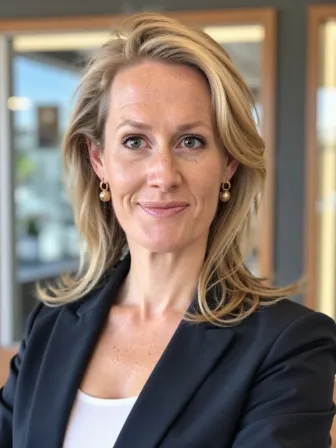
Emily Paddon Rhoads is Associate Professor of Political Science at Swarthmore College, where she teaches courses in international relations, comparative politics, and peace and conflict studies. Her research examines how protection, legitimacy, and trust are constructed when formal institutions are strained or contested, and how communities, local and global, organize safety and cooperation under conditions of violence, crisis, and political fragmentation.
Her work combines field-based research with organizational and institutional analysis. She has conducted extensive fieldwork in conflict-affected and crisis settings, including the Democratic Republic of the Congo, South Sudan, the Central African Republic, Iraq, and Syria. Across these settings, her research foregrounds civilian and frontline actors, treating protection not as a technical output but as a social, political, and moral process.
Paddon Rhoads is the author of Taking Sides in Peacekeeping: Impartiality and the Future of the United Nations (Oxford University Press, 2016), co-editor of Civilian Protective Agency in Violent Settings: A Comparative Perspective (Oxford University Press, 2023), and the author of numerous peer-reviewed journal articles and book chapters on peacekeeping, humanitarianism, civilian agency, and international norms.
Her current research is organized around three interconnected streams. The first examines organizational values, protection norms, and legitimacy in international institutions, with a focus on the United Nations and the practice of peacekeeping and peacemaking, including a John Templeton Foundation-funded (2025–2027) study of humility as an institutional value. The second investigates civilian and frontline protective agency in conflict settings, including how digital technologies and information environments reshape trust, authority, and risk. The third examines grassroots protection and community resilience in response to compound crises such as climate-related disasters, public health emergencies, political polarization, and institutional fragility, with particular attention to bottom-up practices of care, cooperation, and survival. Together, these streams form a unified research agenda on protection and resilience across scales, linking community level practices to institutional design and global governance in an era of persistent uncertainty.
Her research has been supported by the John Templeton Foundation, the European Research Council, the Pierre Elliott Trudeau Foundation, the Government of Canada, the British Council, the University of Oxford, and the Australian Government’s Civil-Military Centre. Her work also engages directly with policy communities, including advisory and collaborative roles with the United Nations on civilian protection and peacekeeping practice. In 2024–2025, she was the J.W. McConnell Visiting Scholar at the Max Bell School of Public Policy at McGill University.
Before coming to Swarthmore, Paddon Rhoads taught at the University of Oxford, where she was Rose Research Fellow in International Relations at Lady Margaret Hall and Associate Faculty at the Blavatnik School of Government. She has been a Visiting Fellow at Columbia University and the International Peace Institute (IPI), an Action Canada Public Policy Fellow, and a Sauvé Scholar at McGill University. From 2016–2019, she was a research collaborator on the European Research Council (€ 2.4 million) project: “Individualization of War: Reconfiguring the Morality, Law, and Politics of Armed Conflict” at the European University Institute.
Paddon Rhoads earned her MPhil and DPhil (PhD) from the University of Oxford, and her A.B. from Brown University. She is an elected Fellow of the Rift Valley Institute and a member of the Folke Bernadotte Academy’s International Working Group on the Protection of Civilians and Conflict-Related Sexual Violence (2025–2029).