Saving Over 700 Pounds of Food Waste, Food Recovery Fridge Exemplifies Sustainability Efforts
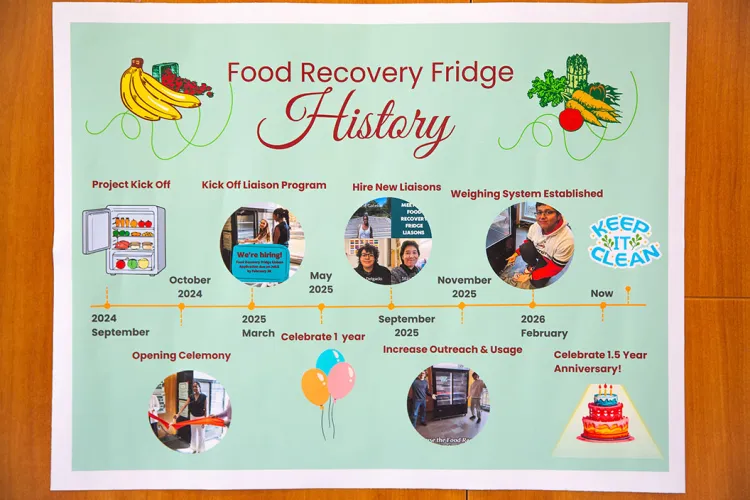
The Food Recovery Fridge (FRF), outside of Science Center Room 199, was spearheaded by President’s Sustainability Research Fellow Saumya Raj ’25 in the 2023-2024 academic year. Its aim: reducing waste on campus and ensuring the safe collection and redistribution of unused food from events.
Awareness of the FRF is increasing, as are its benefits — aligning with the College’s growing efforts in sustainability.
“The FRF program was created with the vision of reducing campus food waste from group events, personal pantries, and campus cafes while simultaneously increasing food availability for students by providing free meals to all members of the community,” says Green Advisor (GA) Alejandro Barragan ’28.
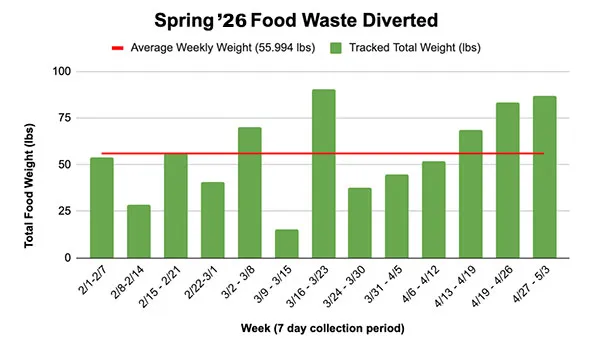
Barragan is in his second year working with the fridge, and responsible for prototyping, modifying, and maintaining the food tracking system that quantifies the total food waste diverted by the Recovery Fridge.
“The device utilizes an Arduino R4 Wifi system to remotely notify of the change in weight detected after subtracting the average weight of plates or other containers,” says Barragan. “Last semester, our device estimated a diversion of 727 lbs. of food waste.”
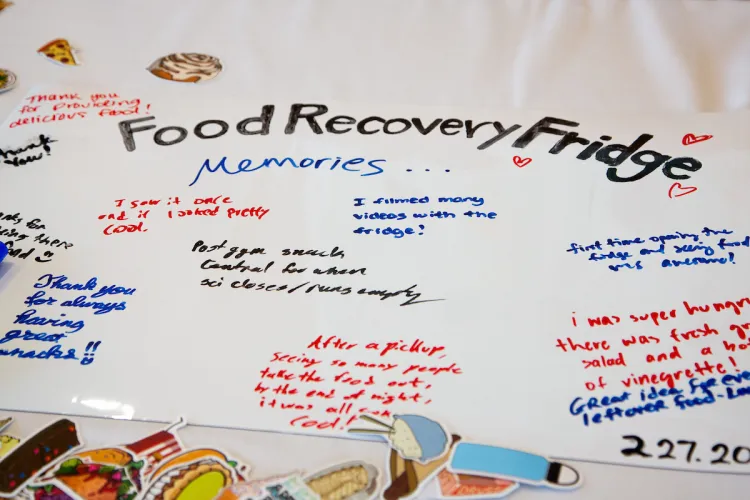
Community members recently gathered to celebrate the anniversary of the FRF and share stories of how they used it.
Carlyne Ishimwe ’29 is another GA doing notable work with the fridge.
“This is my first year working for the FRF, and aside from the general cleaning of the fridge, I am also currently providing assistance to Alex in regards to the weighing system,” she says. “In the coming weeks, I’ll be planning our annual FRF anniversary event, which I am super excited about!”
A recurring problem both students cited across campus was that event coordinators practice a “better-safe-than-sorry” mentality when deciding how much food they would like to cater. While ordering more meals reduces the chance of running out of food, Barragan and Ishimwe mention how common it is to find an excessive amount of leftovers. In extreme cases, over half of the food remains untouched.
“If event coordinators were to specifically communicate with their invitees, coordinators would cater a more considerate amount of food,” they say.
Starting in Spring 2025, the Office of Sustainability and Dining Services piloted a new program for the FRF to collect more leftover food after events. FRF liaisons are now able to help collect food from events and transport it to the fridge. Event planners can use the Food Recovery Fridge Liaison Request Form to secure a liaison to stop by after an event. The form can be found on the Office of Sustainability website or in confirmation emails sent out when reserving a space on campus, and must be filled out at least 48 hours in advance.
What can Swarthmore students do to take measures to reduce their personal waste? The GAs encourage students to make an effort to clean up after themselves, sign up for a FRF liaison if they anticipate any leftovers (or try to get the leftover food to the fridge themselves), and donate some of their own food to the FRF (making sure to label with allergens and put the manufactured date stamp on it). They can also apply to be an FRF liaison through JobX; program leaders typically hire 3–5 students in the fall, and hire as needed in the spring.
But the ultimate goal is to move beyond the need for the FRF program by instilling an environmental consciousness across campus, say the green advisors.