A Lasting Commitment: Swarthmore Bids Farewell to Four Retiring Faculty Members
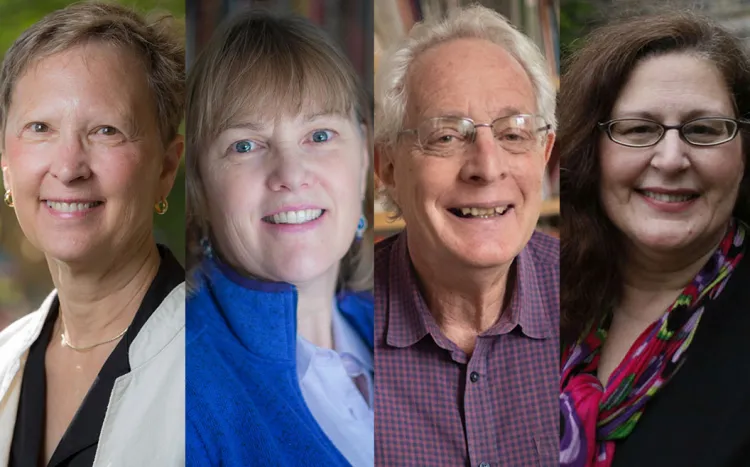
From left: Diane Anderson, Ellen Ross, Bob Weinberg, and Tyrene White.
This spring, the College celebrates the retirement of four esteemed faculty members — Diane Anderson, Professor of Educational Studies; Ellen Ross, Howard M. and Charles F. Jenkins Professor of Quakerism and Peace Studies; Bob Weinberg, Isaac H. Clothier Professor of History and International Relations; and Tyrene White, Richter Professor of Political Science.
Though they will be missed on campus, each leaves behind an indelible legacy, fostered through notable scholarship, devoted mentorship, and lasting commitment to the liberal arts.
Though they will be missed on campus, each leaves behind an indelible legacy, fostered through notable scholarship, devoted mentorship, and lasting commitment to the liberal arts.
Diane Anderson
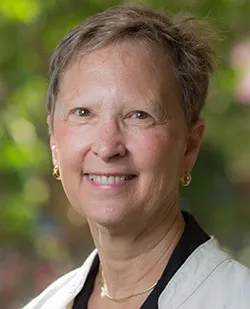
Professor Emerita of Educational Studies Diane Anderson joined the College in 1990 after working for the New Jersey Department of Education for 20 years. She earned a B.A. from Montclair State College, an M.S. from Drexel University, and a Ph.D. from the University of Pennsylvania.
Anderson has served the College in many capacities, including founding the College’s Learning for Life program, serving as associate dean for academic affairs for eight years, and teaching courses such as Pedagogy & Power, Teaching Diverse Young Learners, Literacies & Social Identities, Critical Perspectives on Children and Young Adult Literature, and her Literacies Pedagogies Seminars.
Anderson is a self described “theory nerd,” and an ethnographer of literacy practices. She has written about literacies and identities among both children and adults, in and out of schools. Her most cited works include research into children’s gendered literacy practices, their persuasive writing practices, and children’s numeracy. She is known for using the practice of knitting to teach students pedagogical empathy and as a common touchstone for learning theories.
Beyond campus, Anderson served as an educational consultant at Taktse International School in India from 2017 to 2024 and contributed extensively to organizations including the National Literacy Conference, American Educational Research Association, National Council of Teachers of English, International Reading Association, Association for Supervision and Curriculum Development, Gloucester County Curriculum Consortium, New Jersey Association for Supervision and Curriculum Development, New Jersey Association of Student Councils, the Wallingford-Swarthmore School District, and Swarthmore Friends Meeting.
Anderson plans to continue her research and writing on Learning for Life in retirement as well as her antiracist picturebook biography seminar project Crafting Literacies: Read, Make, and Mend the World. She also looks forward to swimming, reading addictively, indigo dyeing, and crafting.
Ellen Ross
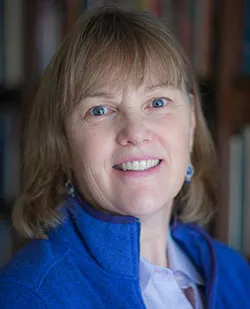
Howard M. and Charles F. Jenkins Professor Emerita of Quakerism and Peace Studies Ellen Ross earned a B.A. from Princeton University and both her M.A. and Ph.D. from the University of Chicago. She joined the College in 1991 and her scholarship focuses on the field of Quaker Studies with interests in Peace and Conflict Studies.
She is the author of The Grief of God: Images of the Suffering Jesus in Late Medieval England (Oxford 1997) as well as “‘The Great Spirit Hears All We Now Say’: Philadelphia Quakers and the Seneca, 1798–1850” in Quakers and Native Americans (Brill, 2019), “Letter 84” in American Values, Religious Voices: 100 Days, 100 Letters (University of Cincinnati, 2018), and “‘Everything Depends Upon Going to the Root of the Matter and Speaking of Radical Principles’: Lucretia Mott (1793–1880) on Peace and the Transforming Power of Love,” published in Quaker History in 2017.
Ross served with the American Academy of Religion, Friends Historical Association, the editorial board of Lucretia Mott Speaks, and the National Endowment for the Humanities.
Ross shares her earliest memory of the College, "When I was a child I lived in West Philadelphia and there was a time when I used to take the train with my siblings from 49th Street to the Moylan/Rose Valley station to go to school. I remember that as the train passed through Swarthmore I would look up the long green hill. I don’t recall that I had any idea what Swarthmore was beyond a train stop, but I remember vividly the feeling of gazing out the train window, entranced by the beauty of the rolling green. I then could never have imagined that for 35 years I would teach and make my home here at Swarthmore College. (I am grateful that finally in my last semester, after the recent years of geothermal well construction, the rolling green hill is at long last returning to view.)"
Ross has enjoyed the opportunity to continually learn throughout her career, and shares that working with the faculty and students has been one of the greatest joys of her life. "During my time at Swarthmore I have learned so much about life," she says" about trusting in process, about what a gift it is to work with others throughout the College who are committed to education and who share in the delight of working with our inspiring students."
Bob Weinberg
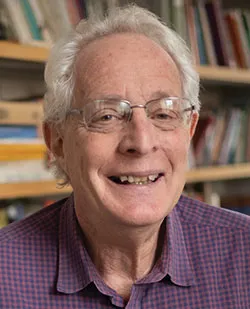
Bob Weinberg, Isaac H. Clothier Professor Emeritus of History and International Relations, joined the College in 1988 and is an expert of 19th and 20th century Russian history and European Jewish history. He earned a B.S. from Cornell University, an M.A. from Indiana University, and a Ph.D. from the University of California, Berkeley.
Weinberg is the author of The Revolution of 1905 in Odessa: Blood on the Steps (Indiana, 1993), Stalin’s Forgotten Zion: Birobidzhan and the Making of a Soviet Jewish Homeland (University of California, 1998), Ritual Murder in Late Imperial Russia: The Trial of Mendel Beilis (Indiana, 2013), and The Four Questions: Jews Under Tsars and Communists (Bloomsbury Publishing, 2024). He co-authored Revolutionary Russia: A History in Documents (Oxford, 2010) as well as numerous articles, edited volumes, and book chapters.
Since joining the College in the 80s, Weinberg says, “The College has grown since in terms of the faculty, administration, and student body, and I never felt like it was getting too out of control.”
During his tenure, Weinberg served as chair of the History Department for 11 years, and on committees of many professional associations including the American Association for the Advancement of Slavic Studies, National Endowment for the Humanities, American Council of Learned Societies, and the American Historical Association. He was involved in teaching the history department’s senior research seminar since its inception.
“I really thoroughly enjoyed my time here,” says Weinberg. “The small classes, working with the students over 40 years, and I found myself very fulfilled intellectually and personally by working at the College. What made my experiences so positive was working with students who worked hard and rose to the occasion. I enjoyed being challenged by the students, they always had an enormous intellectual curiosity that made it fun, rewarding, and challenging to teach.”
In retirement, Weinberg plans to devote time to two Jewish history projects, though right now it feels like the end of any spring semester to him. He expects the reality of retirement to settle in by July.
Tyrene White
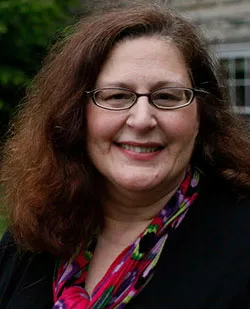
Richter Professor Emerita of Political Science Tyrene White earned her B.A. from Middle Tennessee State University and her M.A. and Ph.D. from Ohio State University. She joined the faculty in 1986 and retired in December 2025.
Her research is on the local political influence of Chinese NGOs and on the use of litigation to improve the status of Chinese women. In her nearly forty years dedicated to teaching and service at the College, she taught courses on contemporary China, East Asia, and population issues, and introductory courses in comparative politics.
White is the author of China’s Longest Campaign: Birth Planning in the People’s Republic, 1949-2005 (Cornell, 2006). She also edited China Briefing: The Continuing Transformation (2000), co-edited Engendering China: Women, Culture, and the State (1994), and published numerous articles on rural politics and population policy in China.