Bruce Dorsey
"Studying history can make you a better person and citizen in the present. It gives you empathy, an empathy for how to live one’s life without knowing what’s going to happen.”
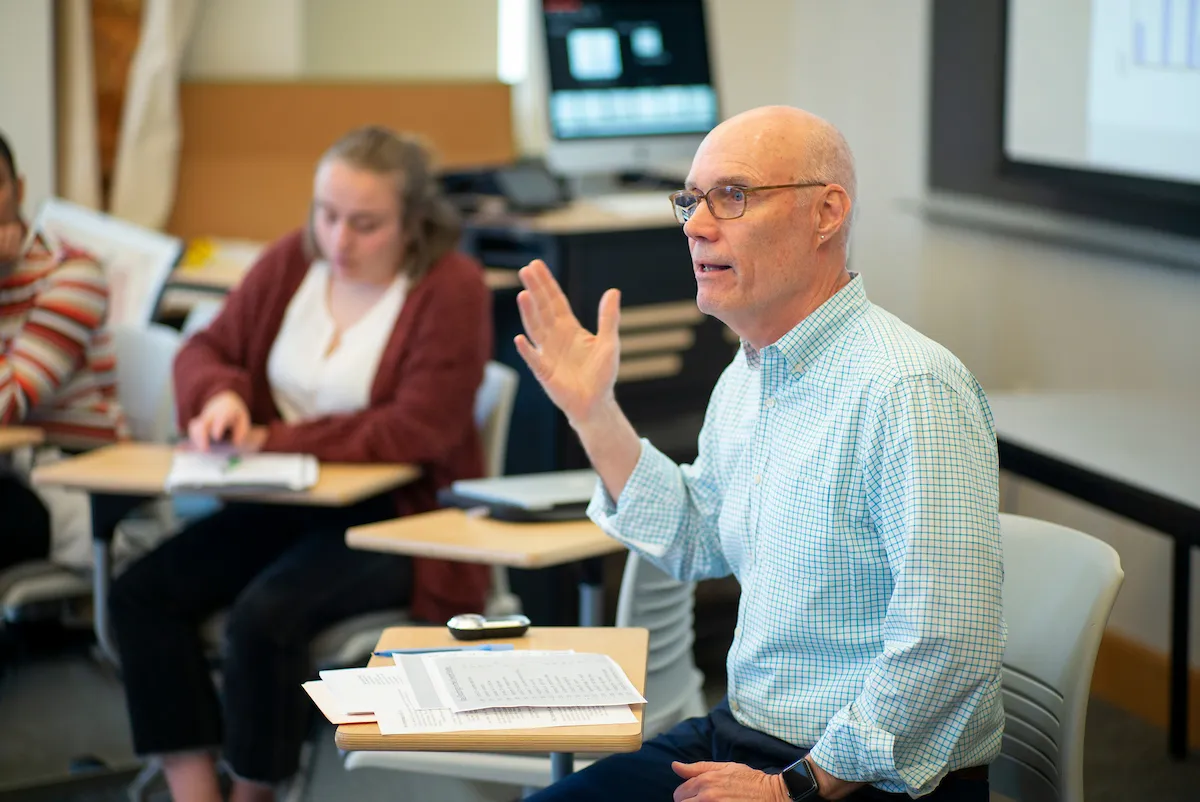
That classroom energy runs through all of Dorsey’s scholarship. His second book grew out of a course he taught for 16 years, built around a spectacular case — the one he went to Newport to research. In 1832, Cornell was found hanging on a farm outside Fall River, Mass. Avery, a married Methodist minister, was accused of her murder. Cornell had told a doctor that Avery coerced her into sex.
The trial of Avery, who was eventually acquitted, divided the nation and became, Dorsey found, a study in storytelling itself. Commentators produced tales and songs, poems, and plays about the scandal.
“I’m interested in these remarkable events that disrupt our world and generate and propel storytelling,” he says.
Now, Dorsey is at work on a third book about the origins of America’s culture wars, anchored in the pivotal year of 1977. It was the year of Star Wars and Saturday Night Fever; when punk, disco, and hip-hop surged into the mainstream; and when Apple released the Apple II. But it also laid the seeds of the fraught and bitterly divided America of today. It was when Anita Bryant launched her anti-gay campaign in Florida and when hardliners opposed to gun control took over the National Rifle Association.
Dorsey traces how the language of civil rights became a zero-sum battleground.
“One person’s rights became the negation of someone else’s rights,” he says, “and that discourse becomes irreconcilable, and produces the polarized world that we live in today.”
In the classroom, Dorsey’s students — many of whom have gone on to become history professors themselves — often arrive with an assumption that history moves predictably toward progress. His aim is to unsettle that assumption, to immerse them in primary sources until they can feel the friction of competing voices and the contingency, and oftentimes unpredictability, of which stories come to endure.
It's a practice that he believes extends beyond the practice of history.
“Studying history can make you a better person and citizen in the present,” he says. “It gives you empathy, an empathy for how to live one’s life without knowing what’s going to happen.”