Swarthmore Welcomes Faculty Members to Campus for 2026-27 Academic Year

This fall, nine Swarthmore faculty members begin tenure-track appointments: Five are receiving tenure-track appointments, one is moving from a regular part-time position to the tenure track, and three faculty members who previously held visiting assistant professor roles are receiving tenure-track appointments.
Faculty members receiving tenure-track appointments:
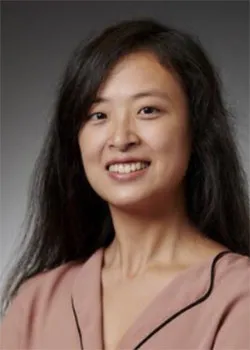
Assistant Professor of Psychology Sijin (Cathy) Chen
Computational and translational neuroscientist Cathy Chen’s research combines behavioral experiments, computational modeling, neuroimaging, and neurophysiology to understand individual differences in value-based decision-making across general, clinical, and military-relevant populations.
A central goal of Chen’s research is to bridge basic and clinical science by using computational approaches to translate mechanistic findings into useful insights that improve people's cognitive health and well-being. Her lab at Swarthmore is a student-centered computational neuroscience lab where undergraduates can contribute to behavioral, EEG, and computational modeling research on reinforcement learning and decision-making.
Chen originally trained as a behavioral neuroscientist, using behavioral experiments, pharmacological approaches, and fiber photometry to study the neural mechanisms underlying learning and decision-making in mouse models. Through that work, she became interested in how basic neuroscience findings could be connected to clinical questions, which led her to transition into human research with clinical populations.
Chen has been published in Current Biology, eLife, Schizophrenia Bulletin, Journal of Neuroscience, and more.
She completed her postdoctoral training in the University of Minnesota’s department of psychiatry and behavioral sciences, where she worked with Sophia Vinogradov and A. David Redish. Chen completed her Ph.D. in the University of Minnesota’s department of psychology and began her research career as an undergraduate research assistant at Carleton College.
She will be teaching Clinical Neuroscience in the fall.
“I am especially excited to return to a liberal arts college environment, since I graduated from a liberal arts college myself,” says Chen. “I hope to build a research program that gives students hands-on experience with state-of-the-art neuroscience methods, while continuing collaborations with colleagues at research universities and creating additional opportunities for students.”
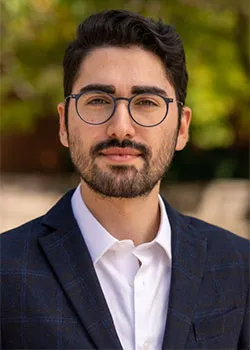
Assistant Professor of Economics Pier Paolo Creanza
Economist Pier Paolo Creanza specializes in economic history, innovation, and applied microeconomics.
His research brings modern quantitative methods to large-scale historical data to answer economic questions.
“These data collection efforts offer great opportunities to involve students in research,” says Creanza.
His article in the Journal of Economic History won the Arthur H. Cole Prize, which is awarded by the editorial board of the Journal for the best article in that year.
Creanza received a Bachelor of Science degree and a Master of Science degree in economic and social sciences from Bocconi University, and a Ph.D. in economics from Princeton University. He is one of three finalists for the Economic History Association's Allan Nevins Prize, for the best dissertation in U.S. or Canadian economic history, which will be announced in September.
In the fall, he will teach a new class, An Economic History of Humanity, a survey of 10,000 years of economic life from the agricultural revolution to the present. The course emphasizes the deep roots of growth, institutions, and inequality, exploring the origins of farming and cities, living standards before industrialization, the causes and consequences of the Industrial Revolution, and the making of the modern global economy.
“As someone whose interests span economics, history, classics, and technology, I’m incredibly excited to contribute to a robust, interdisciplinary liberal arts education at Swarthmore,” says Creanza. “I also deeply appreciate the Quaker ethos that informs Swarthmore’s culture to this day, with its emphasis on universal respect, social responsibility, and community-minded decision-making. I look forward to getting to know everyone who makes this community so special.”
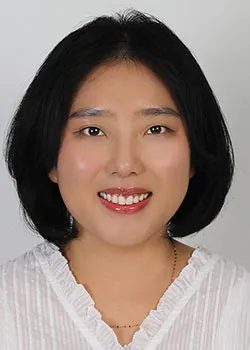
Assistant Professor of Political Science Haemin Jee
Political scientist Haemin Jee’s research bridges the political economy of China with the international and domestic implications of great power competition.
Her research has been published in Perspectives on Politics, Democratization, Governance, and Political Science Research and Methods.
She earned a B.A. in government from Harvard University and a Ph.D. in political science from Stanford University. At Stanford, she was a dissertation fellow at the Institute for Research in the Social Sciences, and a predoctoral fellow at the Stanford Center at Peking University.
Previously, Jee worked as an assistant professor of international affairs in the department of social sciences at the United States Military Academy at West Point.
In the fall, she will be teaching Contemporary Chinese Politics.
"I am incredibly excited to interact with Swarthmore students in and out of the classroom,” Jee says. “I hope we will have many enlightening discussions about Chinese politics, U.S.-China relations, and how to strengthen democratic institutions at home and abroad."

Assistant Professor of English Literature Christopher Cañete Rodriguez Kelly
Chris Cañete Rodriguez Kelly specializes in 20th-century Southeast Asian and Asian diasporic literature, Philippine Tagalog and Anglophone literature, the history and theory of the novel, critical Indigenous studies, global Anglophone studies, media studies, and American and Asian American studies.
They have been published in journals including ASAP/Journal, Hispanic Issues, PMLA, and Perspectives in the Arts and Humanities Asia.
Kelly received a B.A. in liberal arts from Sarah Lawrence College, and a M.A. and Ph.D. in literary studies from University of Wisconsin-Madison.
Previously, they were a Society of Fellows Mellon Postdoctoral Fellow at Columbia University, and earned a Department of English Graduate School Dissertation Fellowship, Fulbright-Hays Doctoral Dissertation Fellowship, and Foreign Language and Area Studies Fellowship.
In the fall, they will teach Transpacific Personalities: Asian American Literature and the Personal Essay, a seminar considering how the tension between subjectivity and collectivity has shaped Asian American literature and media since the 1970s.
“My own attendance at a private liberal arts college changed my life forever,” says Kelly. “While completing my undergraduate degree, I felt like faculty members saw me as a colleague and peer in the production of knowledge. It is an absolute privilege to get to pass that experience on at Swarthmore.”
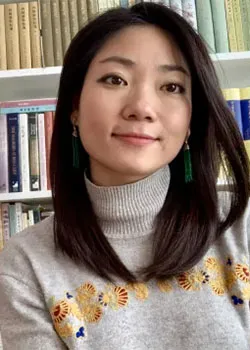
Associate Professor of Modern Languages and Literatures (Chinese) Qiaomei Tang
A scholar of Chinese literature, Qiaomei Tang’s research centers on medieval Chinese literature and culture, with an emphasis on women’s roles and gender dynamics.
Tang first taught at Swarthmore nine years ago as a visiting assistant professor, which she says was a memorable year. After that role, she taught at Grinnell College.
She has been published in numerous journals including Early Medieval China, Nan Nü: Men, Women and Gender in China, and The Journal of the Oriental Society of Australia.
She received a B.A. and M.A. in Chinese language and literature from Beijing Normal University, and a Ph.D. in East Asian languages and civilizations from Harvard University. During her Ph.D. program, she taught at Colgate University.
Tang will be teaching second-year Mandarin Chinese in the fall.
“I made meaningful connections with students and colleagues, some of whom have become very dear friends, and was struck by the beauty of both the campus and the town,” says Tang. “I'm delighted to be returning, and I look forward to forging new connections and contributing further to this vibrant intellectual community.”
One faculty member moved from a regular part-time position to the tenure track:
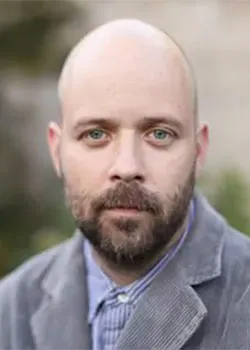
Associate Professor of Theater Matt Saunders
Scenic designer and creator of new performance work Matt Saunders has designed over 150 works of theater, opera, dance, and live performance. His work has appeared in theaters nationally and internationally, including the Pig Iron Theatre Company, the Kennedy Center, and The Almeida Theatre,
Saunders has taught at Swarthmore College since 2011. Previously, he was engaged in an interdisciplinary professional theater career, which included being the associate artistic director of New Paradise Laboratories. He has also taught as a guest instructor at Temple University, Bryn Mawr College, Rowan University, Pennsylvania State University, Moore College of Art and Design, and Yale School of Drama.
Saunders received a B.A. in Theater from Virginia Tech, attended Scuola Commedia del Arte, and received an MFA from Yale School of Drama.
He is the recipient of a Drama Desk Award for Best Set Design the play Daddy, an Audelco Award for Excellence in Black theater for his design on FLEX, an F. Otto Haas Award, a Hodder Fellowship at Princeton University, and a Pew Fellowship.
In the 2026-27 academic year, Saunders will be the co-chair for production in the theater department, designing two shows, and mentoring student designers on two additional shows. In the spring, he will teach Set Design 1, which he has been teaching at the College for 15 years.
“Teaching at Swarthmore has been the central aspect of my artistic design practice for over 15 years,” says Saunders. “Working with our students makes me better in every way. I’m thrilled and honored to be transitioning into the tenure-track position.”
Faculty members who previously held visiting assistant professor roles receiving tenure-track appointments:
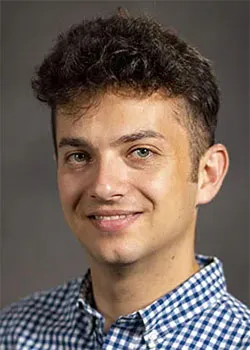
Assistant Professor of Engineering Will Johnson
Will Johnson builds compliant tensegrity robots that can survive harsh impacts from falls. His research will one day enable robots to explore remote locations that are currently inaccessible.
Johnson, who grew up in Bucks County, Pa., is excited to be back home. He joined the College as a visiting instructor in 2025. Previously, he taught physics and engineering at West Nottingham Academy.
He received a B.S.E. in mechanical engineering and applied mechanics summa cum laude and an M.S.E. in robotics from the University of Pennsylvania. He received an M.S., M.Phil, and Ph.D. in mechanical engineering and materials science from Yale University, where he served as a McDougal Teaching Fellow in Yale’s Poorvu Center for Teaching and Learning.
Johnson is also the recipient of a NASA Connecticut Space Grant Consortium Graduate Fellowship Grant, and he won the best paper award at the IEEE Sensors Conference 2022.
This fall, he will teach Mobile Robotics and the labs for Electrical Circuit Analysis.
"I have found the students at Swarthmore to be curious, engaged, courteous, and motivated,” says Johnson. “It will be my privilege to work with them in the classroom and my research lab. I look forward to supporting their interests in engineering and to building robots together."
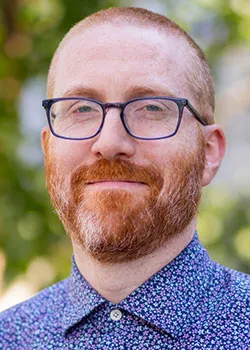
Assistant Professor of Educational Studies Mark Lewis ’10
Educational studies scholar Mark Lewis ’10’s research examines the consequences of schools’ ideological claims about how students should use language and literacy. Their current projects include both historical analysis and partnerships with school district-based research offices.
Their work has been published in journals including Linguistics and Education, Language in Society, Equity & Excellence in Education, and Language & Communication.
Lewis joined the College as a visiting assistant professor in 2024 and also taught at courses at the College in 2018, 2020, and 2021. They previously taught at Temple University and Penn Graduate School of Education, and worked for the William Penn School District and School District of Philadelphia Office of Research and Evaluation.
Lewis served as one of the Teaching and Learning Commons inaugural Faculty Fellows and helped pilot a pedagogical partnership program in which students explore interests in higher education pedagogy with a faculty partner. They are continuing in that role in the 2026-27 academic year.
Lewis graduated from Swarthmore with a special major in educational studies and linguistics. They received a Ph.D. in educational linguistics from the University of Pennsylvania Graduate School of Education.
They will be teaching Pedagogy and Power: Introduction to Education this fall.
"What I value most about the Swarthmore community is our excitement about learning from one another,” says Lewis. “I am thrilled to continue working with Swarthmore students and my colleagues across campus."
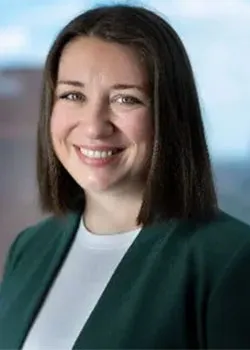
Assistant Professor of Biology Sierra Palumbos
Cell biologist Sierra Palumbos specializes in neurobiology, cell biology, and neurodegeneration. She joined Swarthmore as a visiting assistant professor in 2025.
Palumbos has been published in numerous journals including PNAS, Developmental Cell, Journal of Neuroscience, Current Biology, eLIFE, and Developmental Biology.
She received a B.A. in biological sciences from Cornell University and a Ph.D. in neuroscience from Vanderbilt University.
She completed a postdoctoral fellowship at the University of Pennsylvania Perelman School of Medicine, and was a graduate research fellow at Vanderbilt. She was the recipient of an F32 Postdoctoral Training Grant, an American Heart Association Predoctoral Fellowship, and a National Science Foundation Graduate Research Fellowship.
This fall, Palumbos will be teaching Cellular and Molecular Biology.
“I have loved my time as a visiting assistant professor,” says Palumbos, “and feel so lucky to join Swarthmore as a tenure-track faculty member. The Swarthmore student body is curious and driven, making each class a delight to teach. I look forward to fostering a welcoming and inquisitive research lab driven by undergraduate researchers, where we investigate what neurons do with their cellular waste and what happens when these control systems break down in neurodegeneration.”