Student Research at Swarthmore: 20 Summer Experiences Across the Disciplines
Across disciplines and continents, Swarthmore students use summer research to explore questions, ideas, and possibilities.
From labs on campus to organizations overseas, Swarthmore students spent the summer immersing themselves in hands-on research and internships that stretched their learning far beyond the classroom. More than 300 students pursued projects across disciplines and locations — collaborating with faculty, alumni, and outside experts, or in some cases, working independently. The throughline was a spirit of exploration and discovery.
Providing support for these opportunities were the three academic divisions, Career Services, the Center for Innovation and Leadership (CIL), the Division of Student Affairs, the Lang Center for Civic & Social Responsibility, the Libraries, Mellon Mays Undergraduate Fellowships, the Provost’s Office, the Swarthmore Summer Scholars Program, and more.
Below, 20 students from across the disciplines share highlights of their summer experiences.

Kya Boldizsar ’28, a sociology & anthropology and gender & sexuality studies major from San Diego, Calif.
Focus: Autoethnographic reflection on the political economy of media in post-apartheid Cape Town, South Africa as an intern journalist for Cape Town TV (CTV) through the J. Roland Pennock Fellowship in Public Affairs.
“Despite its legislated abolition, apartheid practices and historical structures in South Africa perpetuate an economic disparity between an impoverished Black majority and an affluent white minority. Working for the non-profit news channel, CTV, revealed the challenges and influence of independent media and solutions-based journalism in a precarious political setting.
Witnessing the devastating effects of austerity’s disproportionate impact on public, community media with my international colleagues informed my study on cultural positioning, workplace learning, and knowledge production. Conducting a reflexive analysis magnified my interest in restorative investigation and prepared me for ethnographic inquiry during my upcoming semester abroad in Apia, Samoa.”
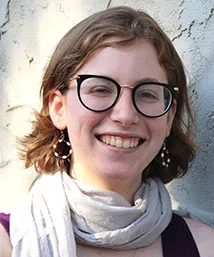
Sarah Cymrot ’27, a medical anthropology and English literature major from Washington, DC.
Focus: Exploring adolescent meaning-making in the face of illness by designing/implementing digital storytelling workshops and conducting interviews with patients at Children’s National Hospital, through a Lang Opportunity Scholarship.
“I worked with the Department of Patient and Family Experience to pilot storytelling initiatives for adolescent and young adult patients: a multi-session digital storytelling workshop and an audio story program. And, as a part of my Honors thesis in medical anthropology, I have been conducting interviews with young adult patients, with a focus on how they make sense of the impact of childhood illness (and talk about it with others).
“It has been an incredible opportunity to spend a summer thinking about questions of adolescent illness, recovery, and narrative from both academic and applied angles. It has felt like a fitting culmination to both my personal health journey since experiencing a stroke seven years ago (and receiving care at Children’s National) and my academic journey at Swarthmore. Seeing how the theoretical ideas I have been studying over the past three years played out in the hospital makes me excited to continue this work my senior year and also to look ahead to what might come next.”
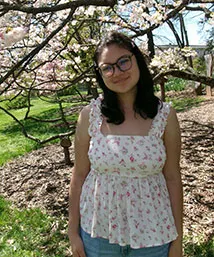
Maria De Luna ’29, a prospective educational studies major from Puyallup, Wash.
Focus: Research and curriculum development for BarrioEd Project, a youth participatory action research after-school program, with mentorship from Associate Professor of Educational Studies Edwin Mayorga and funding from the Lang Center’s Faculty-Led Engaged Research (FLER) grant.
“A highlight was co-creating the after-school curriculum, which included researching and discussing literature, including currere, conocimiento, and border pedagogy. Learning to apply literature into practice to facilitate the co-creation of a culturally sustaining, youth-centered sanctuary was an incredibly valuable experience I'll continue to carry, not only within my involvement in BarrioEd, but into my own classroom post-graduation.
I'm grateful for the collaborative nature of my experience, which helped me feel confident asking questions as I learned about qualitative research methods, design, and writing. In this supportive environment, I contributed to preparing and presenting at a virtual research conference, coding student reflections, and writing an abstract submitted to a research journal. I look forward to continuing to collaborate and learn from our youth co-researchers throughout the ongoing research and writing process!”
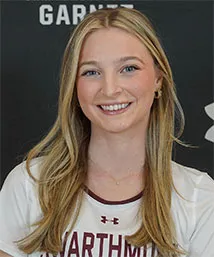
Jamie Dwyer ’27, a neuroscience major from Chadds Ford, Pa.
Focus: Researching attitudes toward subtypes of obsessive compulsive disorder (OCD) with the Swarthmore OCD, Anxiety, and Related Disorders (SOAR) Lab, led by Associate Proessor of Psychology Jedidiah Siev, supported by the Swarthmore Summer Research Fellowship.
“Our research looked at how people judge different types of intrusive thoughts and how those judgments may influence their desire for social distance from people who experience them. I’ve really enjoyed learning more about OCD through a research lens and gaining experience with the different stages of conducting psychological research.
This experience has strengthened my interest in mental health research and given me a greater appreciation for the role that research can play in understanding and improving how we approach mental health. It has been especially interesting to explore a topic that is often misunderstood and to better understand how people’s perceptions of intrusive thoughts can shape their attitudes toward those who experience them.”
Isabelle Garrard ’27, a psychology major from Seattle, Wash.
Focus: Creating novel in vivo paradigms to study moral thought action fusion, a cognitive process implicated in OCD, with Academic Division support.
“I've been working on a new paradigm for studying thought action fusion, one of the cognitive processes that maintains OCD. It's not the same as sitting across from someone as their therapist, but I've been surprised by how rewarding it is and how much it still feels like I'm helping people. Refining how we measure something like a taboo intrusive thought, or reporting honestly when a result doesn't confirm what we expected, moves the field a little closer to understanding why an intrusive thought spirals into something clinical for some people and not others. That understanding is what eventually shapes how people get treated.”
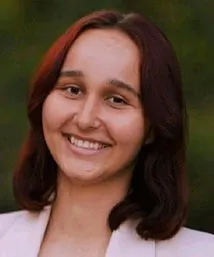
Arina Garifullina ’27, an engineering major from Philadelphia, Pa..
Focus: Investigating dynamic potential of magnetoactuating hydrogels with Professor Claudia Loebel at the University of Pennsylvania, with the Richard Rubin Summer Opportunity Grant.
“I dove deeper into the research realm of hydrogels as accessible biomaterials that can also be used as disease modeling platforms. Even though this wasn’t my first exposure to hydrogels, I gained invaluable knowledge and experience in addressing both theoretical and hands-on aspects of remote magnetic actuation and tunable viscoelastic properties within polymer-based networks.
At Penn, I got a chance to be immersed in a tight-knit lab environment with my peers and mentors at different stages of their academic and professional careers. I learned to effectively plan and collaborate on experiments that reveal information from different perspectives that are then used to put each of our puzzle pieces together to see a bigger picture.”
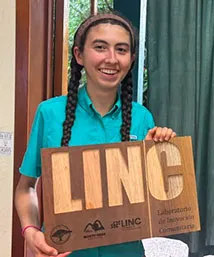
Vanessa Gonzalez-Rychener ’28, an engineering and environmental studies major from Pittsburgh, Pa.
Focus: Interning at a makerspace at the Monteverde Institute in Costa Rica, a nonprofit focused on educating and empowering both the local community and groups from abroad to work towards environmental, economic, and social sustainability, with funding through the McCabe Engineering Award.
“My project was to support the continued development of a makerspace, part of a country-wide program to fund community innovation laboratories (LINCs) in areas where people might not have ever heard of a laser cutter, much less played with one themselves. The Monteverde LINC is relatively new, so my internship revolved around getting it off the ground.
“One day, I might be figuring out how to maintain humidity-sensitive equipment in a cloud forest; another, I could be calculating operating costs for a proposal to the municipality; another I might be running a 3D design workshop. In addition to the technical skills I learned at the LINC, I forged so many connections with other interns, the staff at the institute, and my host family. Everyone was very warm and welcoming, and it was clear that so many of the people with whom I interacted were truly dedicated to community empowerment and sustainability.”
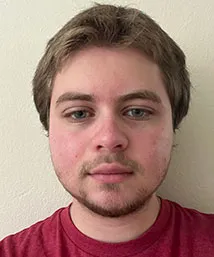
Caleb Hernandez-De Lissovoy ’28, a psychology and linguistics major from Austin, Texas.
Focus: Developing a new scale to measure attitudes around transgender political issues, funded by the Starfield Student Research Endowment in the Social Sciences Division.
“Issues relating to trans identities are particularly salient in current political discourse, yet there are no existing scales to measure people's attitudes around these specific political issues beyond general attitudes towards transness. Throughout the summer, I worked with Associate Professor Daniel Grodner in the Psychology Department to collect data and run analyses on our pilot Trans Political Attitudes Scale items in an effort to develop and validate a scale that will fill this gap.
This experience taught me so much about what goes into the development and validation of a psychological scale that I had never considered before, and helped me further develop my data analysis skills, which will be very useful to me in psychology research long term.”
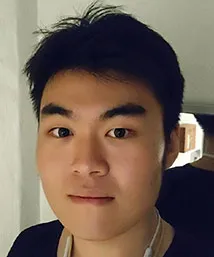
Iver Jiang ’28, an engineering and computer science major from Tianjin, China
Focus: Motion capture of digital movements, through the Lenfest Student Fellowship.
“I worked in the Swarthmore Neuromuscular Biomechanics Lab under Professor Joseph Towles, alongside my lab partner, Kayhaan Mohamed '29, and collaborated with Dr. Eugene Park from Shriners Children's Hospital in Philadelphia. We used a motion-tracking camera system to track thumb tip movements, in order to establish a biomechanical model of the thumb/hand muscles. We hope that our research will be able to help inform surgeons in reconstructive surgeries, as well as treatment procedures and recovery for those who have suffered spinal cord injuries or have otherwise experienced a loss in hand function (tetraplegic patients, for example).
This experience was my first foray in research and really allowed me to understand what biomechanics research looks like. Not only did we learn how to prepare specimens, we learned a lot about motion capturing in general, and the anatomy of our own hands. For me the most important takeaway was actually the ability to schedule tasks in advance and maintain the discipline and consistency in the lab, in order to complete time-sensitive tasks.”
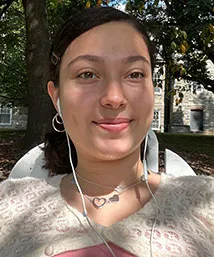
Beyza Kalender ’28, a history and educational studies major from Trumbull, Conn.
Focus: Researching Edward Thorndike’s influence on academic language, through the Niquette-Pohl Summer Opportunity Fund of the Social Sciences Division.
“This research was very eye-opening for me, especially as a future teacher. I learned more about how raciolinguistics have shaped the academic language used in classrooms and the significant impact racist educational theorists, like Thorndike, had on constructing the U.S. public school system.
The opportunity to work with [Assistant Professor of Educational Studies Mark Lewis] also taught me a lot about the research and writing processes for a larger project. I’m glad I had the chance to be a research assistant prior to taking on my own thesis project. And I’m grateful I had such a great mentor and cohort of summer researchers to learn from.”
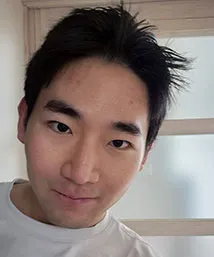
Junhyuk Kim ’27, a mathematics and physics major from South Korea
Focus: Simulating magnetohydrodynamic fluid instabilities in the Wisconsin High-Temperature Superconducting Axisymmetric Mirror plasma, using the non-ideal magnetohydrodynamics with rotation, open discussion (NIMROD) code, through the Tarble Summer Research Fellowship.
“[Morris L. Clothier Professor of Physics Mike Brown] set me up to work remotely with scientists at the fusion startup company Realta Fusion. I calculated how the perturbation grows into instabilities as I vary the equilibrium input profile, such as density distribution, by using finite element methods and spectral methods. At the end of July, I participated in a three-day NIMROD scientists conference where I learned how the scientists were trying to incorporate non-axisymmetric effects and/or kinetic effects into magnetohydrodynamics calculations.
As I am interested in pursuing a Ph.D. physical oceanography, this was especially helpful as it directly involved computational fluid dynamics. Solving Navier-Stokes equations using numerical methods such as finite element methods was a good experience for my future research in geophysical fluid dynamics. It was also interesting to see how plasma physics merged classic electromagnetism, classical mechanics, and statistical mechanics to explain a nonlinear and chaotic phenomenon.”
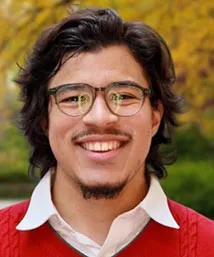
Benjamin Parada ’28, a history and education major from Frederick, Md.
Focus: Buenos Aires cultural history related to music, football, and modes of media consumption with Professor of History Diego Armus, with support from the Mellon Mays Undergraduate Fellowship Program.
“It was very fun to research part of a city’s cultural history. My research on Buenos Aires showed that everyday life holds deep historical significance capable of informing grand national politics. Most memorably, it was fun to research football this summer because of the 2026 World Cup. I was able to go to the FIFA Philly Fan Fest this summer and partake in the footballing spirit with other football fans! My research with football and cultural life has helped me develop language skills and historical knowledge necessary to advance research on my senior thesis on the Soccer War between El Salvador and Honduras.”
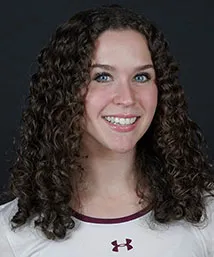
Elle Pedaci ’27, an Honors neuroscience major from Hershey, Pa.
Focus: Analyzing behavioral and neural data with machine learning to explore memory structure and organization, with Assistant Professor of Psychology Youssef Ezzyat, through the Frances Velay Women’s Science Research Fellowship.
“It was an incredible opportunity to explore the complexities of memory research through the hands-on development of an EEG experiment. Investigating memory reactivation dynamics deepened my appreciation for neuroscience, and it was very rewarding to watch the project evolve from its initial programming to participant testing and data analysis.
I loved learning the technical side of EEG data collection, which pushed me to strengthen my skills in coding and machine learning, but interacting with study participants was the highlight of the experience for me. This work has reinforced my goal of pursuing a career in the medical field, where I hope to translate academic research into enhanced patient care in the future.”
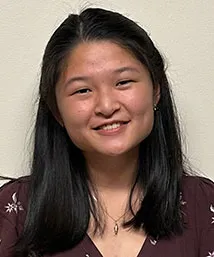
Megan Quan ’28, an engineering and mathematics major from Willow Grove, Pa.
Focus: Working in the Neuromuscular Biomechanics lab under the guidance of Associate Professor of Engineering Joseph Towles, with the support of the Carpenter Engineering Fellowship.
“My project focused on creating a mechanical positioning system to locate and orient a load cell in 3D space in order to examine the forces exerted by the tip of the human thumb. Our goal was to better understand the musculoskeletal mechanics of the hand in hopes of helping restore the grasping abilities of those who have been affected by stroke, spinal cord injury, or other neurologic impairment.
This experience was so rewarding, from getting hands-on in the machine shop to spending time in the tissue laboratory with my labmates. I’ve learned so much about the inner workings of the hand and the engineering process from design to assembly, while making memories that I will cherish and carry with me throughout my education and career.”
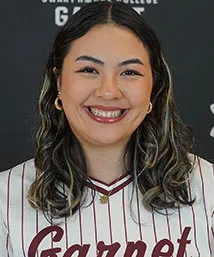
Lucia Sanchez ’28, an engineering major from Exton, Pa.
Focus: Finding lower-cost alternatives to traditional robotics educational materials to increase access, through the Lang Center's FLER Grant.
“Due to the high cost of traditional robotics educational materials, robotics education is largely inaccessible to financially disadvantaged students. To help provide a solution to this problem, I have been developing virtually no-cost soft robotic actuators, utilizing paper, tape, balloons, and other easily accessible household materials. These have been developed with the intent of being implemented alongside an online curriculum so that students could engage in the design engineering process and learn about the developing field of soft robotics without needing to break the bank.
I have been able to pursue this important work of promoting equity within robotics education and the discipline as a whole, something I am deeply passionate about.”
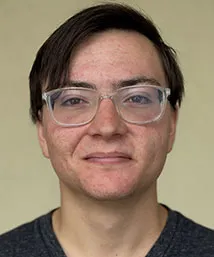
Ben Scully ’28, an art history and Japanese major from Culver City, Calif.
Focus: The "Art Conservation and Restoration — Fine Art and Fresco" workshop through Messors in Southern Italy, as part of the Phillip A. Bruno Fine Arts Endowment Art History Opportunity.
“The workshop was split between analysis and on-site conservation of medieval frescoes in rupestrian (cave) churches, and a number of easel paintings in the workshop studio. We carried out a number of interventions like paint stabilization and inpainting, and discussed conservation ethics as well as the unique cultural and artistic heritage of Southern Italy as seen through these rupestrian settlements and frescoes. It was part of an ongoing effort to shed more light on this aspect of the cultural heritage of Italy through education, research, and by bringing international attention to these sites.
“I met so many interesting people from backgrounds ranging from museum staff to business consultants, and we all became very close friends as a result of long hours scraping moss off frescoes! I feel like my hands-on experience has only intensified my interest in conservation and the art and people of other cultures, alongside community engagement.”
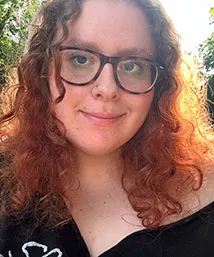
Daniela Trajtman ’28, political sociology and English literature major from Las Vegas, Nev.
Focus: Cultivating Community Together (CCT), a participatory action research project with Professor of Educational Studies Edwin Mayorga that examines the relationship between public schools and the communities around them, supported by the J. Roland Pennock Fellowship in Public Affairs.
“I’ve been working with school and community partners in Philadelphia to support the development of school-based advisory teams, which bring together students, families, educators, administrators, and community members to identify and work toward locally defined priorities. My work has included supporting recruitment and outreach, organizing research materials, and continuing the field-based and archival research that has grown out of CCT’s work across Philadelphia schools.
What I will remember most is how much research changes when you are accountable to the people and places you are learning from. The summer has pushed me to think less about research as something that happens after a question has already been decided and more as an ongoing process of building relationships and making decisions collectively. It has also made me more attentive to the knowledge that already exists within schools and neighborhoods, and to the importance of creating research processes where that knowledge can shape the work itself.”
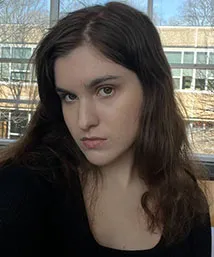
Alina Vykliuk ’26, a computer science and mathematics major from Chernivtsi, Ukraine
Focus: Development of a paradigm-generating online dictionary for endangered languages powered by Apertium, with focus on Urum, under the guidance of Associate Professor of Linguistics Jonathan Washington.
“I contributed to a linguistic tool supporting endangered languages, including Urum — a Turkic language of ethnic Greeks in southeastern Ukraine. The tool is a dictionary with a built-in paradigm generator so users can see a word’s full set of grammatical forms. Additionally, the dictionary suggests semantically similar words and analyzes inflected input to show the lemma of the search.
Working with Professor Washington, I integrated these features into Apertium HTML Tools, a localized web interface for Apertium, the open-source platform for rule-based machine translation. Beyond full-stack development, I remotely collaborated with Urum language activists to demo the product, refine goals, and improve Urum language technology. As an international Ukrainian student, the work felt especially meaningful in preserving my country’s minority cultural heritage.”
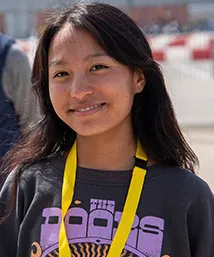
Kinley Zangmo ’29, a prospective engineering and astrophysics major from Punakha, Bhutan
Focus: Carbon vacuum ultraviolet (VUV) emission spectroscopy of Wisconsin High-Temperature Superconducting Axisymmetric Mirrors (WHAM) fusion plasma, through the Francis Velay Science Research Fellowship.
“The main goal was to compute the synthetic VUV emission intensity spectra of potential carbon impurities found within the WHAM fusion, plasma using a Python-based collisional radiative model: ColRadPy. The synthetic intensity spectra enabled in comparing the different line intensity ratios of the existing carbon ions, which proved to be highly temperature sensitive. Hence, this research provided a potential temperature diagnostic for investigating the actual temperatures of the WHAM plasma!
This was my first experience conducting professional research in a field I have always been passionate about. Through this project, I independently learned Python, explored advanced physics concepts. and gained hands-on insights into plasma physics. I also got to hone my presentation skills and build meaningful connections with my colleagues and faculty, all the while receiving an opportunity to present my research at the American Physical Society (APS) annual conference!”
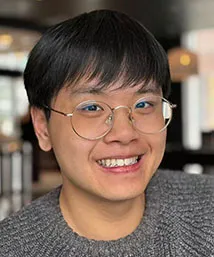
Bohou Zhang ’27, a computer science and political science major from Hong Kong
Focus: Investigating the genus age selectivity of extinctions for modern marine animals with Professor of Statistics Steve Wang, with Academic Division funding.
“Over the Phanerozoic Eon, the age of a genus in the fossil record is generally positively associated with its probability of survival into the next stage. However, mass extinctions have been exceptions to this pattern, with little to no association between extinction risk and genus age in some of the Big Five events. Thus, one way of looking at whether we are currently in a mass extinction event is to examine whether the age selectivity of potential extinctions in the modern age are more similar to those of Phanerozoic background extinction or mass extinction stages with respect to genus age selectivity.
Since we had to draw on many sources of data when trying to answer this question, we ran into hurdles with the consistency of our information (for example, it seems that no one can agree on how to classify fish classes). The processes required a lot of processing, cleaning, and standardizing very different datasets; by comparison, actually running the analyses and regressions was far more straightforward. It was a very rewarding experience and a good reminder of how messy but interesting scientific research can be.”