In Honor of Emerita French Professor Jean Ashmead Perkins ’49
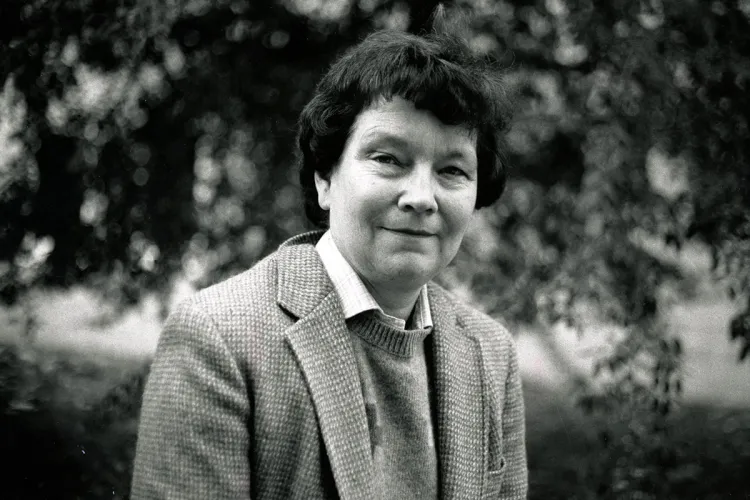
Jean Ashmead Perkins '49 in 1990
President Valerie Smith shared the following message with the campus community on November 16, 2026:
Dear Friends,
With deep sadness, I write to share the news that Jean Ashmead Perkins ’49, the Susan W. Lippincott Professor Emerita of French, died in Kennett Square, Pa., on Oct. 24. She was 98.
Jean, who served on the Modern Languages and Literatures (MLL) faculty for 33 years, is remembered as a nationally respected scholar of 18th-century French literature, as well as an effective campus leader whose integrity and high standards influenced her colleagues, department, and the College as a whole.
Jean was predeceased by Edward B. Perkins ’49, her husband of 53 years, who died in 2002 and whose father, E. Russell Perkins, graduated in 1911. She is survived by daughters Brenda Perkins ’79 (Mark Taylor ’80) and Jennifer Henderson (Scott Henderson); five grandchildren, including Ian Perkins-Taylor ’13 and Colin Perkins-Taylor ’20; and one great-grandchild. A memorial service will be held at a future date. In lieu of flowers, the family welcomes contributions to the Jean A. ’49 and Edward B. ’49 Perkins Scholarship Fund at Swarthmore College.
I invite you to read more below about Jean and her many lasting contributions to our community.
Sincerely,
Valerie Smith
President
Roy J. and Linda G. Shanker Presidential Chair
In Honor of Emerita French Professor Jean Ashmead Perkins ’49
Susan W. Lippincott Professor Emerita of French Jean Ashmead Perkins ’49 died on Oct. 24 at age 98. With her passing, the College has lost a brilliant scholar and one of its most respected and dedicated champions. As one of only a few tenured women on the faculty in the 1960s and 1970s, her willingness to get involved and contribute to College governance served as a model for generations of students and colleagues.
“Jean’s presence and allegiance here ran long and deep,” says Susan Lippincott Professor Emeritus of Modern and Classical Languages Gil Rose. “I valued her as a colleague and friend. She also had an important role as president of the Modern Language Association (MLA), the leading professional organization for scholars of literature and culture, at a time when a woman in that role had long been a rarity.”
“When I first came to Swarthmore in 1987, Jean was the most reliable female voice on the faculty,” says Professor of Linguistics and Social Justice Donna Jo Napoli. “It was a different time, a different ethos, and women's voices were infrequent and tentative at faculty meetings. Not Jean’s. She was a powerhouse.”
“Jean belongs to a generation of scholars who built our department and, through her presidency of the MLA, helped shape the profession as a whole,” says Professor of French and Chair of Modern Languages & Literatures Jean-Vincent Blanchard. “Her example remains part of the department’s identity. I believe she would be proud of the department today — of its enduring dedication to the teaching of languages, and of a faculty whose scholarship continues to meet the high standards she set.”
Jean Marion Ashmead was born in 1928 in Bombay (now Mumbai), India, where her father worked for Standard Oil. At age 8, she attended boarding school in London, then moved to Canada because of World War II to live with family in Toronto.
At Swarthmore in the mid-1940s, Perkins was president of French House, a small residence just off campus on Harvard Avenue for students who studied the language. She was also active on the Halcyon and with the Women’s Student Government Association. She graduated with High Honors in French, history, and philosophy.
The September after they graduated, Jean and Ed married and moved to New York, where Ed began work at Chase National Bank. Perkins then earned an M.A. and Ph.D. in French literature from Columbia University. In her dissertation, Diderot and La Mettrie, she examined the similarities and differences in materialism and views on human nature between the two prominent 18th-century French philosophers.
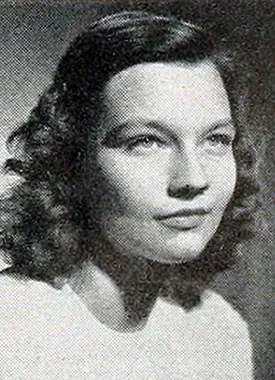
Perkins in The Halcyon, 1949.
Years later, Perkins dryly remarked: “I have always claimed the unusual distinction of being one of the very few women whose husbands put them through graduate school.”
Perkins taught briefly at Columbia and for two years at Bryn Mawr College before returning to Swarthmore in 1957 to join the MLL faculty. Here, her courses included Poetry of the Middle Ages and the Renaissance, The 18th-Century Novel, History of the French Language, and Honors seminars such as Medieval Literature and The Age of Enlightenment.
An expert on 18th-century French literature and culture, Perkins is the author of The Concept of the Self in the French Enlightenment (Librairie Droz, 1969). In the words of one reviewer, she tackled with “confident authority” a subject that is “among the most intractable of philosophy's perennial issues,” concluding she “deserves praise” for producing a work that “deepens our understanding of 18th-century thought.” Perkins also published on a wide range of related topics, including examinations of 18th-century Quaker history, French and English landscape gardening, and autobiography. She also contributed a chapter to Studies on Voltaire and the 18th Century (Voltaire Foundation, 1973) with her mentor and noted French literature scholar Edith Philips, who then held the emerita professorship Perkins would later hold herself.
In addition to her scholarship, Perkins involved herself in myriad issues on campus and was one of the few women in a position to do so. For example, in 1969 during the first year of pass-fail grading for first-year students, faculty debated whether to continue the experiment. Perkins said that if both students and their advisers were well aware of the academic progress being made, then she had no objection, and encouraged her skeptical colleagues to “give it another year.” The policy remains in effect today.
Centennial Professor Emerita of Anthropology and Provost Emerita Jennie Keith came to Swarthmore that year and remembers Perkins as a senior member of the faculty and one of only four women with tenure.
“Jean was both an inspiration and a model for me,” Keith says. “Her active and prominent academic life beyond the College demonstrated that professional engagement and success could co-exist with the teaching and collegial priorities of Swarthmore.”
Perkins identified some of those priorities when, in 1973, she helped organize and served as the first president of the Swarthmore Women’s Coalition. The group of women faculty and staff members formed, in part, to examine employment conditions on campus. They first successfully advocated for equal wages for housekeepers and janitors; at the time, women were paid 40 cents less per hour. They also sought to determine whether conditions for men and women were equal in faculty salaries, research grants, and participation on College committees.
In the 1970s, Perkins helped reevaluate existing admissions policies and recommended new ones after student protests about the College’s lack of Black students. She served on search committees for both the president and provost. She chaired a group charged with examining the student-faculty ratio, and another on equal opportunity. She served on the Council on Educational Policy when it developed a proposal for individualized majors. In 1975, she successfully advocated against the proposed elimination of the educational studies program, which today remains a vital part of the curriculum.
“Jean gave generously not just to her students, but also to faculty governance,” says Alexander Griswold Cummins Professor Emeritus of English Literature Phil Weinstein. “I remember Jean on a range of committees issuing reports and representing most broadly the humanist argument in favor of continuing to teach foreign languages aggressively at the College. Her dedication and acuity commanded faculty respect.”
Indeed, in a 1979 address Perkins gave as MLA president to more than 8,500 of the group’s approximately 30,000 members at their annual convention, she said:
“The ability to express oneself cogently and persuasively is not given to any individual at birth; it must be nurtured and encouraged, and those of us teaching languages and literature are at the absolute center of this important activity. Unexamined feelings lead to snap judgments that are often intolerant and sometimes ignorant. A careful examination of the thought patterns, social mores, imaginative constructs, and expressive utterances of peoples who differ from us in historical time or cultural context enables us both to become more tolerant of others and to appreciate our own culture more deeply.”
Keith also remembers Perkins as “an intrepid supporter of women faculty, vigilant about equitable treatment in salary as well as leadership roles. As a wife, mother, and grandmother, she also embodied for junior female faculty the possibility of a satisfying balance of personal and professional life.”
Perkins was not shy about calling out those and other pressures. In The Bulletin, she described dealing with male students who found it difficult to accept women faculty members, particularly that “some freshmen are shocked to face a woman faculty adviser.”
She also noted the “tendency to assume, particularly toward a married woman, that you are either stuck here and therefore don’t have to be handled in the same way, or you’re not a good bet because you are going to have a baby or you’re going to leave if your husband moves elsewhere.”
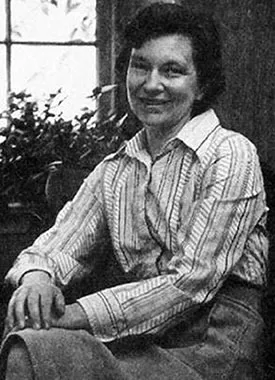
In 1979, Perkins became president of the MLA, the leading professional organization for scholars of literature and culture, at a time when a woman in that role had long been a rarity.
Still, Perkins only wanted what was fair.
“If anybody suggested that because I was a woman I should have special treatment, I would be annoyed,” she said. “And as a matter of absolute principle, I’ve never said that since I have children I would not be able to do [something].”
Students sought Perkins’ support as well, such as when advocating for the creation of a women’s center. In the early 1970s, they had their sights set on a building for a fraternity that had recently folded.
“I don’t think the fraternity lodges are being pried loose as quickly as students think,” Perkins told The Phoenix, which reported on the campaign. “Space is what one fights for longest and hardest here.”
In 1974, the Women’s Center opened in two rooms on the second floor of Bond Hall. It didn’t move to the former Kappa Sigma house until the 1980s, where it remains today as the Gender & Sexuality Center.
“Jean was my only woman professor when I was a student at Swarthmore,” says Lisa Smulyan ’76, the Henry C. and Charlotte Turner Professor Emerita of Educational Studies. “I admired her for that and appreciated her presence; only later did I realize what a challenging position that must have been at the time. She cared deeply about both language and literature and wanted her students to respect both as well. She held high expectations, and brooked no nonsense!”
Given her principled interest in how the College functioned, it is perhaps no surprise that, in 1977, Perkins testified for the plaintiff when the College faced a class-action sex discrimination lawsuit. Perkins’ testimony included her description of how, a few years earlier, she had been encouraged to believe she would be considered for chair of Modern Languages & Literatures, but then was not allowed an opportunity to advance her candidacy; a male colleague was named chair instead. She told The Phoenix she felt personally insulted by the decision and believed Swarthmore’s leadership had relied on her “loyalty to the College and good breeding” to keep her from making “a fuss” about it.
Although the College successfully defended itself in court, Perkins said that the trial exposed issues that still required resolution. To ensure that the case and its implications would not be forgotten, she made its relevant documents available in McCabe Library on general reserve throughout and after the trial.
“There are still individuals who feel that they are being taken advantage of,” she said after the verdict. “There is still a good bit of work to be done on campus.”
At the time, says William R. Kenan Jr. Professor Emerita of Psychology Jeanne Marecek, there were no policies for adjudicating such cases.
“Jean stood alongside female faculty who were ill-treated,” she says. “Moreover, she advocated College policies that would guarantee equitable treatment for women.”
“Jean was a towering presence during my early years at the College,” says Professor Emerita of English Literature Nathalie Anderson. “My own recollections are of her professional integrity, a sense of her having lived through misogynistic times at the College and being wittily sardonic about it, and her quiet kindness for us younger women.”
“I remember Jean as reliably strong, strict, and fair,” Weinstein says. “You didn't have to agree with Jean, but she made sure you knew why you didn't; she strove for clarity. I believe that all the faculty, whether for or against her positions, recognized the candor of her thinking. It was a contentious time, and Jean rose to the intricacies of the challenge. For decades, she contributed energetically to the well-being of the College she loved.”
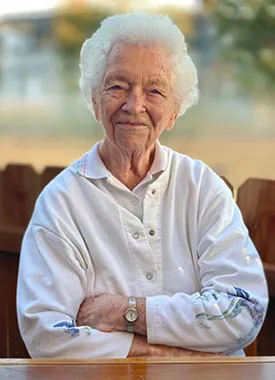
After retiring in 1990, Perkins continued to develop her scholarly, professional, and personal interests and established a scholarship in honor of her and her husband's long Matchbox marriage.
In 1978, Perkins received a fellowship from the American Council of Learned Societies for her project on the Physiocrats and the French Enlightenment. The following year, she moderated a panel and was the only woman on the program to commemorate the 100th anniversary of the Swarthmore Meetinghouse on campus, where she was a member. Perkins later served two stints as MLL chair in the 1980s, and directed the College’s study abroad program in Grenoble, France.
Perkins’ academic interests often extended to those of her colleagues. Napoli recalls that when many language departments around the country felt “intruded upon” by the field of linguistics, Perkins did not.
“Jean saw opportunity, and she worked with me to gather support for a major in linguistics and languages, which allowed cooperation between our two departments,” Napoli says. “I am not sure that Jean ever thought much of linguistics as a discipline, but she was dedicated to her students and that was enough for her to be willing to stretch out a hand.”
“I still remember her unexpected words of praise and critique with respect to an article I had published on Faulkner,” Weinstein says. “I hadn't expected her to read it, and I was struck by the perceptiveness of her response.”
Keith adds that, in addition to influencing her own career, “models like Jean’s were helpful to me as provost.” Keith says she would invoke Perkins to “reassure potential junior faculty whose graduate advisors were often warning them that teaching in a liberal arts college would starve their professional development.”
After retiring in 1990, Perkins continued to live in Swarthmore until she and Ed moved to a Quaker retirement community in Kennett Square, where she served as president of the residents association. After Ed’s death in 2002, Perkins established a College scholarship in his memory and in honor of their long Matchbox marriage to support students on the basis of academic merit and financial need.
In retirement, Perkins also continued to develop her scholarly, professional, and personal interests. She gave papers, published reviews and articles, and continued her associations with the Modern Language Association and the American Society for 18th-Century Studies. She also served for several years on the board of Westtown School, a Quaker school in West Chester, Pa., and volunteered at a local library.
“Jean stayed engaged with our department and was wonderful in conversation, a thoughtful interlocutor and a real intellectual,” says Professor of Russian Sibelan Forrester.
“Practical, smart, involved with her field and with the future of the College,” Napoli says. “Jean was a model for us all.”