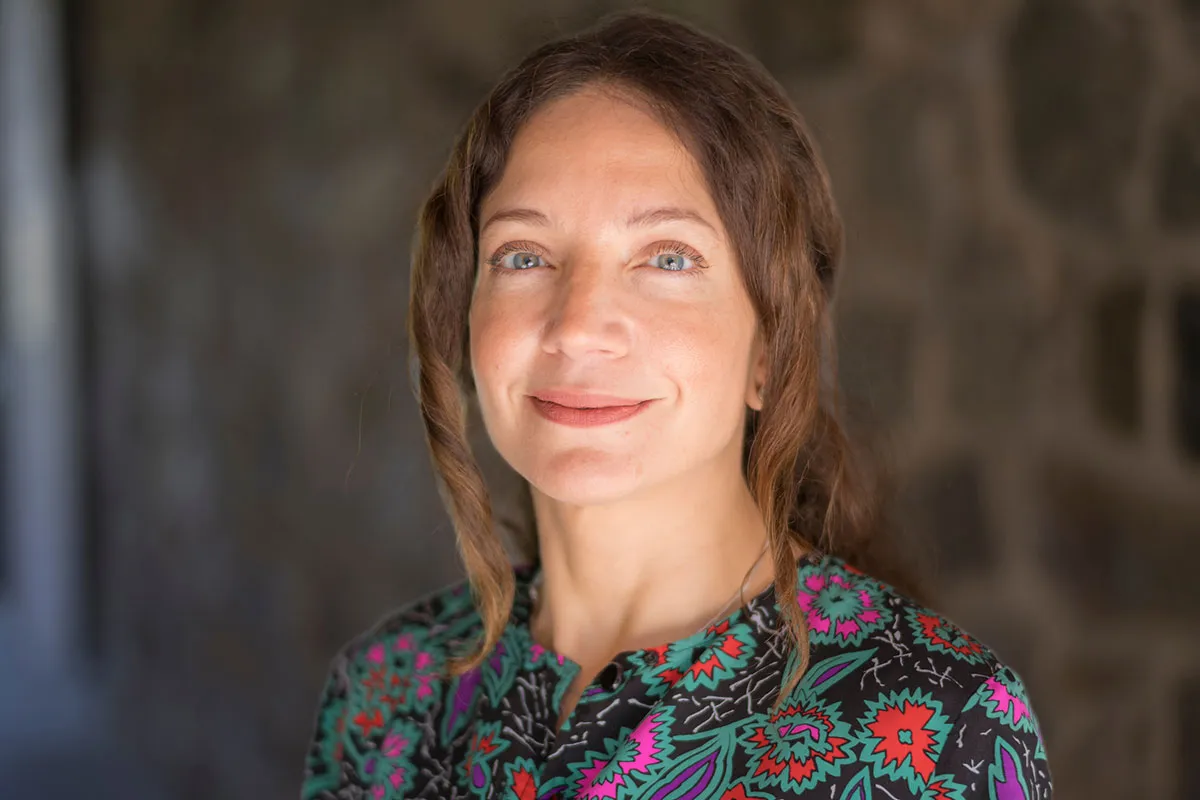
Ayse Kaya
“Our students, in this rapidly changing world, one in which the U.S. may not be at the center, need to understand how to view events from a global perspective.”
It’s an insight that helps explain the current moment. The U.S. retreat from international institutions that were helping constrain rising powers like China is, says Kaya, a strategic misstep. Abandoning them removes mechanisms that were helping to amplify U.S. global strength.
Both the left and the right have criticized the IMF over the years, and Kaya has no illusions that it’s a purely benign organization. Still, she insists that global economic institutions create something valuable: predictability. Growing up in a deeply unequal society, she says, drew her to questions of who wins and who loses, and predictability matters most to those with the least.
“When a crisis hits, people with fewer resources have fewer means to throw at that unpredictability,” she says. “Global economic institutions give information to policymakers and create rules that reduce policy uncertainty.”
In 2023, Kaya stepped briefly from academia into government through a Council on Foreign Relations fellowship, one of just five awarded nationwide that year. For Kaya, a naturalized U.S. citizen, working on climate policy at the State Department was a source of pride, as well as a close-up education in how policy gets made.
The experience also sharpened questions that are driving her current research on the World Bank’s climate finance, examining who receives it, what it pays for, and whether it meaningfully reduces emissions.
Much of the apparent surge in climate finance since the 2015 Paris Agreement has been “mainstreamed” into broader development projects, blurring the line between genuine climate action and other kinds of development. But where, Kaya asks, does mainstreaming end and greenwashing begin?
The same instincts that power Kaya’s research have led her to help expand what Swarthmore offers students.
Together with Associate Professor of Modern Languages & Literatures - French & Francophone Studies Carina Yervasi, Kaya built the Global Studies Program out of her conviction that, in a geopolitically fragmenting world, students need the capacity to interpret events across borders and perspectives. Languages, she argues, are an invaluable skill set that gives access to information from a fundamentally different point of view.
“Our students,” Kaya says, “in this rapidly changing world, one in which the U.S. may not be at the center, need to understand how to view events from a global perspective.”
Does her expertise make her more or less anxious than the average news reader these days? On that point, Kaya hesitates, choosing her words carefully.
Growing up under authoritarian rule in Turkey, she watches with alarm today’s erosion of democratic norms across the world, alongside policy responses that diagnose real problems but offer flawed solutions. At the same time, she insists on optimism.
“I feel we have no choice but to be optimistic,” she says. “So we can think of creative solutions.”