Ben Geller '01
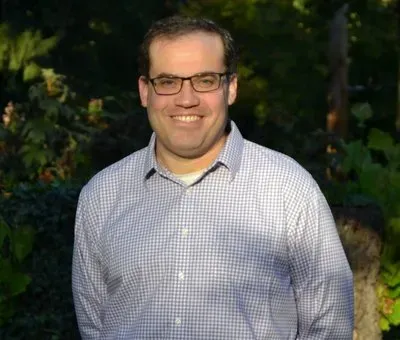
I grew up in rural Pennsylvania, a child of parents from New York City who left to raise a family in a small town. I was and am a passionate sports fan, whose favorite teams always let me down but never stop me from believing the next year will be different. My dad is a lawyer who spent his entire career working for Legal Services, providing voice and representation to low income folks and those who are most vulnerable. Those values were instilled in me from an early age and now inform my teaching and research. I am a Swarthmore alum, having graduated from the college with a degree in Chemistry in 2001.
As an undergraduate I was fascinated by almost every subject I studied and felt like they were all connected. I wrote a paper about the similarities between quantum mechanics and Buddhist philosophy, and another exploring what genetics had to say about ethics. Picking a major was a challenge and I changed my mind a few times along the way. After college I did a master’s degree in the Philosophy of Physics at Columbia University, spent a year as a Fulbright Scholar in the U.K, and ultimately pursued and obtained a Ph.D. in Physics. It’s been a winding path, but the strand that runs through all of it is the liberal arts commitment to seeing the natural sciences and humanities as deeply connected. I do Physics Education Research, a field of study that explores all aspects of how students learn science, and physics in particular. I’m interested in how not just thoughts and ideas, but also attitudes and emotions, play such an important role in how we learn math and science. It is also research that directly informs my teaching. I am continually trying to make my classroom a more interactive and engaging space in which all students can learn deeply. I’m excited to share some of my experiences and learn from everyone involved in the Summer Scholars Program!
Ben Geller ’01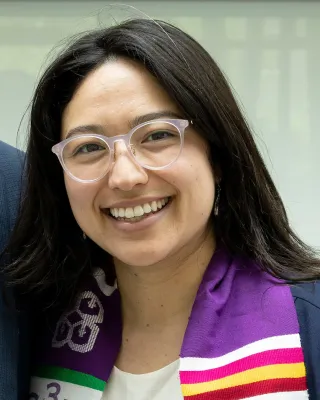
Kyra Harvey-Broughton '19
As a Swarthmore student from a low-income background, I had first-hand experience with some of the challenges that under-resourced students face as they transition to Swarthmore's rigorous academic environment. In S3P, I share my own experience pursuing a STEM major at Swarthmore while battling imposter syndrome. As an antidote to overwhelm, I work to familiarize Scholars with the plethora of resources available to them as Swarthmore students, and I encourage them to regularly and persistently seek help. As a Licensed Social Worker, I bring a relational, whole-person perspective to student mentorship and advising while keeping trauma-informed practices at the center of my work. My hope is that after participating in the summer program, Scholars enter their first semester with a sense of belonging in community and a strong network of support that will last throughout their time in college (and beyond!).
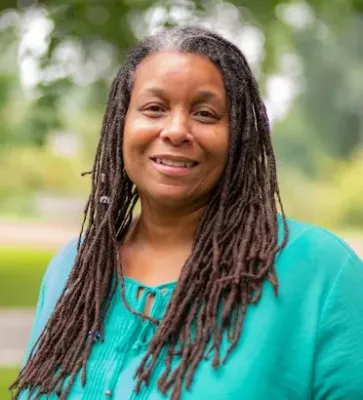
Karen Henry '87
When I came to Swarthmore, I felt like I didn't fit. I struggled here, mainly because my Philadelphia high school hadn't prepared me for the challenge. What saved me was the mentoring I got from faculty and staff. All of them helped me not just to survive but to thrive at Swarthmore.
When I returned to work in the Student Affairs Division, I determined to make sure to provide this same kind of mentoring and support. A lot of students come into my office and describe what a different experience Swarthmore is for them. I share with them my experience and assure them they will survive. I encourage them to use faculty office hours and to speak up in discussion-based classes—two things first-gen students struggle with. I tell them that this is their chance to take advantage of the great resources Swarthmore has to offer—summer research funding, internships, career services, and programs such as the Richard Rubin Scholar Mentoring Program. This helps first-gen students navigate not only Swarthmore, but life after.
Karen Henry ’87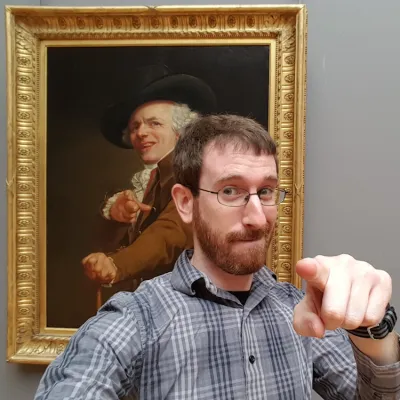
Kevin Webb
I grew up outside Knoxville, Tennessee as an only child. From an early age, I was always fascinated by anything electronic -- especially computers. I was lucky to have parents who encouraged my exploration and provided me with computer hardware and (what was at the time) this fancy new thing called Internet access.
As computing became more mainstream, I took every opportunity to study it. My high school offered a computer networking course, and I fell in love with the topic. From there, I majored in computer science at Georgia Tech, and I was inspired by some of the incredible instructors I had there to get involved in CS education, although I wasn't quite sure how yet. As I finished my undergraduate degree, I realized that there was still so much more that I didn't know, so I decided to pursue graduate school. As a Ph.D. student at UC San Diego, I served as a teaching assistant for several courses, where I came to recognize that teaching and supporting students was my passion.
Since coming to Swarthmore in 2013, much of my research centers around CS education, particularly teaching introductory computer systems topics to undergraduate students. I strongly believe in the transformative power of education and providing all students with the individualized support that they need to succeed. Toward that goal, I've been involved with advocacy efforts for undocumented students on campus and efforts within the CS department to attract and retain a diverse student body.
Outside of work, I enjoy growing plants, playing games with my son and/or my childhood friends, and hanging out with my wife and our cats.
Kevin Webb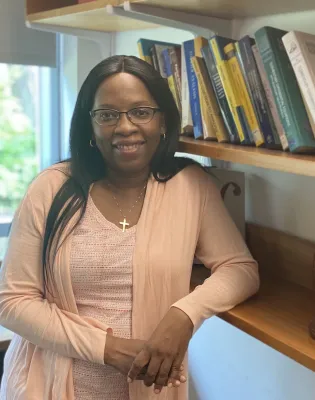
Nsoki Mavinga
I was born and raised in the Democratic Republic of Congo. Since a young age, I have loved mathematics and been passionate about explaining it to classmates and friends. I was inspired to become a math professor after witnessing the excitement with which one of my professors explained equations and geometry.
I earned my B.S. in Mathematics from the University of Kinshasa (D.R. Congo), then went to Italy to pursue a Postgraduate Diploma in Mathematics from the International Centre for Theoretical Physics in Trieste, before moving to the University of Alabama at Birmingham for my graduate studies in Mathematics. After earning my Ph.D. in 2008, I held a postdoctoral position at the University of Rochester, and I have been a professor of mathematics at Swarthmore College since 2011. My research focuses on nonlinear analysis, partial differential equations, and mathematical epidemiology.
Here at Swarthmore, I have embraced the challenge of teaching courses at various levels, from introductory to advanced, with each level requiring its own adaptations to my pedagogical and mentoring approach in order to actively engage students. I am deeply engaged in mentoring students and expanding the participation of underrepresented groups in mathematics. This is what inspired me to co-found the student group Black & Brown in Mathematics and Statistics (B²iMS), with the goal of creating peer mentorship networks to support Black and Brown students' interest in mathematics and increase their representation within the department. I have also served as a mentor for the Richard Rubin Mentorship Program and currently serve as the Faculty Liaison for the Swarthmore Women's Tennis Team.
I believe that mentoring students in various capacities is vital to building a richer Swarthmore community, and that community involvement creates lasting connections. In my free time, I enjoy watching soccer and tennis and spending time with family and friends.
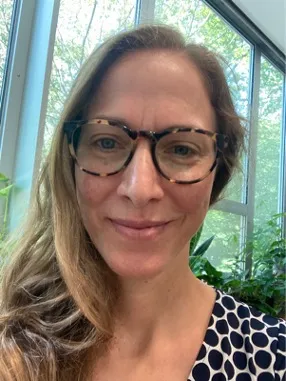
Laura Dandridge
As a former high school math teacher, a large part of my role at Swarthmore is helping students make the transition from high school math to college math as smoothly as possible. I believe learning math is really about making connections. Connections to the web of prior knowledge and life experiences that already exist within our brains, connections with other mathematicians who are productively struggling with the same problem, and connections between math and other academic disciplines will all help to make learning durable and meaningful. Often the transition to higher-level math can involve “unlearning” as well, as memorizing formulas and procedures will not be enough for the challenges ahead. I encourage students to let go of the idea that you’re either a “math person” or you’re not; rather, all people can grow to use the tools of mathematics to solve problems.
In addition to assisting with the math program in S3P, I also teach a PreCalculus workshop attached to Math 15 (Calculus 1) for students who need further support in their transition. I coordinate the Math/stat department’s peer assistants, tutors, and graders. I encourage all students taking a math class to build time into their weekly schedule to seek support and collaborate with other students on the homework. I also encourage students to find balance and make time for non-academic activities they enjoy. When I’m not helping students with math, you may find me running on the track, swimming in the pool, working out in the Matchbox, meandering along the Ockanickon (native name for Crum) or Wissahickon creeks, or playing with my dogs.
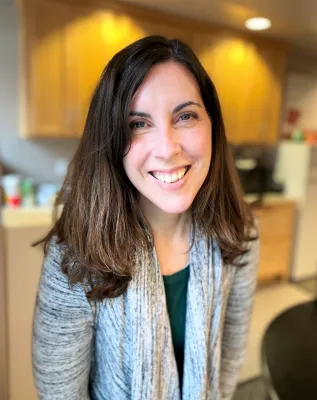
Natalie Mera Ford
Most writers come to love writing through reading, and I was no different. Thanks in large part to my mom and dad’s influence and the short walk to our local library, poetry, myth, and fantasy were my favorite genres as a kid. Over time, I expanded to other fiction – especially novels with a gothic touch – plus memoir and historical nonfiction. In school, reading and writing almost anything interested me. I remember getting a quiet satisfaction just opening textbooks (their heft seemed to promise wisdom) and pencilling equations or lab results, although the humanist in me already loved penning Spanish translations, English essays, and creative pieces most.
This all led me to pursue higher education in a slightly smorgasbord way. Thanks to a scholarship and my family, I attended a liberal arts college. Bard didn’t have majors, which encouraged me to study deeply across divisions, even as my senior project focused on literary fiction. After seeing more of the world – through service in education and jobs ranging from cider-making to coaching international engineers in the English language – I returned to academia, thanks again to my family and another scholarship. At this level, my intellectual eclecticism sometimes felt like a hindrance, but interdisciplinary research offered a path forward. The work at York was hard at first, much harder than when I was a girl thriving in my hometown schools. I missed the daily boost of my parents cheering me on; they were now an ocean away. But meeting challenges independently while finding a support network in friends and professors proved a new, profound satisfaction.
My master’s and doctoral degrees reflect the academic training and critical projects I achieved, and I’m proud of those. Yet I’m also grateful to have learned the value of growing through difficulty within a community that cares about helping people as much as advancing knowledge. This may be why I’ve enjoyed contributing to S3P in past years as a guest and assistant Writing instructor! I can’t wait to welcome this summer’s scholars and begin working on writing together.
Natalie Mera FordSummer of 2026
Allison Miller, S3P Math Instructor, Assistant Professor of Mathematics
Kathryn Riley, S3P Chemistry Instructor, Associate Professor of Chemistry
Sibelan Forrester, S3P Writing Instructor, Susan W. Lippincott Professor of Modern and Classical Languages
Laura Dandridge, S3P Assistant Math Instructor, Department of Mathematics and Statistics
Maria Gallagher, S3P Assistant Chemistry Instructor, Department of Chemistry and Biochemistry
Michael Wilson Becerril, S3P Assistant Writing Instructor, Visiting Assistant Professor of Peace & Conflict Studies, Latin American & Latino Studies, Environmental Studies
Summer of 2025
Ralph Gomez, S3P Math Instructor, Professor of Mathematics
Dawn Carone, S3P Biology Instructor, Associate Professor of Biology
Alba Newmann Holmes, S3P Writing Instructor, Assistant Professor of English Literature, Director of the Writing Associates Program
Laura Dandridge, S3P Assistant Math Instructor, Department of Mathematics and Statistics
Susie O'Donnell, S3P Assistant Biology Instructor, Department of Biology
Lette Bragg, S3P Assistant Writing Instructor, Visiting Assistant Professor of English Literature
Summer of 2024
Joseph Towles, S3P Math Instructor, Associate Professor of Engineering
David Cohen, S3P Astronomy Instructor, Professor of Astronomy
Alba Newmann Holmes, S3P Writing Instructor, Assistant Professor of English Literature, Director of the Writing Associates Program
Laura Dandridge, S3P Assistant Math Instructor, Department of Mathematics and Statistics
Jesse Rivera, S3P Assistant Astronomy Instructor, Department of Physics and Astronomy
Hannah Donald, S3P Scientific Poster Instructor, Department of Biology
Summer of 2023
Cheryl Grood, S3P Math Instructor, Professor of Mathematics and Statistics
Lisa Meeden, S3P Computer Science Instructor, Neil R. Grabois Professor of Computer Science
Sibelan Forrester, S3P Writing Instructor, Professor of Russian, Russian Section Head
Laura Dandridge, S3P Assistant Math Instructor, Department of Mathematics and Statistics
Lauri Courtenay, S3P Assistant Computer Science Instructor, Department of Computer Science
Natalie Mera Ford, S3P Assistant Writing Instructor, Assistant Professor of English Literature
Hannah Donald, S3P Scientific Poster Instructor, Department of Biology
Summer of 2022
Philip Everson, S3P Math Instructor, Professor of Mathematics and Statistics
Carr Everbach, S3P Engineering Instructor, Professor of Engineering and Environmental Studies
Joseph Derrick Nelson, S3P Writing Instructor, Associate Professor of Educational and Black Studies
Laura Dandridge, S3P Assistant Math Instructor, Department of Mathematics and Statistics
Ann Reuther, S3P Assistant Engineering Instructor, Department of Engineering
Natalie Mera Ford, S3P Assistant Writing Instructor, Assistant Professor of English Literature
Susie O'Donnell, S3P Scientific Poster Instructor, Department of Biology
Summer of 2021
Ben Geller, S3P Math Instructor, Associate Professor of Physics
Bradley Davidson, S3P Biology Instructor, Professor of Biology
Tim Burke, S3P Writing Instructor, Peggy Chan Professor of History
Danielle Ledford, S3P Assistant Math Instructor, Department of Mathematics and Statistics
Tim DuBuc, S3P Scientific Poster Instructor, Department of Biology
Summer of 2020
Ralph Gomez, S3P Math Instructor, Professor of Mathematics and Statistics
Kathleen Howard, S3P Chemistry Instructor, Edward Hicks Magill Professor of Chemistry and Biochemistry
Betsy Bolton, S3P Writing Instructor, Alexander Griswold Cummins Professor of English Literature
Danielle Ledford, S3P Assistant Math Instructor, Department of Mathematics and Statistics
Summer of 2019
Philip Everson, S3P Math Instructor, Professor of Mathematics and Statistics
Matt Zucker, S3P Engineering Instructor, Professor of Engineering
Peter Schmidt, S3P Writing Instructor, William R. Keenan, Jr. Professor of English Literature
Summer of 2018
Philip Everson, S3P Math Instructor, Professor of Mathematics and Statistics
Lisa Meeden, S3P Computer Science Instructor, Neil R. Grabois Professor of Computer Science
Peter Schmidt, S3P Writing Instructor, William R. Keenan, Jr. Professor of English Literature
Summer of 2017
Deb Bergstrand, S3P Math Instructor, Professor Emeritus of Mathematics and Statistics
Catherine Crouch, S3P Physics and Astronomy Instructor, Professor of Physics
David Cohen, S3P Physics and Astronomy Instructor, Professor of Astronomy
Anthony Foy, S3P Writing Instructor, Associate Professor of English Literature
Summer of 2016
Deb Bergstrand, S3P Math Instructor, Professor Emeritus of Mathematics and Statistics
Catherine Crouch, S3P Physics Instructor, Professor of Physics
Frank Moscatelli, S3P Physics Instructor, Professor Emeritus of Physics
Anthony Foy, S3P Writing Instructor, Associate Professor of English Literature
Summer of 2015
Cheryl Grood, S3P Math Instructor, Professor of Mathematics
Amy Cheng Vollmer, S3P Biology Instructor, Professor Emerita of Biology
Jill Gladstein, S3P Writing Instructor, Associate Professor of English