Swarthmore Theater Professor Emeritus Allen Kuharski celebrates the life of Dito van Reigersberg’94
Dito was not just interesting, he was a deeply interested person. Professor Emeritus Kuharski shares his experience with this legendary performer and person.
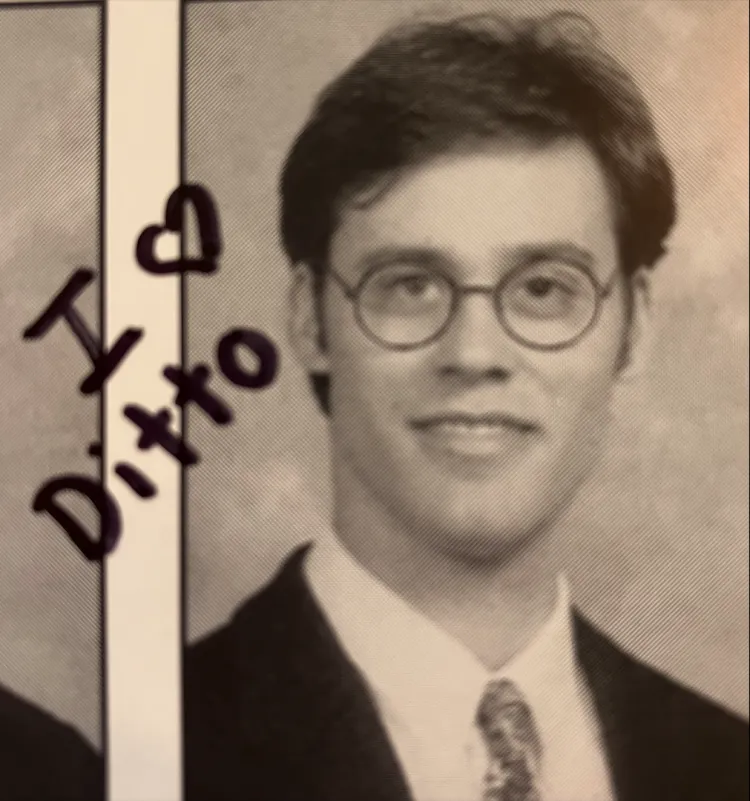
A photo of Dito Van Reigersberg '94
This past weekend, the Philadelphia Theater Community celebrated the life of Dito van Reigersberg ‘94. A powerhouse performer with a delicate soul, Dito left a lasting impression on everyone that crossed his path. As a theater artist, he was a founding member of Pig Iron Theater Company where he won Barrymore awards for Mission to Mercury and Cafeteria. Most recently, he was the lead artist on Pig Iron’s Poor Judge, a dance-theater cabaret featuring the music of Aimee Mann (for which he shared another Barrymore for Outstanding Overall Production of a Musical). He also performed regularly under his drag alter-ego, Martha Graham Cracker.
Yet, Dito was more than just a performer. He was a poet who secretly wrote since he was a teen. He was a fluent Spanish speaker, obsessed with the work of Lorca and Calderón. He was both the wild life of the party and a homebody who enjoyed a quiet evening in. Dito’s myriad aspects are almost impossible to capture.

Rose Jarboe at A Day Celebrating Dito. Photo by Johanna Austin.
To celebrate his life, Swarthmore Theater spoke with Professor Emeritus Allen Kuharski about Dito and their relationship. Allen has spoken about Dito’s life at several memoriams, and a link to his remarks can be found here. We were so grateful to get a small insight into the life of one of the brightest and most beloved Swarthmore Theater alumni. In this conversation, we discuss what current Swat Theater students can learn from Dito’s life and legacy.
Swarthmore Theater:
What was your earliest memory of Dito?
Allen Kuharski:
I met him when he was 17. He took my Intro to Theater class, a theater history class. He was a classic theater kid, coming from a good high school with a good theater program. And, Corinna Burns ‘96, who remained Dito's close friend, told me a great story about how, as incoming theater students, they would sit down to lunch and quiz each other on Shakespeare. What was their favorite Shakespeare play? Who was their favorite character? Because they both came from high school already knowing so much.
Dito was not only intelligent, he was also talented. As a freshman, he was already a singer, and somehow a dancer. He had all these different topics swimming around in his head. And Spanish! Did you know he was functionally bilingual? I actually looked at his transcript. He was working with three departments all the way through [his time at Swarthmore]: Theater, English, and Spanish.
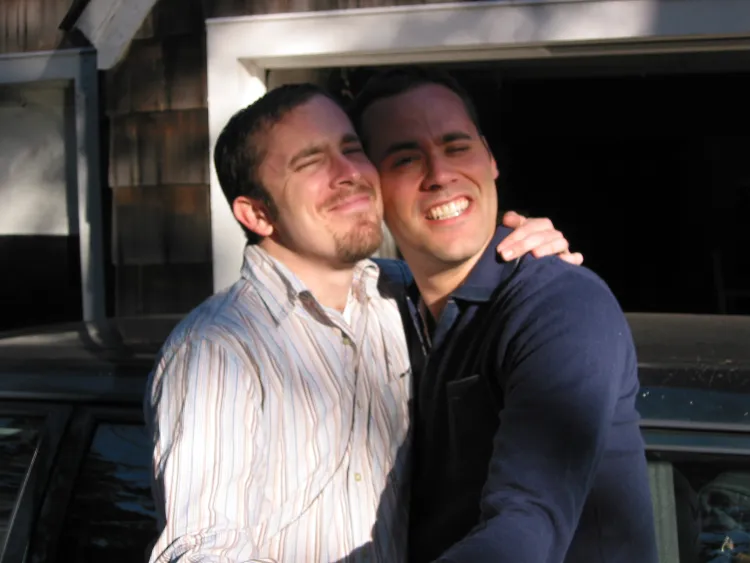
Quinn Bauriedel '94 and Dito Van Reigersberg '94
Something I always loved about Dito was his curiosity. He seemed to have some knowledge about almost everything. And you’re saying he was like that from the beginning?
Dito was an intellectual omnivore, especially when it came to theater and performance. He wanted to know anything and everything about Shakespeare. He was crazy about the Spanish Golden Age. He was crazy about Lorca and his works Blood Wedding and The House of Bernarda Alba. Then, as he spent more time at Swarthmore, his interests expanded. He became obsessed with Martha Graham after viewing Night Journey, one of her dance pieces, in my class. He became really interested in Charles Ludlum. He was excited by Grotowski, and by Calderón. These were things that he would go do these deep dives into.
During his time at Swarthmore, he directed a cutting of The House of Bernarda Alba [by Federico Garcia Lorca] to be performed in Spanish. No translation, no super titles. We did it for the public, and it was marvelous. Even though it was well received, he didn't go on to do more directing because he said he didn't enjoy the stress of it. He was an actor, and he would never trade the gratification he got from acting for directing.
Hearing you talk about how Dito was constantly consuming things from different departments–from Spanish, from Theater, from Dance–helps me understand what you say in your remarks that Dito was “incubated by Swarthmore.” I'm curious about how Dito's energy affected Swarthmore. What do you think?
Well, he was hugely popular with other students. He was a seventeen-year-old version of who he was whenever you met him. He was always a kind of a social star. People loved him. He was warm, he was popular, he was funny. He had this lightness that was very appealing.
He also came back to work on other students' work as an alumni. We hired him once to work on Sarah Kane’s Phaedra’s Love, by a very talented directing student, Marc Boucai ‘04.
We hired him and Emmanuelle Delpeche. Emmanuelle was cast as Phaedra, and I think Dito was Theseus. It was an amazing cast. And Marc appreciated the opportunity to work with smart people like them.

Pig Iron Theater's Love Unpunished (Cooper Series 2021)
When he was a student, Dito read Racine’s Phaedra with me in class. Martha Graham also did a famous Phaedra take. Phaedra was one of the texts I pitched hard, as a kind of surprise to the students to take something from the French 17th century so seriously.
Really the point about Dito is that he let everything influence him. He was informed by all those unlikely, crazy passions about theater, and performance, and dance, and poetry. Dito couldn't separate them, and his work doesn't separate them. I feel like when we talk so much about Martha Graham Cracker, people assume that’s how he's best known.
But Martha Graham Cracker wouldn't exist without all his interests in theater.
Swarthmore students are often compelled to have a big, wide set of interests much like Dito. How should current students try to live on in Dito’s legacy?
In a way, I would say Dito is maybe the best case study for why the practice of the arts should be part of the Swarthmore curriculum. It didn't used to be. Before 1987, you couldn't get a graded credit for performing anything. You couldn't paint a picture, or play an instrument, or taking a drawing class and count it towards graduation. Practical application of the arts was in this co-curricular or extracurricular category, and it wasn't taken seriously by the College. But Dito still took part in all of those performances, even if it wasn’t for credit.
On top of all the uncredited performances he did on campus, Dito was also an Honors Student in Theater. This was indicative of his omnivorous nature because no one did Honors in Theater when Dito did. It wasn't popular. We didn't encourage it, because it didn't make sense. Even his examiners said “Why is he writing all these papers? He’s a performer.”
But he insisted he was gonna do it, even though it was so heavy. He did six preparations. Today, the Honors Program is only four and that can include creative work. Back then, it was six preparations, and you couldn't do any creative work.
So I would say he's the argument for why a Swarthmore education and everything the institution can provide is appropriate for someone going on to be a working artist in theater. His career would not have been possible without Swarthmore.
So, it was his omnivorous curiosity combined with a deep course of study that led to his success after Swarthmore?
Liberal arts was the perfect foundation for Dito, and for his richness later. He got this super education with a lot of depth and a lot of sophistication in all of these dimensions, which a BFA program doesn't support or encourage.
I feel like the liberal arts approach is the ideal platform for a long-term theater person, no matter what you're doing. You need all that complexity. And ultimately, you decide what your education is within these very general parameters of liberal arts.
Dito also was a young soul. You know, Pig Iron Theater Company, which he was a founding member of, and École Lecoq, the school that influenced their work, emphasize the naive in the clown. Even though Dito didn’t study with Lecoq, he was a born Lecoq actor because of the beautiful naivete he had. He had the wonder of a seven-year-old. This is a really deeply important lesson. You must never lose touch with your inner seven-year-old. He had that naivete, but that naivete did not mean he didn't know things. He knew so many things.
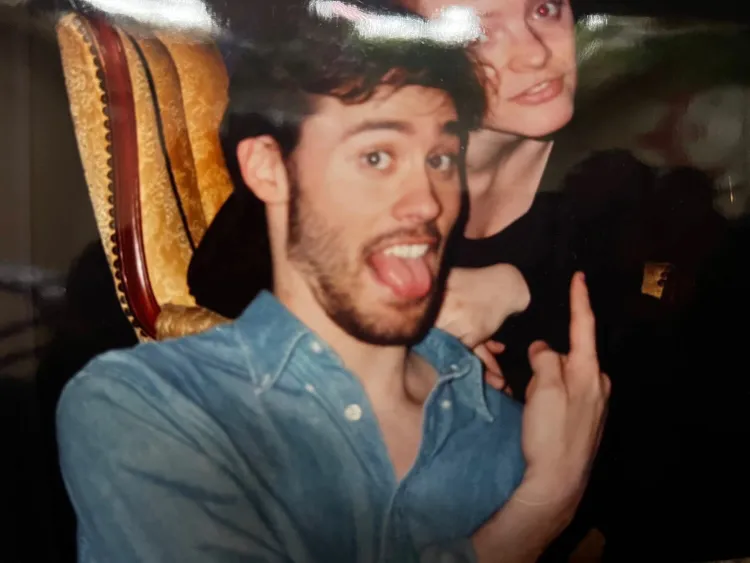
Dito Van Reigersberg '94. (Photo courtesty of Allen Kuharski)
You mentioned in your remarks that Dito is “a role model of courage and artistic success to the campus’s fledgling queers.” How should these on-campus LGBT folks live a life that honors Dito’s memory?
The message to an LBGTQ+ student, I would say, from Dito’s example, are two things. One: learn everything. It doesn't have to be LBGTQ+ specific. Dito, however, couldn't separate the queer work from everything else. Inside of it all was the DNA of his other passions. Something like Poet in New York, which was one of his first big breakouts, is a good example of that. Everything about Dito is going on in that piece. Everything is happening. It's Lorca. It's poetry. It's poetic movement. There’s even some singing.
The other thing is to be interested and be interesting. Dito was an interesting person. He was interesting to talk to because he had all these things going on in the ways that liberal arts makes you an interesting person. But he was also deeply interested in other people, which gave him the tools to be a great collaborator.
It is that space between people where theater happens. Dito could activate that space between people so precisely. Dito treated everything as interactive and porous. So, everything you study is infusing and influencing everything you will do. A Swarthmore education makes that possible.