Brian Goldstein Authors First Biography of Influential Architect Max Bond
September 17th, 2026
Cara Anderson
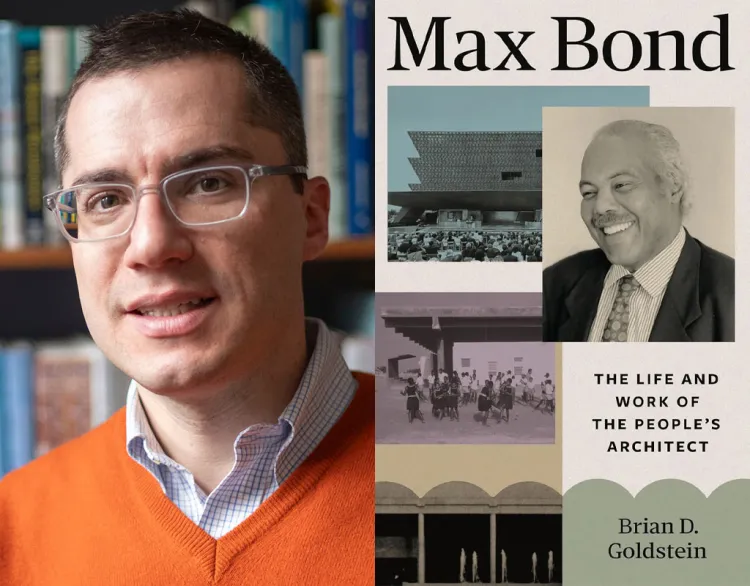
Brian Goldstein’s Max Bond: The Life and Work of the People's Architect (Princeton 2026), released earlier this week, is the first biography of the preeminent postwar architect Max Bond, who championed the cause of freedom through architecture and transformed Black history and modernism.
J. Max Bond Jr. (1935–2009) was a civil rights activist, educator, and architect born in Louisville, Ky., who played a central role in shaping places from Harlem to Ghana. His distinguished career spanned more than four decades; he designed housing, cultural institutions, community centers, and campuses amid an era of major changes in American culture, architecture, and urbanism.
Goldstein, an associate professor of architectural history who researches the intersection of architecture and race, dedicated 10 years to writing this biography. He describes Bond as “a visionary figure who asked how he could design buildings and cities that would create a more just world.”
“Max Bond is the culmination of years of work — days spent viewing myriad archival collections, dozens of oral history interviews, and the historian's pursuit of elusive threads: the name of a college roommate or a lost tape of a public lecture,” says Goldstein. “Seeing the book and holding it in my hand is thrilling and almost unbelievable.”
Beyond the personal and professional meaning of this book release, Goldstein is excited for people to learn from Bond.
“While his physical impressions were widespread, from Ghana to Birmingham,” he explains, “what is so striking about his work is its consistent interest in how architecture can help to make the world a better place. As much as this is an architectural history and a biography, it is also a chance to learn from a figure whose career can offer lessons in still-very-relevant questions about how our built environment can be a more just place, how it can better reflect the many kinds of people who inhabit it, and how people can shape it towards these outcomes.”
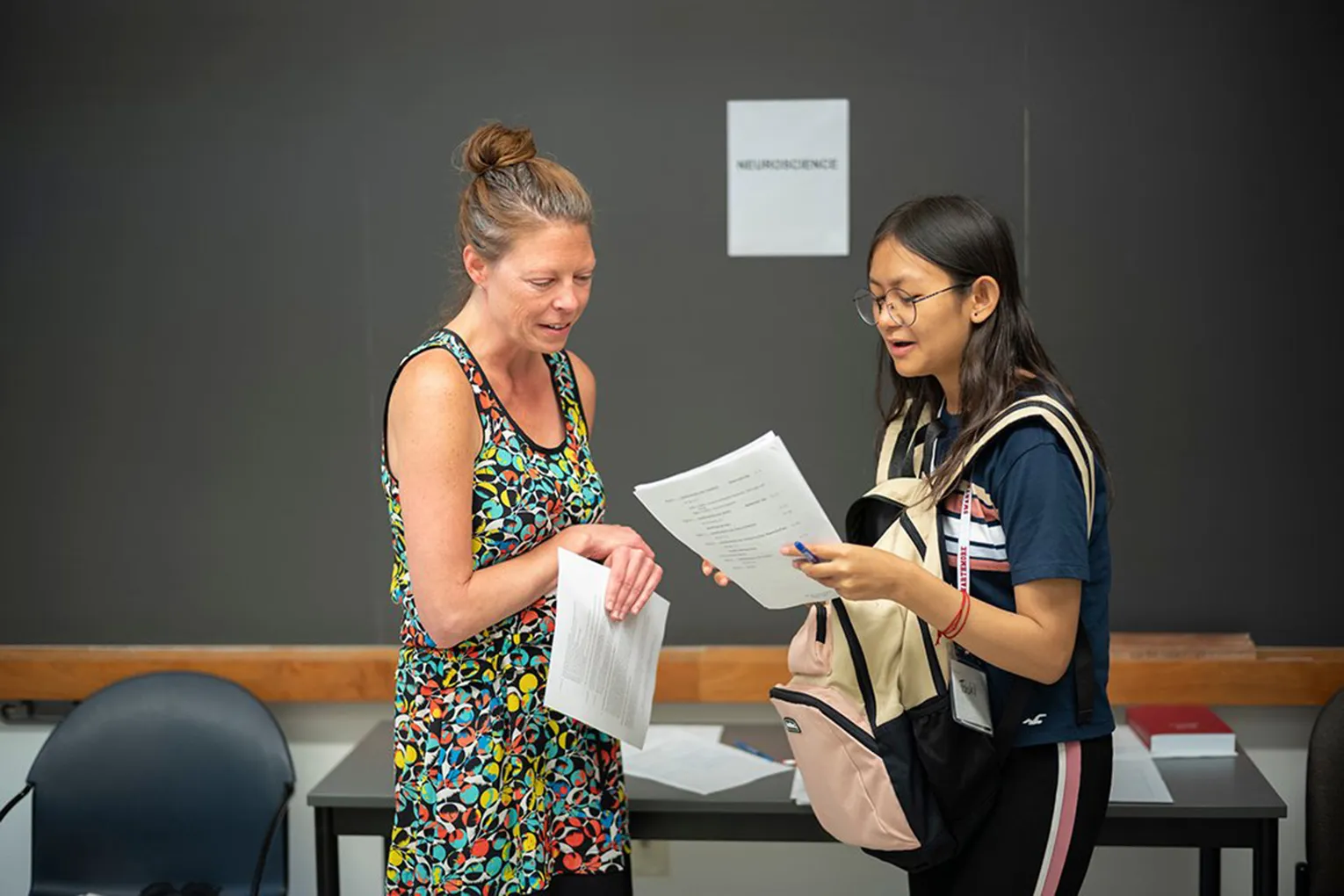
Goldstein says his teaching at Swarthmore and the book have influenced one another.
“I have taught the course Race, Space, and Architecture several times, including this semester, and it has shaped how I have thought about the many different ways racial identity, architecture, and urban spaces interact,” says Goldstein. “My course Building Architecture from Dirt to Dust was in many ways shaped by Bond's argument that an architect plays only a brief part in a building's life and that we must ask about all the other people who shape buildings, from the people who manufacture building materials to construction workers to caretakers to residents.
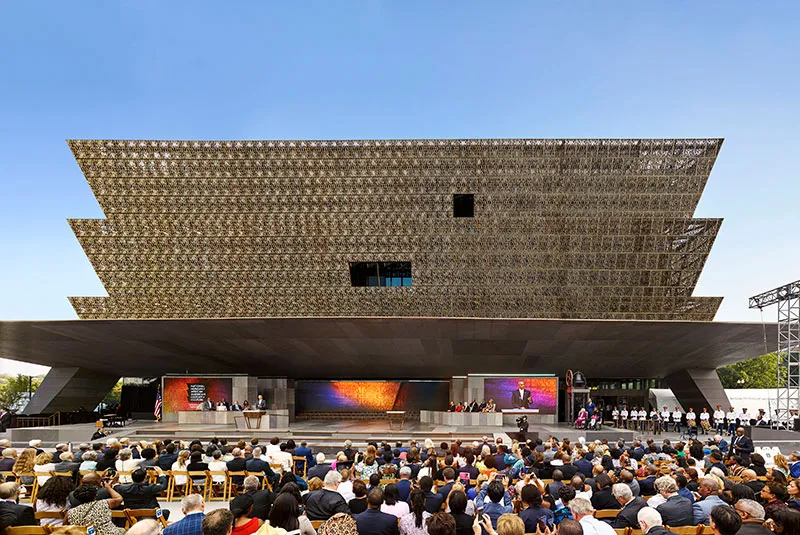
President Barack Obama speaks at the dedication of the National Museum of African American History and Culture, September 2016. The museum, opened ten years ago, was designed by a team of architects that included the firms of Bond, Phil Freelon, David Adjaye, and SmithGroup. Photo by Alan Karchmer/NMAAHC.
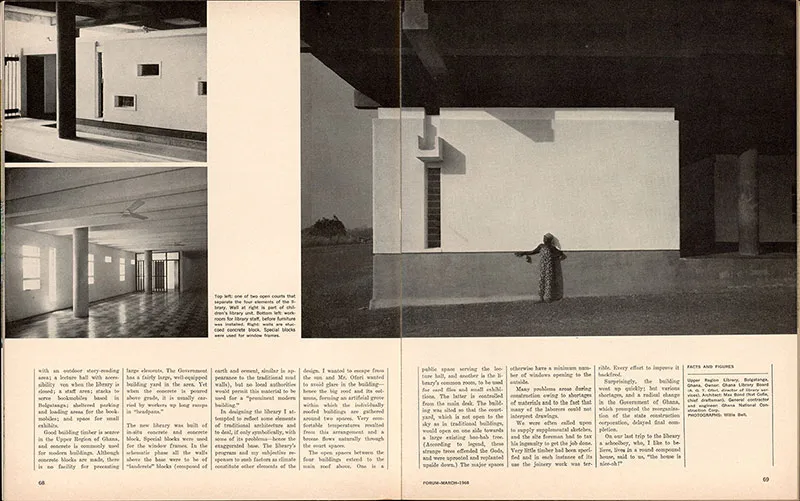
A two-page spread from the March 1968 article “A Library for Bolgatanga,” in Architectural Forum. Featuring the photographs of Willis Bell, the Bond-authored piece described his design for the Upper Region Library in Bolgatanga, Ghana, his first independent project.
President Barack Obama speaks at the dedication of the National Museum of African American History and Culture, September 2016. The museum, opened ten years ago, was designed by a team of architects that included the firms of Bond, Phil Freelon, David Adjaye, and SmithGroup. Photo by Alan Karchmer/NMAAHC.
Photo/
1
of
2
“Reading and thinking with students has helped me write this book,” he adds. At the same time, I have benefited greatly from the research leaves that Swarthmore has enabled me to take, which allowed me to complete much of the research for the book and, in 2023-24, when I was a fellow at the Center for Advanced Study in the Visual Arts at the National Gallery of Art, to write many of its chapters. I could not have completed the book without that time and I am certainly grateful for that opportunity.”
Bond’s designs include some of the most significant cultural and civic projects in the country, such as the Martin Luther King Jr. Center for Nonviolent Social Change in Atlanta, the National September 11 Memorial & Museum at Ground Zero, and the National Museum of African American History and Culture in Washington, D.C. Driven by the concerns of the Civil Rights Movement, Bond insisted on a practice centered on deep social engagement during years when his profession became preoccupied with celebrity and spectacle.
“The book avoids reducing Bond’s story to one of struggle alone,” writes Mark Gardner, principal at Jaklitsch/Gardner, president-elect of the American Institute of Architects, and member of the National Organization of Minority Architects, in Architectural Record. “Instead, it emphasizes his creativity, leadership, and determination to expand the possibilities of the profession. More than a biography, it is a work of historical recovery that restores a crucial figure to his rightful place in American architectural history.”
Goldstein’s The Roots of Urban Renaissance: Gentrification and the Struggle over Harlem (Harvard 2017) highlighted Bond’s work directing the Architects' Renewal Committee in Harlem (ARCH) in the late 1960s. Exploring that brief period of Bond’s career sparked Goldstein’s interest in charting the long trajectory of an overlooked yet deeply influential figure in both architecture and the struggle for civil rights.
On Sept. 23, Max Bond will be the subject of a book event at Celia Bookshop in Swarthmore, with Goldstein in conversation with Pulitzer Prize-winning Philadelphia Inquirer architecture critic Inga Saffron. Goldstein’s book tour will continue in many of the cities where Bond designed major projects, including Washington, D.C.; Birmingham, Ala.; Cambridge, Mass.; Louisville, Ky.; Atlanta; Chicago; and New York City.
Submissions Welcome
The Communications Office invites all members of the Swarthmore community to share videos, photos, and story ideas for the College's website. Have you seen an alum in the news? Please let us know by writing news@swarthmore.edu.