Andrew Ward
William R. Kenan, Jr. Professor
Psychology
Peace & Conflict Studies
Contact
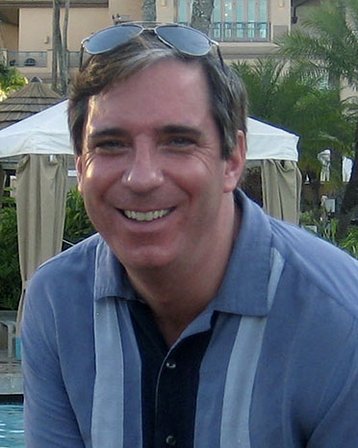
Curriculum Vitae | Publications | Presentations | Virtual Reality Stimulus: Please contact me for samples
Curriculum Vitae
Academic History
Ph.D., Psychology, Stanford University, 1996
A.B., Biology, Harvard University, 1990
Positions
William R. Kenan, Jr. Professor, Psychology Department, Swarthmore College, 2019-present
Acting Department Chair, Psychology Department, Swarthmore College, 2017-2018
Professor, Psychology Department, Swarthmore College, 2011-2019
Department Chair, Psychology, Swarthmore College, 2009-2014
Associate Professor, Psychology Department, Swarthmore College, 2003-2011
Assistant Professor, Psychology Department, Swarthmore College, 1997-2003
Visiting Professor, Psychology Department, UCLA, 2013-present
Visiting Professor, Psychology Department, Bryn Mawr College, 2020
Visiting Professor, Psychology Department, University of Pennsylvania, 2015-2018
Acting Program Chair, Peace and Conflict Studies, Swarthmore College, 2007-2008; 2015-2016
Visiting Professor, Psychology Department, Drexel University, 2012-2015
Visiting Faculty Member, RAND Corporation Graduate Program, 2008-2009
Visiting Associate Professor, Psychology Department, UCLA, 2004-2005
Faculty Affiliate, Solomon Asch Center for Study of Ethnopolitical Conflict, 1999-2007
Visiting Lecturer/Post-doctoral Researcher, Psychology Dept., University of Michigan, 1996-1997
Associate Director, Stanford Center on Conflict and Negotiation, 1995-1996
Instructor, Stanford University Summer Program, 1994, 1995
Fellowships and Awards
Lang Faculty Fellowship, Swarthmore College, 2000-2001.
APA Dissertation Award, 1995
Best Paper Award, Seventh Annual Conference of the International Association for Conflict Management
(with R. J. Robinson, D. Keltner, and L. Ross), 1994
Fellow, Stanford Center on Conflict and Negotiation, 1992-1993
Stanford University Fellowship, 1990-1992
John Harvard Scholarship, 1990
Harvard College Scholarship, 1987, 1988, 1989
Grants
R01 Grant, NHLBI, “The Role of Attention in Self-Regulation,” 2008-2013 (co-principal investigator with Traci Mann of the University of Minnesota), Direct Costs: $950,000
R01 Grant, NIMH, “The Role of Attention in Self-Regulation,” 2002-2007 (co-principal investigator with Traci Mann of UCLA), Direct Costs: $625,000
Research Grant, Solomon Asch Center for Study of Enthnoplitical Conflict, 2001
NIMH Individual Training Grant (National Research Service Award), 1993-1996
Fellow, NIMH Social Area Training Grant, Stanford University, 1992-1993
Research Grant, Stanford Center on Conflict and Negotiation, 1993
Curriculum Development Grant, Institute for Research on Women and Gender, Stanford University, 1991
Curriculum Development Grant, American Express Ethics Program, Harvard University, 1991
Professional Memberships
American Psychological Association
American Psychological Society
Society for Experimental Social Psychology
Society for Personality and Social Psychology
Sigma Xi
Research Interests
Self-regulation and control
- Disinhibited and inhibited behavior under limited attention
- Rumination under uncertainty
Negotiation and Conflict Resolution
- Psychological barriers to the negotiated resolution of disputes
- Overcoming obstacles to successful negotiations
Social Perception
- "Naive realism," egocentric construal, and other inferential biases
- The role of "negative acknowledgment" in impression management
Professional Experience (partial list)
External Grant Reviewer, NSF, 2006; 2013
External Review Committee, Franklin and Marshall College, 2012
External Review Committee, Pomona College, 2011
Contributing writer, PBS television series "Mental Engineering"
Lecturer, Cortext/Mind Matters Seminars
Ad-hoc Reviewer for Psychological Science, Journal of Personality and Social Psychology, Social Cognition, Psychological Medicine, Health Psychology, Journal of Experimental Social Psychology, Group Processes and Interpersonal Relations, Appetite, Negotiation Journal, British Journal of Clinical Psychology, Journal of Applied Social Psychology, PNAS, European Journal of Social Psychology, BASP, Psychology and Health, Exp. Psych., Journal of the American Dental Association, Acta Psychologica, J Dec. Making.
Guest Lecturer, Annual Conference, ACE Global Insurance, 2008
Guest Lecturer, Wharton School of Management, University of Pennsylvania, 2008
Guest Lecturer, Maryland Project for the Book, 1999
Guest Lecturer, Anderson Graduate School of Management, UCLA, 1998
Guest Lecturer, California Institute of Technology, 1997, 1996
Guest Lecturer, University of Michigan, 1996
Consulting Reviewer, Program Review Committee, Western Psychological Association, 1993
Guest Lecturer, Second Annual Conference of Advanced Placement Psychology Teachers, 1993
Stanford Psychology Department Graduate Student Representative, 1992-1993; Organizer of Weekly Social
Area Lab Meetings, 1992-1993; Member of Graduate Admissions Committee, 1992
Research Assistant with Dr. Ellen Langer, Department of Psychology, Harvard University, 1989-1990
Faculty Committees (partial list)
VP Development Search Committee 2011-2012
Provost Search Committee, 2010-2011
Dean Search Committee, 2005-2006; 2009-2010
Broader Educational Experiences Planning Group, 2007-2008
Associate Dean Search Committee, 2006-2007
Website Redesign Committee, 2005-2006
Prizes and Fellowships Selection Committee, 2005-2007
Advisory Committee to the Dean, 1999-2008
Peace and Conflict Studies, 1998-present (Search Committee for Joint Bryn Mawr-Haverford Position, 1999; Search Committee for Visiting Professor Position, 2007)
Research Ethics Committee, 1998-2000
Teaching Experience (partial list)
Graduate Seminar in Social Psychology, Drexel University
Introductory Psychology -- Swarthmore College; UCLA; University of Pennsylvania; Stanford University (summer)
Introductory Social Psychology --Swarthmore College; University of Pennaylvania; Bryn Mawr College; UCLA (summer)
Honors Seminar in Social Psychology, Research Design and Analysis, Psychology of Self-Control, Applications
of Social Psychology -- Swarthmore College
Research Methods in Psychopathology -- University of Michigan
Publications (partial list)
Wallaert, M., Ward, A., & Mann, T. (2014). Ask a busy person: Attentional myopia and helping. Journal of Applied Social Psychology.
Caruso, E. M., Van Boven, L., Chin, M., & Ward, A. (2013). The temporal Doppler effect: When the future feels closer than the past. Psychological Science, 24, 530-536.
Ward, A., Atkins, D. C., Lepper, M. R., & Ross, L. D . (2011). Affirming the self to promote agreement with another: Overcoming a psychological barrier to conflict resolution. Personality and Social Psychology Bulletin, 37, 1216-1228.
Ward, A., Wallaert, M., & Schwartz, B. (2011). Who likes evolution? Dissociation of human evolution versus evolutionary psychology. Journal of Social, Evolutionary, and Cultural Psychology, 5, 122-130.
Wallaert, M. Ward, A., & Mann, T. (2010). Explicit control of implicit responses: Simple directives can alter IAT performance. Social Psychology, 41, 152-157.
Ross, L., Lepper, M., & Ward, A. (2010). History of social psychology: Insights, challenges, and contributions to theory and application. In S. T. Fiske, D. T. Gilbert, & G. Lindzey (Eds.), Handbook of Social Psychology (5th ed., Vol. 1, pp. 3-50). Hoboken, NJ: Wiley.
Monterosso, Mann., Ward, Ainslie, Bramen, Brody, & London (2010). Neural Recruitment during Self-Control of Smoking: A Pilot fMRI Study. In Ross, Kincaid, Spurrett, & Collins (Eds.), What is addiction? (pp. 269-289). Cambirdge, MA: MIT Press.
Ward, A., Mann, T., Westling, E. H., Creswell, J. D., Ebert, J. P. & Wallaert, M. (2008). Stepping up the pressure: Arousal can be associated with a reduction in male aggression. Aggressive Behavior, 34, 1-9.
Ward, A., Gerber, L, Brenner, L., & Ross, L. (2008). Acknowledging the other side in negotiation. Negotiation Journal, 24, 269-285.
Nenkov, G., Morrin, M., Ward, A., Schwartz, B., & Hulland, J. (2008). A short form of the Maximization Scale: Factor structure, reliability and validity studies. Judgment and Decision Making, 3, 371-388.
Ward, A. (2007). Polarization processes. In R. F. Baumeister & K. D. Vohs (Eds.). Encyclopedia of social psychology. New York: Sage.
Mann, T. & Ward, A. (2007). Attention, self-control, and health behaviors. Current Directions in Psychological Science, 16, 280-283.
Parent, S., Ward, A., & Mann. T. (2007). Health information processed under limited attention: Is it better to be "hot" or "cool"? Health Psychology, 26, 159-164.
Ward, A., & Brenner, L. (2006). Accentuate the negative: The positive effects of negative acknowledgment. Psychological Science, 17, 959-962
Westling, E. H., Mann, T., & Ward, A. (2006). The self-control of smoking: When does narrowed attention help? Journal of Applied Social Psychology, 36, 2115-2133.
Mann, T., & Ward, A. (2004). To eat or not to eat: Implications of the attentional myopia model for restrained eaters. Journal of Abnormal Psychology, 113, 90-98.
Schwartz, B., & Ward, A. (2004). Doing Better but Feeling Worse: The Paradox of Choice. In P. A. Linley & S. Joseph (Eds.), Handbook of Positive Psychology. Hoboken, NJ: Wiley.
Ward, A., Lyubomirsky, S., Sousa, L, & Nolen-Hoeksema, S. (2003). Can't quite commit: Rumination and uncertainty. Personality and Social Psychology Bulletin, 29, 96-107.
Schwartz, B., Ward A., Monterosso, J., Lyubomirsky, S., White, K., & Lehman, D. R. (2002). Maximizing versus satisficing: Happiness is a matter of choice. Journal of Personality and Social Psychology, 83, 1178-1197.
Maoz, I., Ward, A., Katz, M., & Ross, L. (2002). Reactive devaluation of an "Israeli" vs. "Palestinian" peace proposal. Journal of Conflict Resolution, 46, 515-546.
Mann, T., & Ward, A. (2001). Forbidden fruit: Does thinking about a prohibited food lead to its consumption? International Journal of Eating Disorders, 29, 319-327.
Ward, A. (2000). Why the bias to study biases? Commentary on Krueger on Social-Bias. Psycoloquy, 11 (123) Tue Nov 14, 2000.
Ward, A. & Mann, T. (2000). Don't mind if I do: Disinhibited eating under cognitive load. Journal of Personality and Social Psychology, 78, 753-763.
Ross, L., & Ward, A. (1996). Naive realism: Implications for social conflict and misunderstanding. In T. Brown, E. Reed, and E. Turiel (Eds.),Values and Knowledge (pp. 103-135). Hillsdale, NJ: Lawrence Erlbaum Associates.
Ross, L., & Ward, A. (1995). Psychological barriers to dispute resolution. In M. Zanna (Ed.), Advances in Experimental Social Psychology (Vol. 27, pp. 255-304). San Diego: Academic Press.
Robinson, R. J., Keltner, D., Ward, A., & Ross, L. (1995). Actual versus assumed differences in construal: "Naive realism" in intergroup perception and conflict. Journal of Personality and Social Psychology, 68, 404-417.
Trade Book
Kronzon, S., & Ward, A. (2005). The Bargaining Bride. Career Press.
Presentations (partial list)
Wallaert, M., Ward, A., & Mann, T. (2014). Ask a busy person: Attentional Myopia and Helping.
Paper presented at the 15th annual convention of the Society for Personality and Social Psychology, Austin, TX.
Ward, A. (2013). Self-control research: Past and future directions. Invited presentation, UCLA.
Ward, A., & Brenner, L. (2013). Here's a crazy idea: Negative acknowledgment in evaluative contexts.
Paper presented at the 14th annual convention of the Society for Personality and Social Psychology, New Orleans, LA.
Caruso, E., Van Boven, L., & Ward, A. (2011). The temporal Doppler effect: When the future feels closer than the past. Paper presented at the 12th annual convention of the Society for Personality and Social Psychology, San Antonio, TX.
Ward, A. (2010). Insights of social psychology. Faculty lecture, Swarthmore College.
Ward, A., Mann, T., & Parent, S. (2010). Health choices in the presence of conflicting informational cues: Is it better to be "hot" or "cool"? Paper presented at the 11th annual convention of the Society for Personality and Social Psychology, Las Vegas, Nevada.
Ward, A. (2009). Try to control yourself: Self-regulation under limited attention. Invited presentation, USC.
Ward, A. (2009). Try to control yourself: Self-regulation under limited attention. Invited presentation, Pomona College.
Ward, A. (2008). Try to control yourself: Self-regulation under limited attention. Invited presentation, American Psychological Association Conference, Boston, MA.
Ward, A. (2007). Try to control yourself: Regulating the self under conditions of limited attention. Invited presentation, Princeton University.
Ward, A. (2006). Try to control yourself: Regulating the self under conditions of limited attention. Faculty lecture, Swarthmore College.
Ward, A. (2005). Control yourself: On the self-regulation of behaviors, emotions, and thoughts. Invited presentation, UCLA.
Ward, A. (2005). Try to control yourself: Self-regulation under limited attention. Invited presentation, University of California, Riverside
Ward, A. (2004). Psychological Barriers to Dispute Resolution. Anderson School o f Management, UCLA
Ward, A. (2003). Toward a New Model of Self-Control. Invited presentation, Bryn Mawr College.
Ward, A. (2003). The Positive Benefits of Negative Acknowledgment. Second Annual International Summit on Positive Psychology, Washington, DC.
Ward, A. (2002). Toward a New Model of Behavioral Control. Invited presentation, Lehigh University.
Ward, A. (2002). Barriers to Dispute Resolution. Invited presentation, UCLA.
Ward, A., & Mann, T. (2002). Pay Close Attention: Toward a New Model of Behavioral Control. Invited presentation, University of California-Berkeley.
Ward, A. (2002). Toward a New Model of Behavioral Control. Invited presentation, Harvard University.
Ward, A., & Mann, T. (2002). Pay Close Attention: Toward a New Model of Behavioral Control. Invited presentation, Stanford University.
Ward, A. (2002). Explorations in Mental Control: Regulating Emotions, Thoughts, and Behaviors. Faculty lecture, Swarthmore College.
Ward, A. (2001). A Social Psychological Perspective on Conflict. Solomon Asch Center for Study of Ethnopolitical Conflict, University of Pennsylvania.
Ward, A. (2001). Explorations in Mental Control: Regulating Thoughts, Emotions, and Behaviors. Invited presentation, Yale University.
Ward, A. (2000). Barriers to Dispute Resolution. Invited presentation, University of Massachusetts.
Ward, A., & Mann, T. (2000). Eating Under Cognitive Load: Toward a New Theory of Attentional Self-Regulation. "Hot topic" presentation, 12th Annual Convention of the American Psychological Society.
Mann, T., & Ward, A. (2000). Does Thinking about A Forbidden Food Lead to Its Consumption? "Hot topic" presentation, 12th Annual Convention of the American Psychological Society.
Ward, A. (2000). Conflict Resolution and Nonviolence. Invited presentation, Haverford College.
Ward, A. (1999). Psychological Barriers to Dispute Resolution. Seminar, Solomon Asch Center for the Study of Ethnopolitical Conflict.
Ward. A. (1999). Psychological Barriers to Dispute Resolution. Invited presentation, Bryn Mawr College.
Ward, A. (1999). Conflict Resolution and Democratic Governance, Maryland Project for the Book, Furness Free Library, Wallingford, PA.
Ward, A. (1998). Psychological Barriers to Dispute Resolution, Workshop, Invited presentation, College of Business Administration, University of Florida.
Ward, A., & Mann, T. (1998). The Mental Control of Eating: Lessons from Alcohol. Paper presented as part of the symposium entitled Applied Issues in Mental Control, at the 106th Annual Convention of the American Psychological Association, San Francisco, CA.
Ward, A. (1998). Psychological Barriers to Dispute Resolution. Invited presentation, Behavioral Economics and Decision Research Center, Cornell University.
Ward, A. (1997). Barriers to Dispute Resolution. Invited presentation, Princeton University.
Ward, A. (1996). Psychological barriers to dispute resolution. Special Colloquium, Harvard University.
Ward, A. & Mann, T. (1996). The effect of cognitive load on disinhibited eating. Paper presented at the 76th annual convention of the Western Psychological Association, San Jose, California.